Evaluation of the safety and effectiveness of combination therapy with 1% ivermectin solution in moderate to severe rosacea: a cohort study
Kyzzhibek Keneshbek kyzy, Aisuluu Omurzakova, Venera Azhikulova, Bukatcha Zainalieva, Dinara Abdulkasymova

TL;DR
A study found that combining 1% ivermectin solution with traditional treatments significantly improves symptoms of moderate to severe rosacea more safely and effectively than traditional methods alone.
Contribution
The study introduces combination therapy with 1% ivermectin as a more effective and safe treatment for moderate to severe rosacea.
Findings
Combination therapy with ivermectin led to a 48–54% decrease in symptoms by week 4, compared to 25–30% in the control group.
By week 8, the main group showed 78–88% reduction in symptoms, with no serious side effects reported.
The therapy's effectiveness was consistent across demographic and clinical factors, and it significantly reduced Demodex ticks.
Abstract
Introduction. Rosacea is a common chronic dermatological disease that negatively affects the quality of life of patients. Hypothesis. Combination therapy with 1% ivermectin solution alongside systemic treatment methods is more effective in reducing the severity of moderate to severe papulopustular rosacea symptoms compared with traditional treatment methods alone. Aim. This study is aimed at finding new approaches to the treatment of moderate and severe forms of rosacea. Methodology. This research compared the main group receiving ivermectin with a control group getting conventional treatment to assess the safety and efficacy of 1% ivermectin combination therapy in 70 individuals with moderate to severe rosacea. At weeks 2, 4 and 8, the dynamics of clinical symptoms were evaluated using a 4-point scale. Results. The use of combination therapy with ivermectin led to a more pronounced…
Genes, proteins, chemicals, diseases, species, mutations and cell lines named across the full text — each resolved to its canonical identifier and authoritative record.
Click any figure to enlarge with its caption.
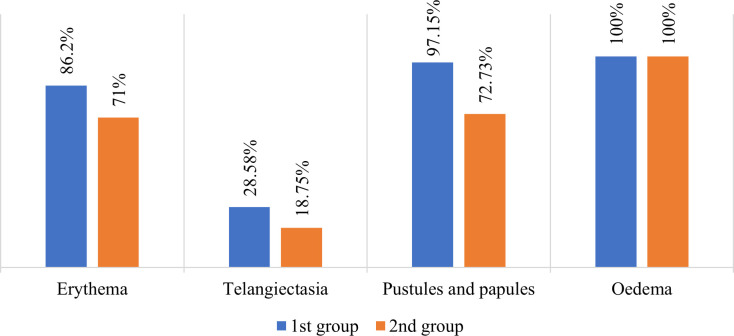 Figure 1
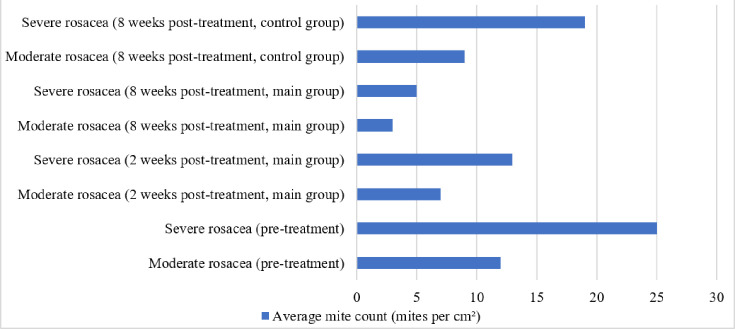 Figure 2
Peer Reviews
No public reviews on file for this paper yet. If you reviewed it on a platform where reviews are public (OpenReview, ICLR, NeurIPS, ICML), you can paste yours below so the community can read it here.
Videos
No videos yet. Explain this paper in a talk, walkthrough, or lecture? Add one.
Taxonomy
TopicsAcne and Rosacea Treatments and Effects · Bee Products Chemical Analysis · Phytochemistry and Bioactivity Studies