The validation of the CTS-6 Evaluation Tool for diagnosing carpal tunnel syndrome (CTS) in Thai wheelchair users
Montana Buntragulpoontawee, Siam Tongprasert, Jiraporn Khorana, Kittipong Kitisak, Waris Karinuntakul, Sineenard Pornjaksawan, Phichayut Phinyo, Paraskevopoulos Eleftherios, Paraskevopoulos Eleftherios, Paraskevopoulos Eleftherios

TL;DR
This study validated the CTS-6 diagnostic tool for carpal tunnel syndrome in Thai wheelchair users, finding it effective with high specificity at a cutoff score of 12.
Contribution
Validated the CTS-6 tool in a new population of wheelchair users, providing cutoff score insights for clinical use.
Findings
The CTS-6 tool showed strong discriminative ability with an AUC of 0.935.
At a cutoff of 12, the tool had 43.8% sensitivity and 100% specificity.
A lower cutoff of 7.5 increased sensitivity but introduced more false positives.
Abstract
The CTS-6 Evaluation Tool is a clinical diagnostic tool for carpal tunnel syndrome. It was originally developed using data from non-disabled individuals and has never been validated in different population. This study aimed to validate CTS-6’s diagnostic performance at a cutoff score of 12 in a new population of wheelchair users. The participants were 54 Thai wheelchair users from a university hospital’s neuropathy registry. Those with a history of nerve injury, fracture, neuropathy, or pregnancy were excluded from the study. All underwent clinical exam, CTS-6, and electrodiagnosis (blinded evaluator). Carpal tunnel syndrome was diagnosed based on clinical symptoms and electrodiagnostic criteria. Of 54 participants, 13 were female (24.1%) with an average age of 46.9 (SD 12.2) years, and 18 (33.3%) participants had carpal tunnel syndrome. Duration of disability (years) was…
Genes, proteins, chemicals, diseases, species, mutations and cell lines named across the full text — each resolved to its canonical identifier and authoritative record.
Click any figure to enlarge with its caption.
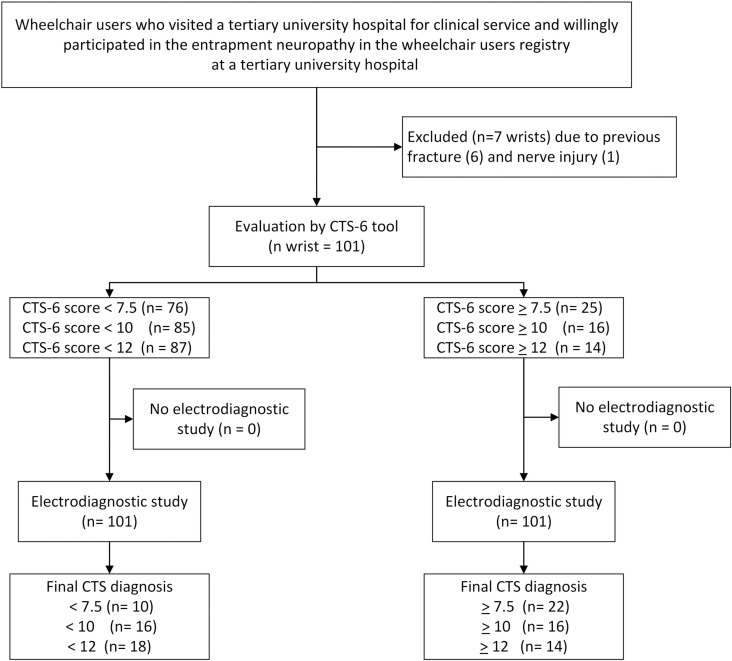 Figure 1
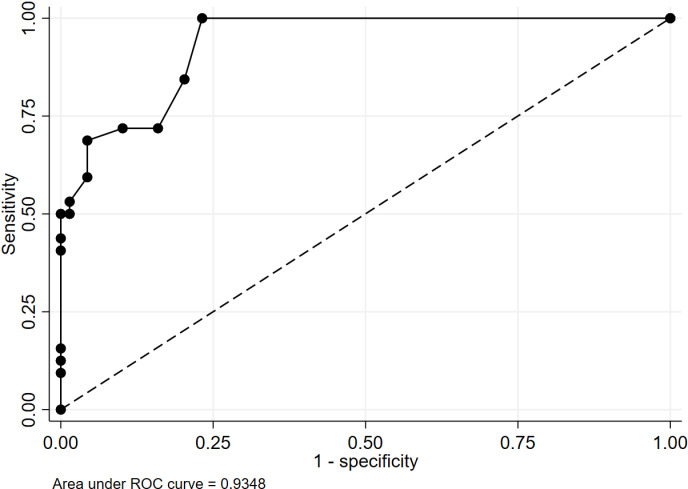 Figure 2
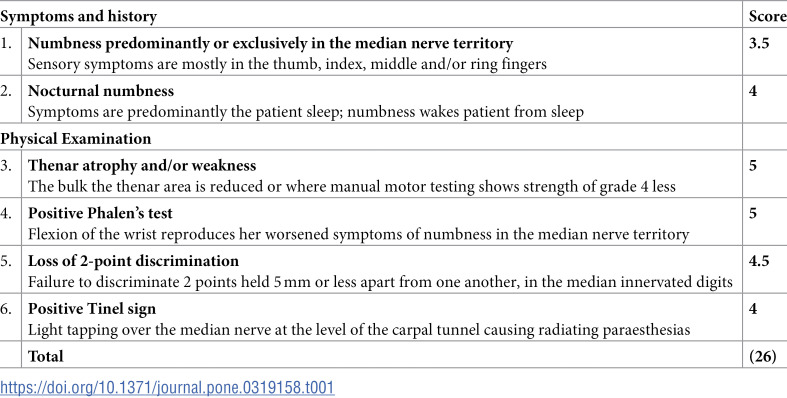 Figure 3
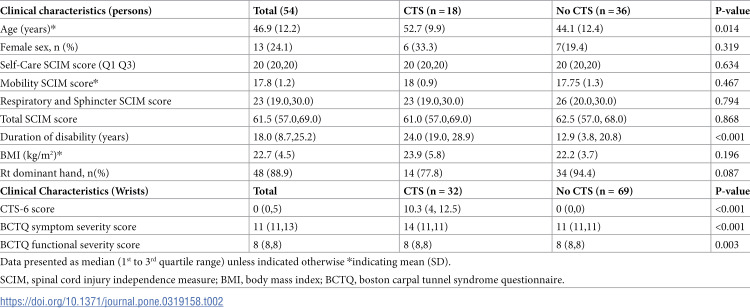 Figure 4
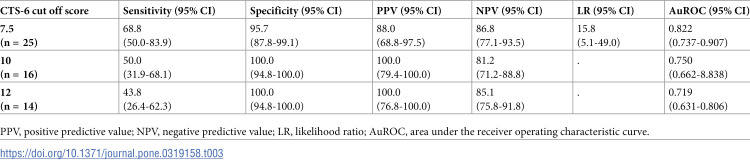 Figure 5
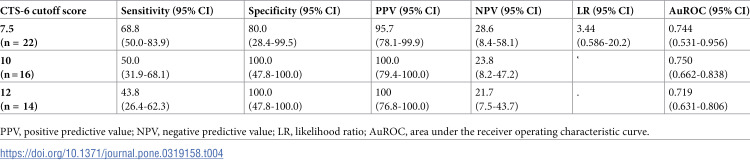 Figure 6
Peer Reviews
No public reviews on file for this paper yet. If you reviewed it on a platform where reviews are public (OpenReview, ICLR, NeurIPS, ICML), you can paste yours below so the community can read it here.
Videos
No videos yet. Explain this paper in a talk, walkthrough, or lecture? Add one.
Taxonomy
TopicsPeripheral Nerve Disorders · Orthopedic Surgery and Rehabilitation · Nerve Injury and Rehabilitation