Acceptability and feasibility of HIV self-testing integration into publicly-funded HIV prevention services: Perspectives from HIV testing agency staff that provide HIV testing services to sexual and gender minority youth in Philadelphia County
Dovie L. Watson, Stephen Bonett, Steven Meanley, Sarah M. Wood, Kathleen A. Brady, José A. Bauermeister

TL;DR
This study explores how HIV self-testing can be integrated into public HIV prevention services for sexual and gender minority youth in Philadelphia, highlighting both benefits and challenges.
Contribution
The study provides new insights into the acceptability and feasibility of HIV self-testing among agency staff serving sexual and gender minority youth during the early pandemic.
Findings
Most staff were familiar with HIV self-testing and likely to recommend it to clients.
Perceived benefits included increased access and reduced stigma, while challenges included loss of client connection and linkage to care.
Staff viewed HIV self-testing as a useful tool but identified the need for resources to address implementation challenges.
Abstract
Increasing HIV testing among priority populations is a primary strategy of the Ending the HIV Epidemic initiative. In October 2019, the Philadelphia Department of Public Health (PDPH) established a program to distribute publicly-funded HIV self-testing (HIVST) kits to Philadelphia County residents aged 16 years and older. Through a community-academic partnership, we used a cross-sectional sequential transformative mixed-methods design to examine perceived organizational factors, opportunities, and challenges to HIVST integration among agency staff at PDPH-funded agencies early in the COVID-19 pandemic due to decreased access to traditional in-person HIV testing services with a focus on agencies whose client populations included sexual and gender minority clients assigned male sex birth aged 13 to 24 years (not the sole population served at each agency). We integrated data from online…
Genes, proteins, chemicals, diseases, species, mutations and cell lines named across the full text — each resolved to its canonical identifier and authoritative record.
Click any figure to enlarge with its caption.
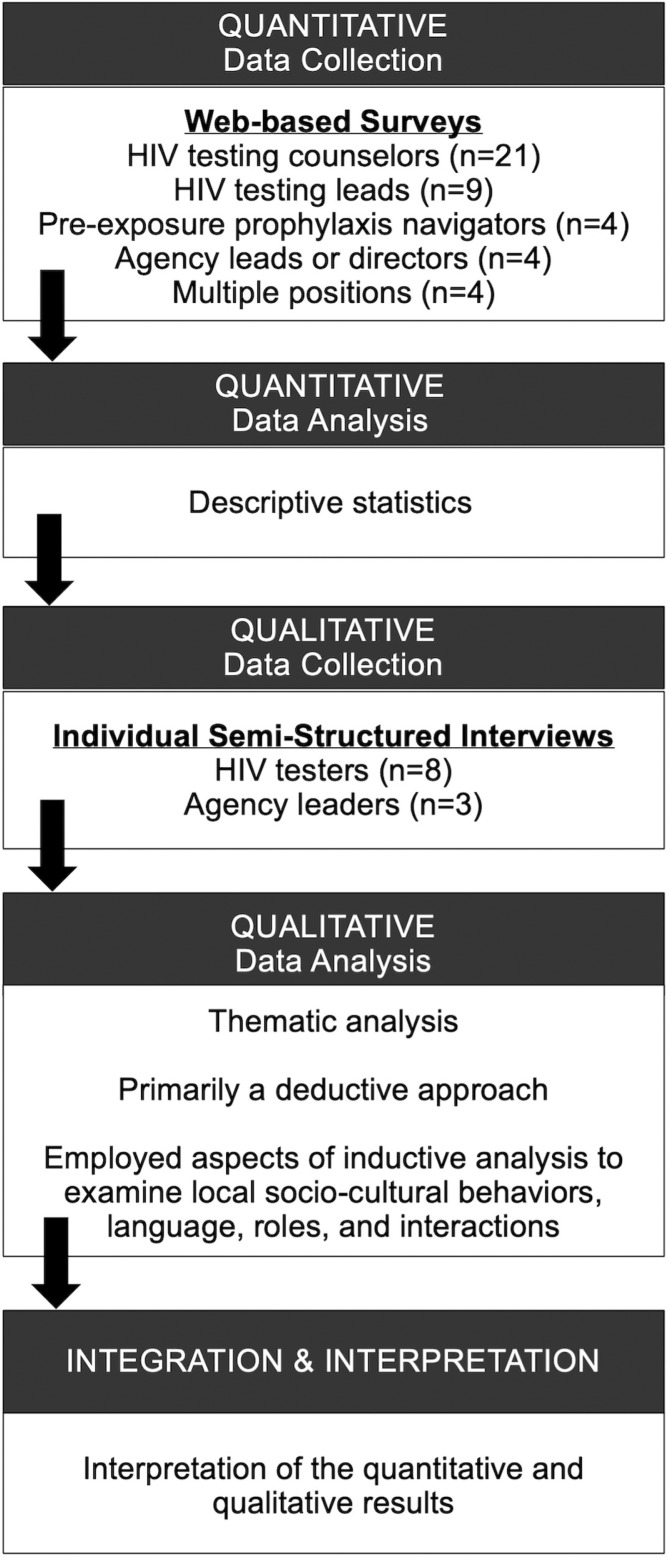 Figure 1
 Figure 2
 Figure 3
 Figure 4
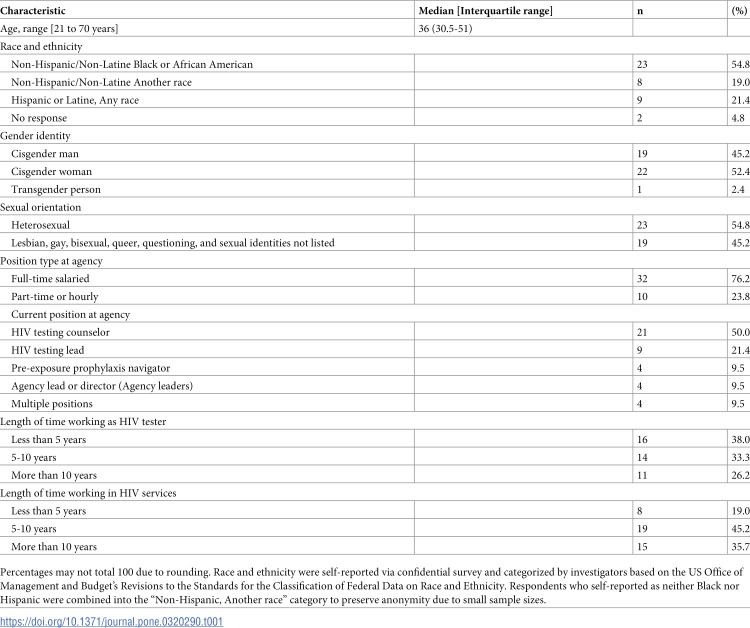 Figure 5
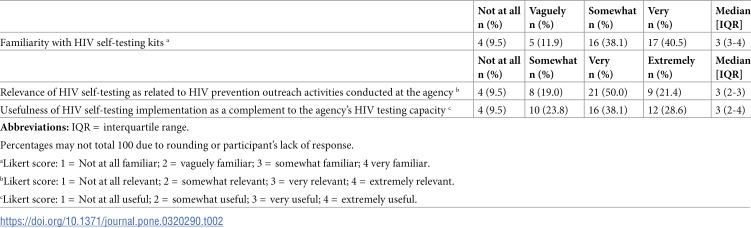 Figure 6
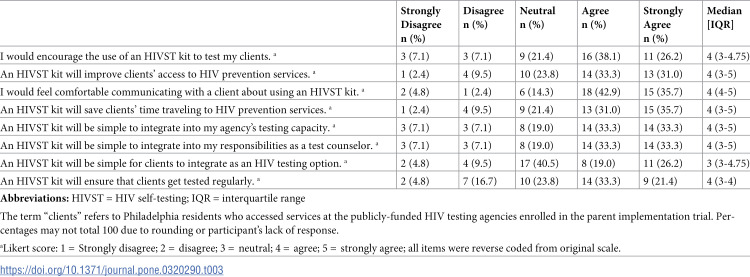 Figure 7
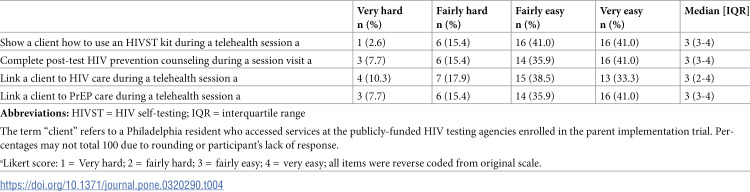 Figure 8
 Figure 9
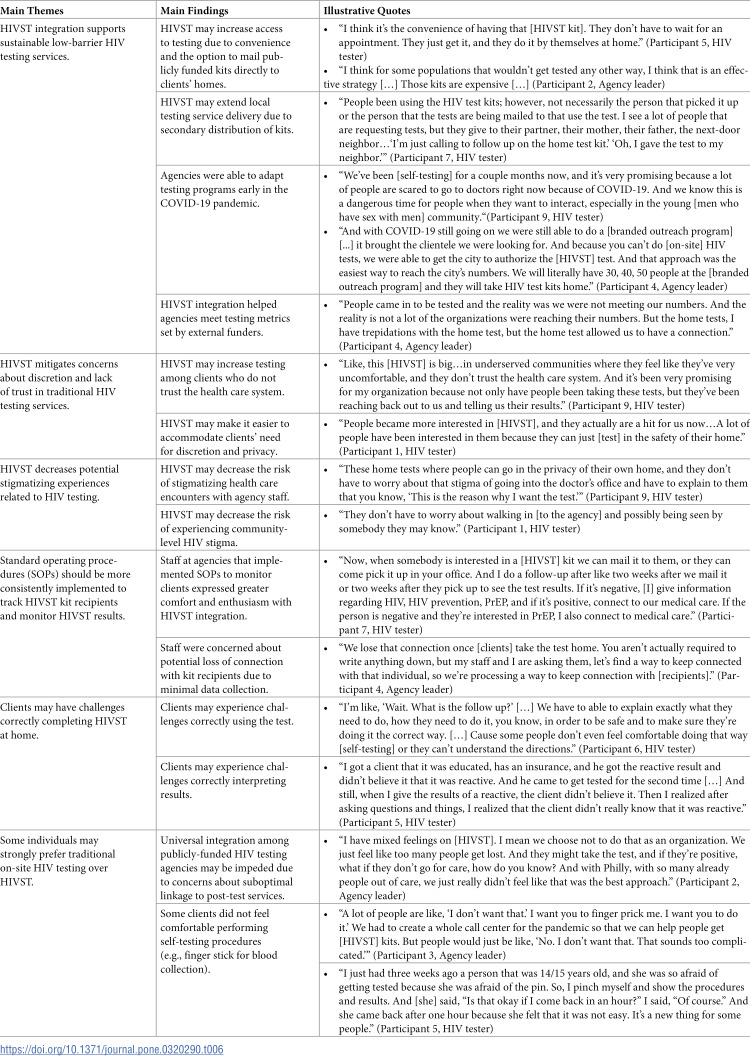 Figure 10
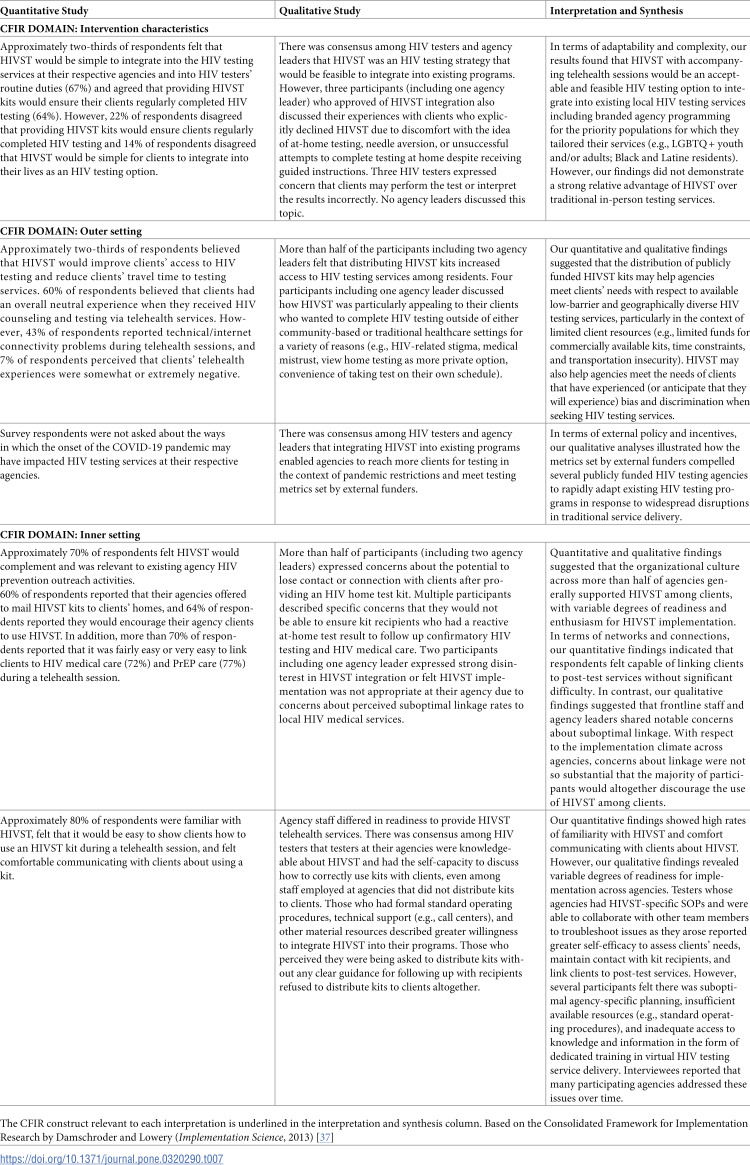 Figure 11
Peer Reviews
No public reviews on file for this paper yet. If you reviewed it on a platform where reviews are public (OpenReview, ICLR, NeurIPS, ICML), you can paste yours below so the community can read it here.
Videos
No videos yet. Explain this paper in a talk, walkthrough, or lecture? Add one.
Taxonomy
TopicsHIV/AIDS Research and Interventions · HIV, Drug Use, Sexual Risk · Adolescent Sexual and Reproductive Health