Bacterial lysis or survival after infection with phage Sf14 depends on combined nutrient and temperature conditions
Nykki D. Ross, Alexis L. Chin, Archana Pannuri, Sarah M. Doore

TL;DR
The study shows that the outcome of phage Sf14 infection in Shigella flexneri depends on both nutrient availability and temperature.
Contribution
The research reveals how combined environmental factors influence phage infection outcomes in S. flexneri.
Findings
Nutrient-rich media support phage production at all temperatures.
Lower nutrient levels make temperature a key factor in phage and bacterial growth.
Phage genes are expressed with a delay, allowing bacteria to potentially outpace phage.
Abstract
Bacteriophage Sf14 is a Moogle-like myovirus that infects Shigella flexneri. S. flexneri is a human pathogen that replicates intracellularly in the intestine, but it persists in a low metabolic state in environmental fresh water sources. Though closely related to FelixO1, Moogleviruses were more recently discovered within the last 10 years; thus, mechanistic knowledge of their infection cycles is still being gathered. This work investigated the combined effects of temperature and nutrient concentration on both host growth and phage replication. In combination, a total of 16 different conditions were analyzed. Results indicate that nutrient-rich media facilitate shorter infection cycles and support phage production at all temperatures. As nutrient content decreased, temperature significantly affected both host cell replication and phage production. Results indicate phage genomes are…
Genes, proteins, chemicals, diseases, species, mutations and cell lines named across the full text — each resolved to its canonical identifier and authoritative record.
Click any figure to enlarge with its caption.
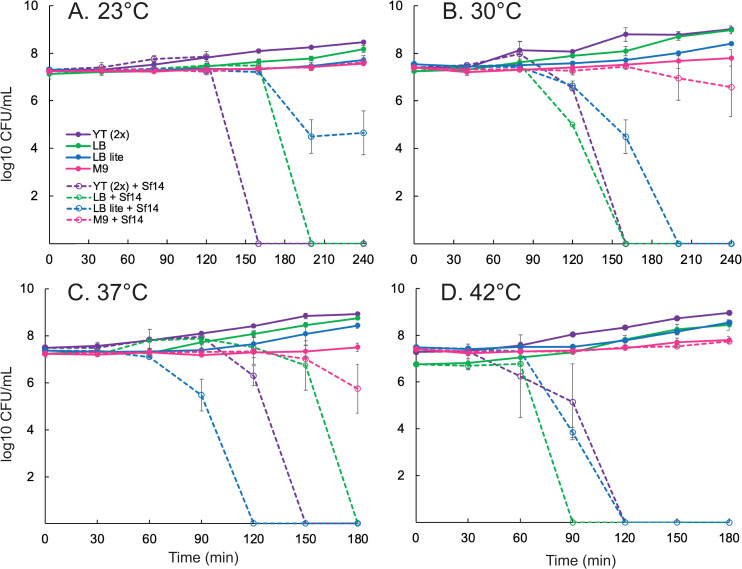 Figure 1
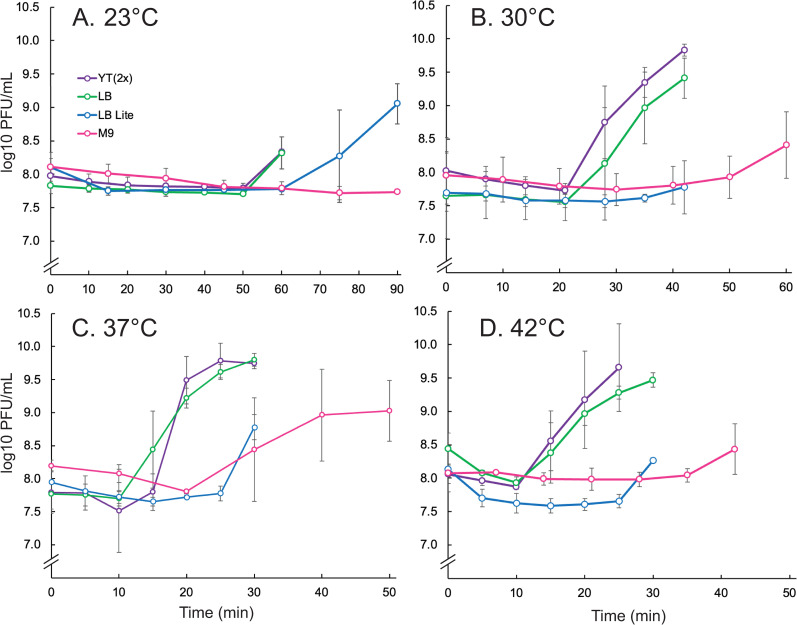 Figure 2
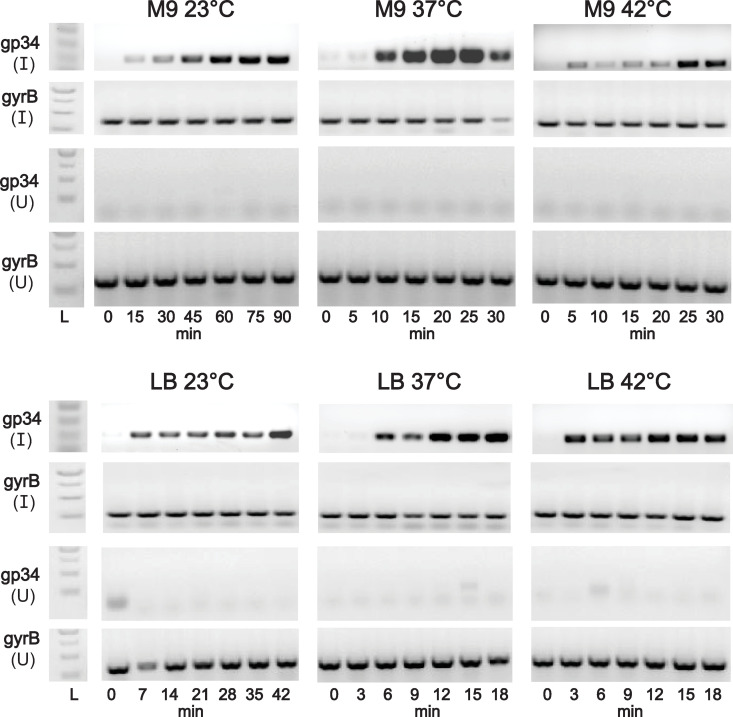 Figure 3
Peer Reviews
No public reviews on file for this paper yet. If you reviewed it on a platform where reviews are public (OpenReview, ICLR, NeurIPS, ICML), you can paste yours below so the community can read it here.
Videos
No videos yet. Explain this paper in a talk, walkthrough, or lecture? Add one.
Taxonomy
TopicsBacteriophages and microbial interactions · Viral gastroenteritis research and epidemiology · Respiratory viral infections research