Evolutionary history of the DNA repair protein, Ku, in eukaryotes and prokaryotes
Sadikshya Rijal, Ashmita Mainali, Sandesh Acharya, Hitesh Kumar Bhattarai

TL;DR
This paper explores the evolutionary history of the DNA repair protein Ku across eukaryotes and prokaryotes, revealing insights into its origin and gene duplication in early eukaryotic evolution.
Contribution
The study provides a detailed phylogenetic analysis of Ku proteins, identifying a common ancestry and gene duplication event in early eukaryotes.
Findings
Eukaryotic Ku proteins share a common ancestor, distinct from prokaryotic and viral clades.
Gene duplication in ancestral eukaryotes likely led to the emergence of Ku70 and Ku80.
Archaeal Ku proteins resemble eukaryotic Ku70, suggesting a possible intermediary role in evolution.
Abstract
Ku is essential in non-homologous end-joining (NHEJ) across prokaryotes and eukaryotes, primarily in double-stranded breaks (DSBs) repair. It often presents as a multi-domain protein in eukaryotes, unlike their prokaryotic single-domain homologs. We systematically searched for Ku proteins across different domains of life. To elucidate the evolutionary history of the Ku protein, we constructed a maximum likelihood phylogenetic tree using Ku protein sequences from 100 representative eukaryotic, prokaryotic, and viral species. The resulting tree revealed a common node for eukaryotic Ku proteins, while viral and prokaryotic species clustered into a distinct clade. Our phylogenetic analysis reveals that the common ancestry of Ku70 and Ku80 likely resulted from a gene duplication event in the ancestral eukaryote. This inference is supported by BLASTp results, which indicate a close…
Genes, proteins, chemicals, diseases, species, mutations and cell lines named across the full text — each resolved to its canonical identifier and authoritative record.
Click any figure to enlarge with its caption.
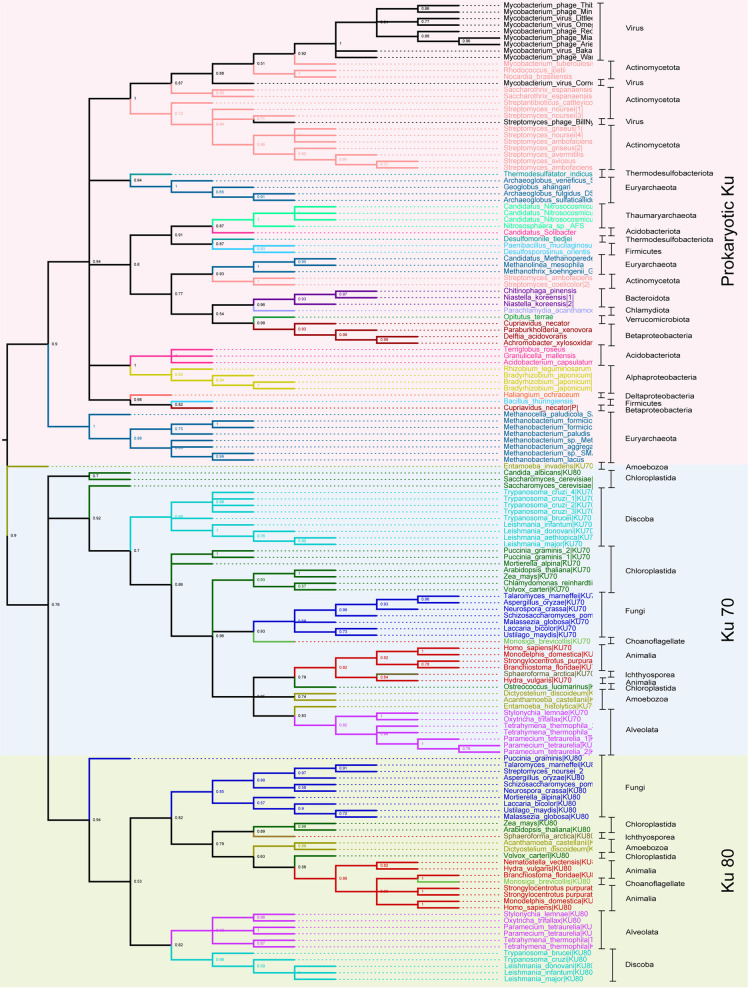 Figure 1
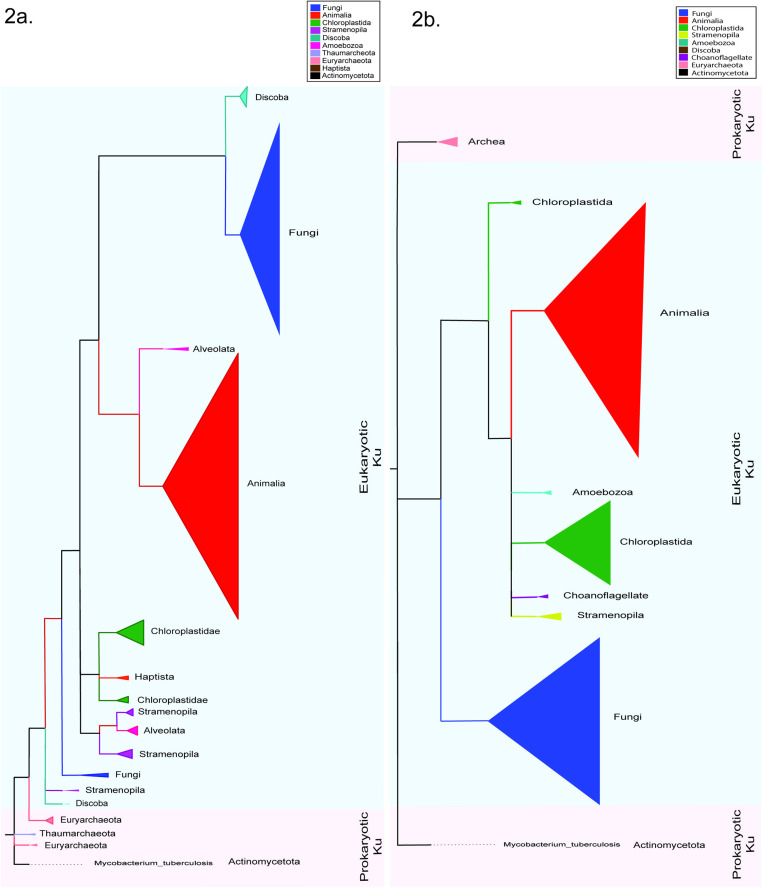 Figure 2
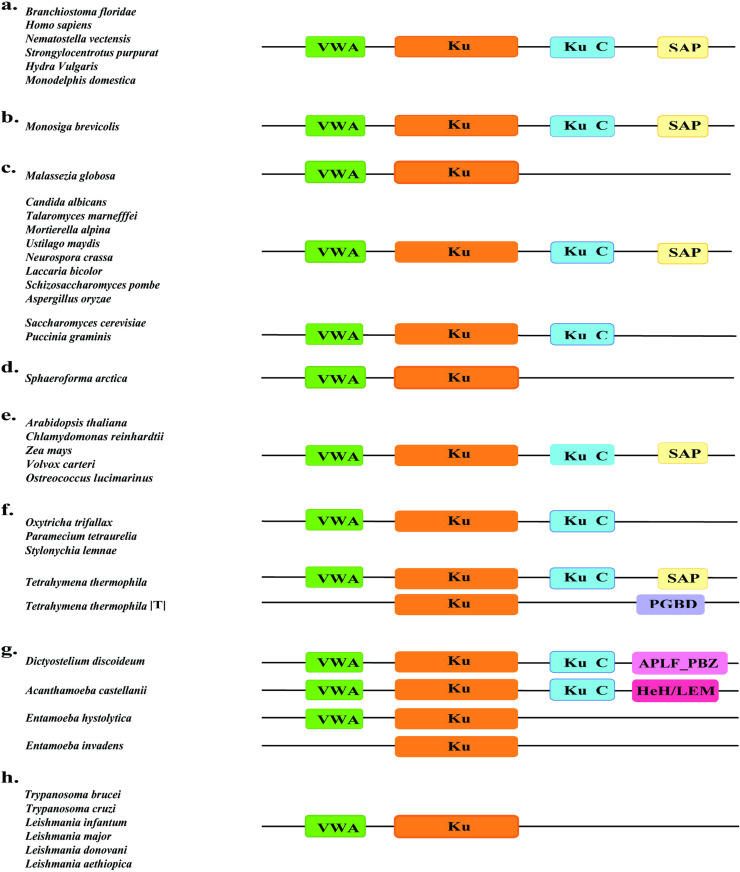 Figure 3
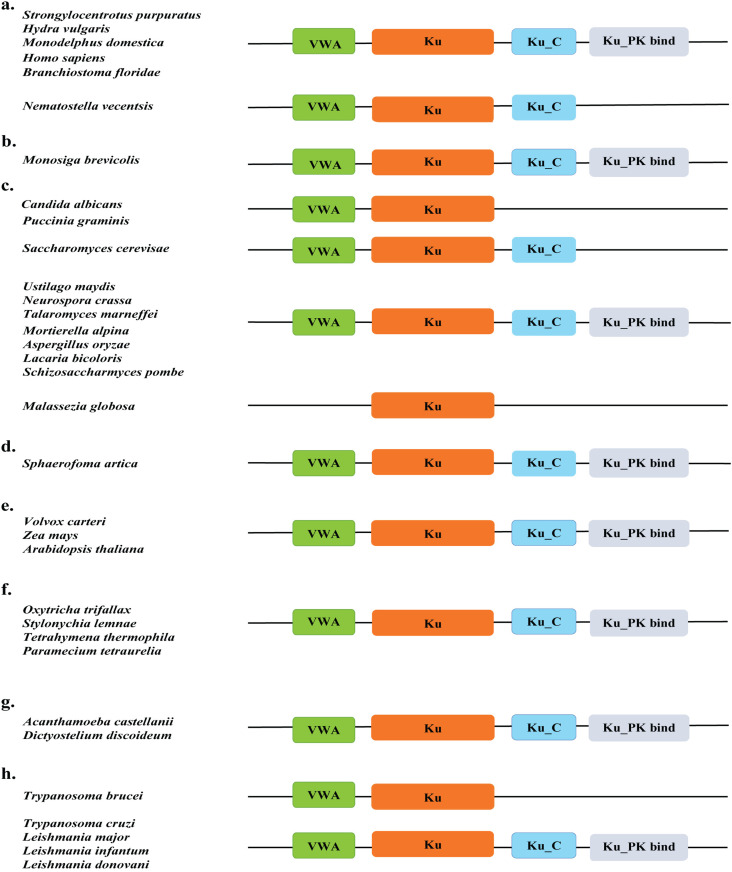 Figure 4
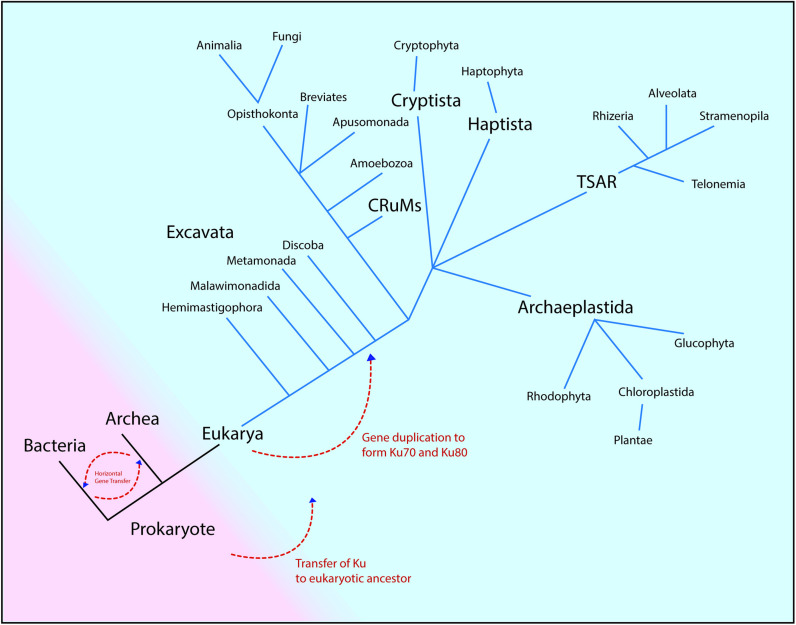 Figure 5
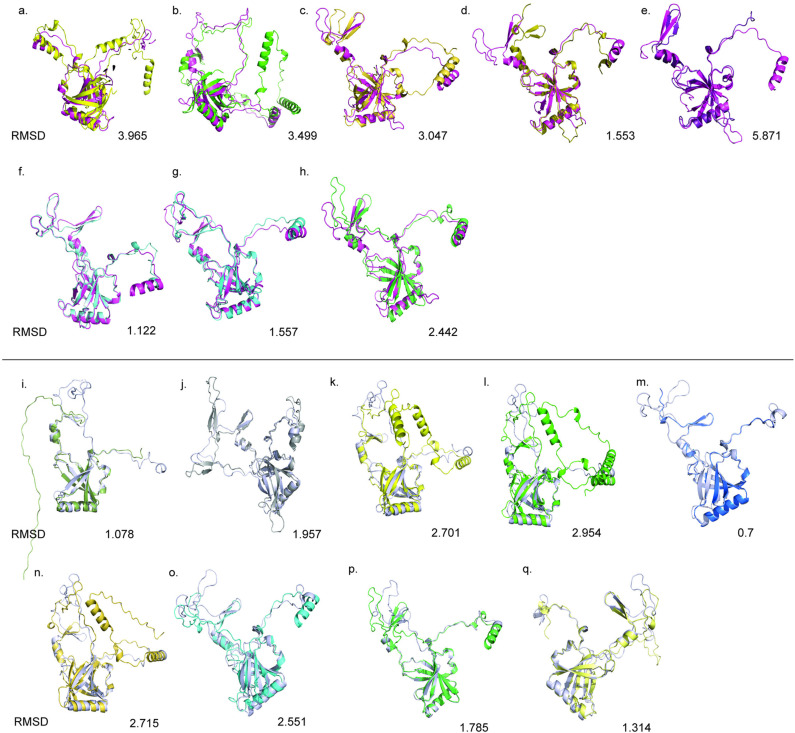 Figure 6
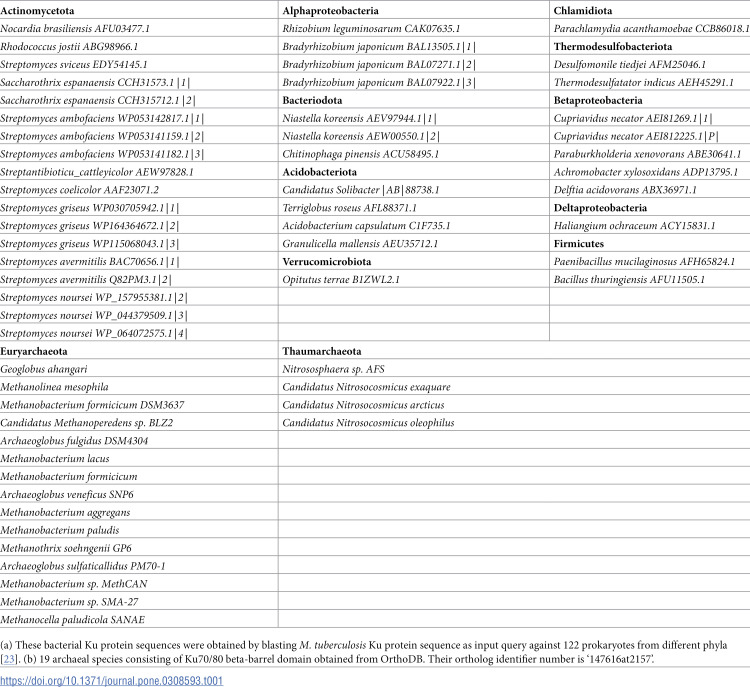 Figure 7
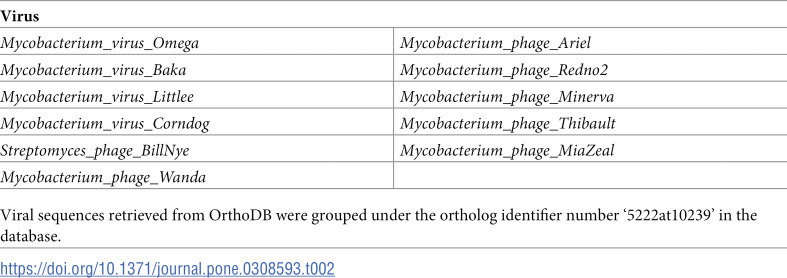 Figure 8
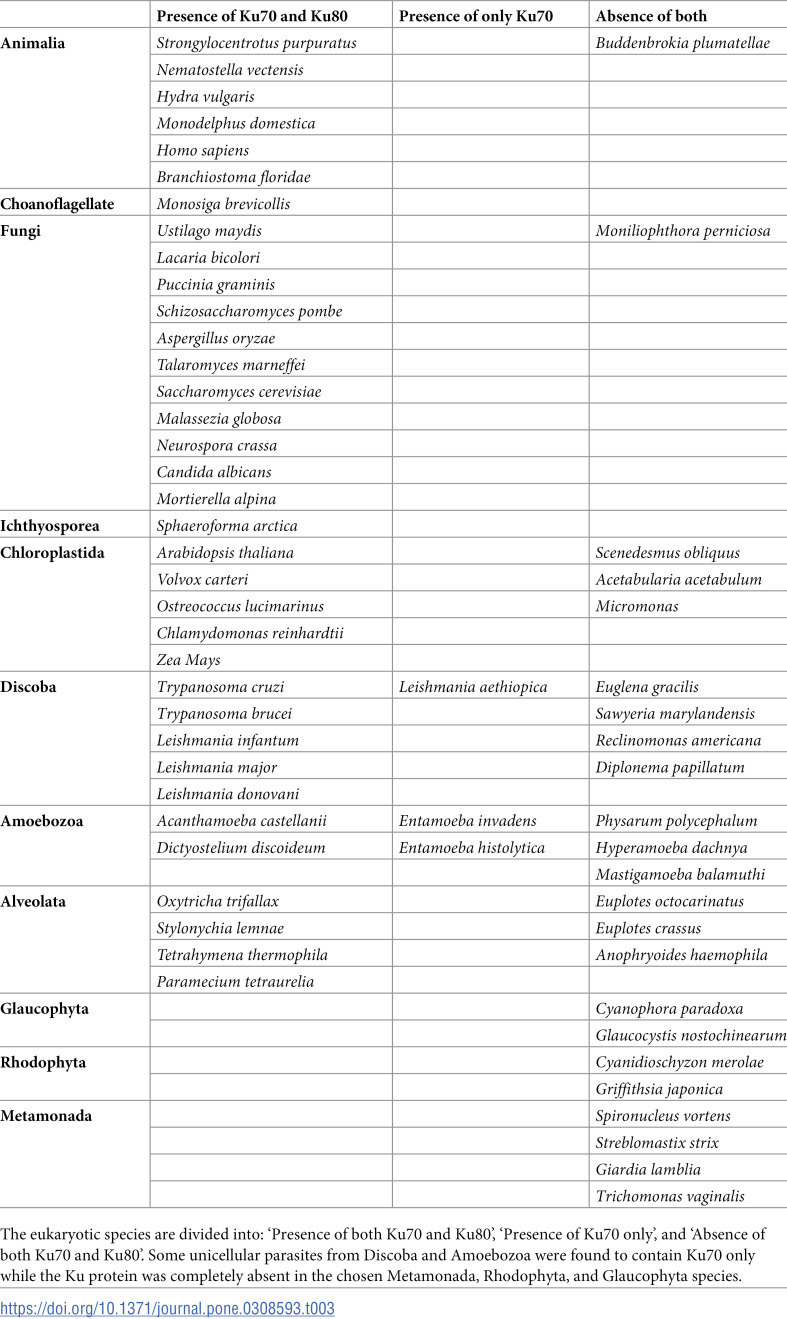 Figure 9
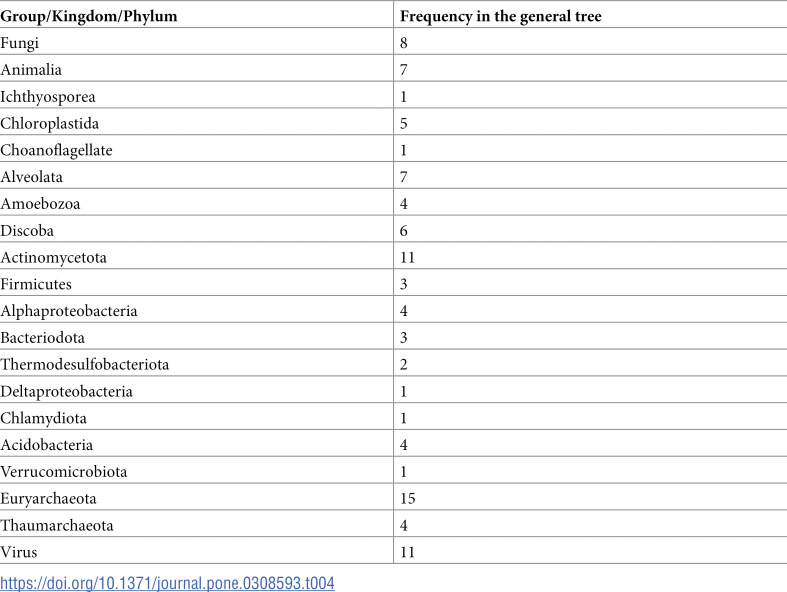 Figure 10
Peer Reviews
No public reviews on file for this paper yet. If you reviewed it on a platform where reviews are public (OpenReview, ICLR, NeurIPS, ICML), you can paste yours below so the community can read it here.
Videos
No videos yet. Explain this paper in a talk, walkthrough, or lecture? Add one.
Taxonomy
TopicsDNA Repair Mechanisms · Bacterial Genetics and Biotechnology · Enzyme Structure and Function