Recurrent pleural effusion: a case of metastatic melanoma 12 years after initial diagnosis
Olia Poursina, Susan Karki, Jingxin Qiu

TL;DR
This case report describes a rare instance of melanoma metastasis causing pleural effusion 12 years after the initial diagnosis, highlighting the need for long-term monitoring.
Contribution
The novelty lies in documenting a metastatic melanoma case with a 12-year latency period before pleural effusion occurred.
Findings
Melanoma can cause pleural effusion even 12 years after initial diagnosis.
Amelanotic pleural effusion is a rare but possible manifestation of metastatic melanoma.
Long-term follow-up is essential for melanoma patients due to delayed metastasis.
Abstract
Pleural effusion caused by metastatic melanoma is uncommon, occurring in only 2% of cases, and is associated with a poor prognosis. Despite its rarity, it is critical to consider melanoma as a potential underlying cause when evaluating pleural effusion, especially in patients with a history of melanoma. Most metastases occur within the first 3–5 years after diagnosis. This case report highlights an unusual presentation of amelanotic pleural effusion that developed 12 years after the initial melanoma diagnosis. The prolonged latency emphasizes the importance of long-term follow-up for patients and maintaining a high suspicion of melanoma when evaluating metastatic pleural effusion.
Genes, proteins, chemicals, diseases, species, mutations and cell lines named across the full text — each resolved to its canonical identifier and authoritative record.
Click any figure to enlarge with its caption.
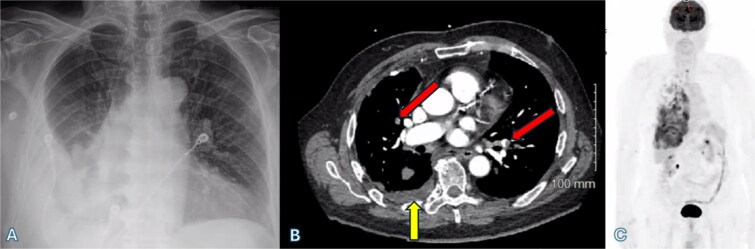 Figure 1
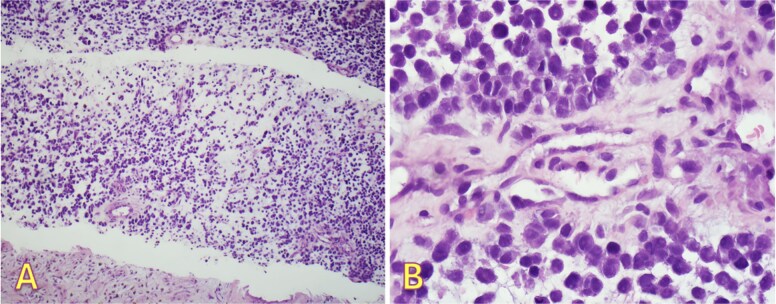 Figure 2
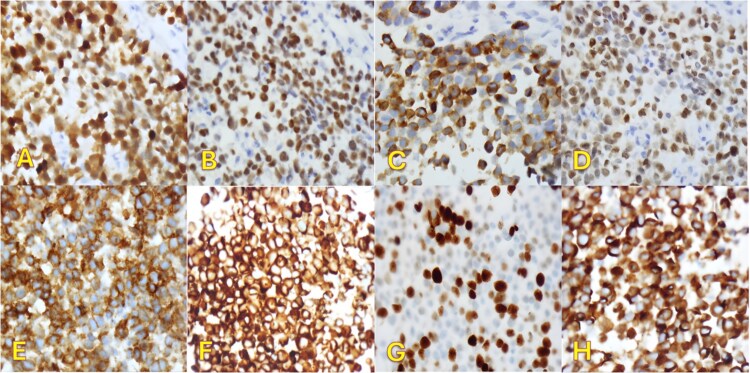 Figure 3
Peer Reviews
No public reviews on file for this paper yet. If you reviewed it on a platform where reviews are public (OpenReview, ICLR, NeurIPS, ICML), you can paste yours below so the community can read it here.
Videos
No videos yet. Explain this paper in a talk, walkthrough, or lecture? Add one.
Taxonomy
TopicsPleural and Pulmonary Diseases