Is Pseudomonas aeruginosa a possible aetiological agent of periodontitis in dogs?
Małgorzata Targońska-Karasek, Izabela Polkowska, Henryk Krukowski

TL;DR
This study suggests that Pseudomonas aeruginosa may cause periodontitis in dogs, based on its isolation from an affected dog.
Contribution
The paper reports the identification of Pseudomonas aeruginosa as a potential cause of periodontitis in dogs.
Findings
Pseudomonas aeruginosa was isolated from a dog with periodontitis.
The bacterium was identified using microbiological tests and advanced diagnostic methods.
Abstract
Periodontal diseases are the most frequently diagnosed problem in small animal veterinary medicine. Although their exact cause is not fully understood, bacteria play an important role in their development. Pseudomonas aeruginosa is a Gram-negative, rod-shaped, non-spore-forming bacterium. The living environment of this bacterium may be soil and water; however, it can also be found in humans and animals. Antibiotic treatment of periodontitis may be complicated by the carbapenem resistance of some P. aeruginosa strains, if these bacteria are found to be an aetiological agent. The aim of the study was to identify all bacterial strains isolated from dog with periodontitis. After a clinical examination of a Schnauzer dog in the Department and Clinic of Animal Surgery in the University of Life Sciences in Lublin Faculty of Veterinary Medicine, periodontitis was diagnosed. A swab was taken…
Genes, proteins, chemicals, diseases, species, mutations and cell lines named across the full text — each resolved to its canonical identifier and authoritative record.
Click any figure to enlarge with its caption.
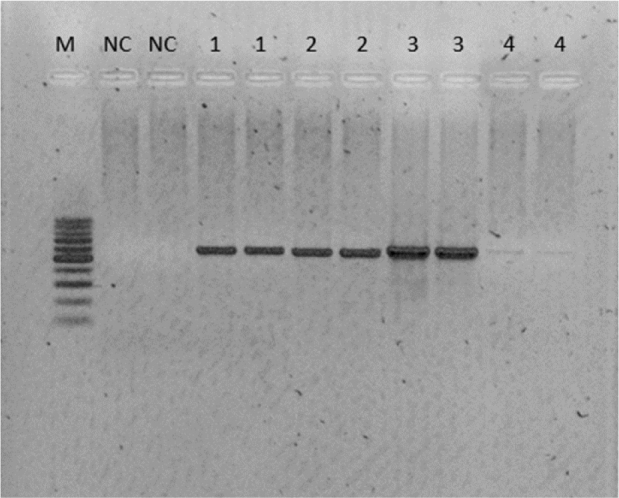 Figure 1
Peer Reviews
No public reviews on file for this paper yet. If you reviewed it on a platform where reviews are public (OpenReview, ICLR, NeurIPS, ICML), you can paste yours below so the community can read it here.
Videos
No videos yet. Explain this paper in a talk, walkthrough, or lecture? Add one.
Taxonomy
TopicsOral microbiology and periodontitis research · Bacterial biofilms and quorum sensing · Bacterial Identification and Susceptibility Testing