Red shell‐ high risk normal tissue in stereotactic radiosurgery
Jun Yang, Weihua Qi, Lei Wang, Qiuxia Lu, Liangfu Han, Brian Wang, Weisi Yan

TL;DR
The paper introduces the 'Red Shell' concept to identify and quantify normal tissue damage in high-dose radiation therapy, using biological and physical factors to improve treatment planning.
Contribution
The novel contribution is the introduction of the 'Red Shell' concept to assess normal tissue damage in SBRT using biological equivalent dose.
Findings
The Red Shell concept helps quantify normal tissue damage exceeding dose constraints in SBRT.
Combining biological and physical factors improves understanding of clinical implications of Red Shell.
The concept aids in optimizing radiation therapy planning to reduce normal tissue damage.
Abstract
Due to the ablative nature of high prescription in Stereotactic Radiosurgery or stereotactic body radiation therapy (SRS/SBRT), the normal tissue surrounding the CTV receives the dose higher than tissue's dose constraint. A concept of Red Shell is proposed to define and quantify these tissue damaged in SBRT, using biological equivalent dose (BED) concept. The combination of biological factors and physics factors, including serial and parallel organ, dose gradient, dose distribution and fractionations, are further discussed to interpret the clinical meaning of Red Shell. This concept can also help planner to improve the optimization in planning process.
Genes, proteins, chemicals, diseases, species, mutations and cell lines named across the full text — each resolved to its canonical identifier and authoritative record.
Click any figure to enlarge with its caption.
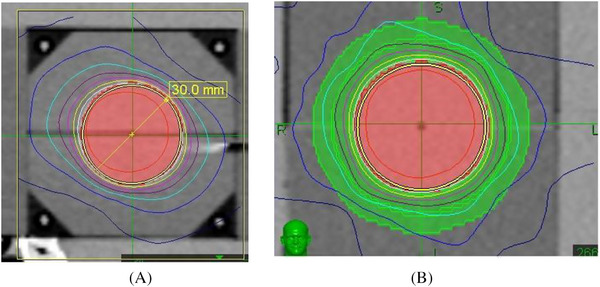 Figure 1
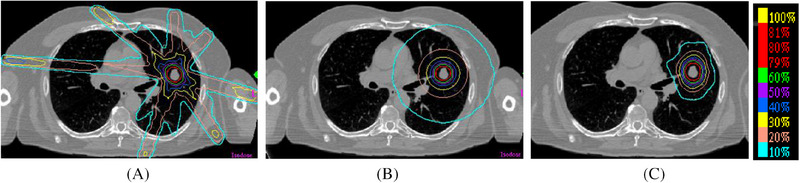 Figure 2
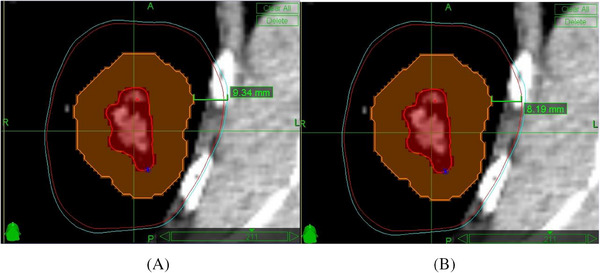 Figure 3
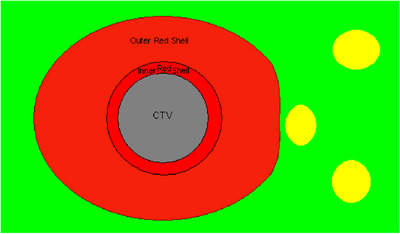 Figure 4
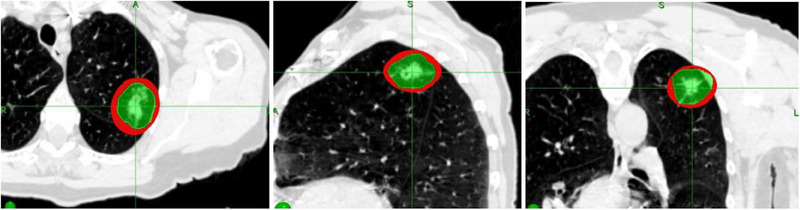 Figure 5
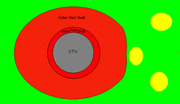 Figure 6
Peer Reviews
No public reviews on file for this paper yet. If you reviewed it on a platform where reviews are public (OpenReview, ICLR, NeurIPS, ICML), you can paste yours below so the community can read it here.
Videos
No videos yet. Explain this paper in a talk, walkthrough, or lecture? Add one.
Taxonomy
TopicsAdvanced Radiotherapy Techniques · Medical Imaging Techniques and Applications · Management of metastatic bone disease