Mandibular Oral Tori Predict the Presence but Not the Severity of Obstructive Sleep Apnoea. A Systematic Review and Meta‐Analysis of the Literature
Chee Weng Yong, Bernadette Quah, Nicole Li Shuen Kong, Juliana Tereza Colpani, Raymond Chung Wen Wong

TL;DR
This study finds that having a mandibular oral torus increases the likelihood of obstructive sleep apnoea but does not affect treatment outcomes or disease severity.
Contribution
The study clarifies the relationship between mandibular torus and OSA, resolving conflicting evidence on its role in diagnosis and treatment.
Findings
Patients with mandibular torus have a 1.9 relative risk of OSA.
Larger torus is linked to mild or moderate OSA but not severe OSA.
Torus does not hinder the effectiveness of OSA treatments like surgery or devices.
Abstract
Oral torus assessment is recommended as a part of routine craniofacial examination in patients with obstructive sleep apnoea (OSA). However, there are conflicting studies on whether oral torus is associated with OSA and whether it affects OSA therapy. This study aimed to systematically review the effects of mandibular torus on OSA and its treatment. The PubMed, Embase and Cochrane Library databases were searched up to 15 July 2024. Studies that included patients with oral torus and examined the diagnosis and severity of OSA (Apnoea–Hypopnea Index [AHI], oxygen saturation, blood pressure and patient‐reported outcomes), and studies that examined the effectiveness of OSA treatment in patients with oral torus were included. PRISMA guidelines were followed for data extraction. Eleven studies with 1372 patients were included in the study. Patients with mandibular torus were found to have a…
Genes, proteins, chemicals, diseases, species, mutations and cell lines named across the full text — each resolved to its canonical identifier and authoritative record.
Click any figure to enlarge with its caption.
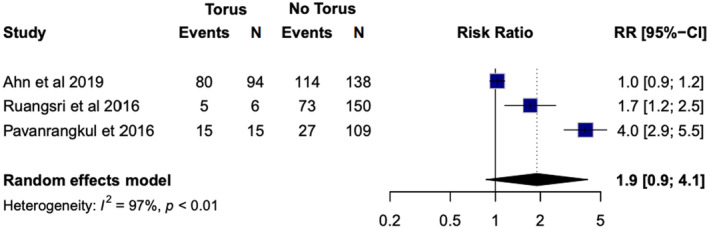 Figure 1
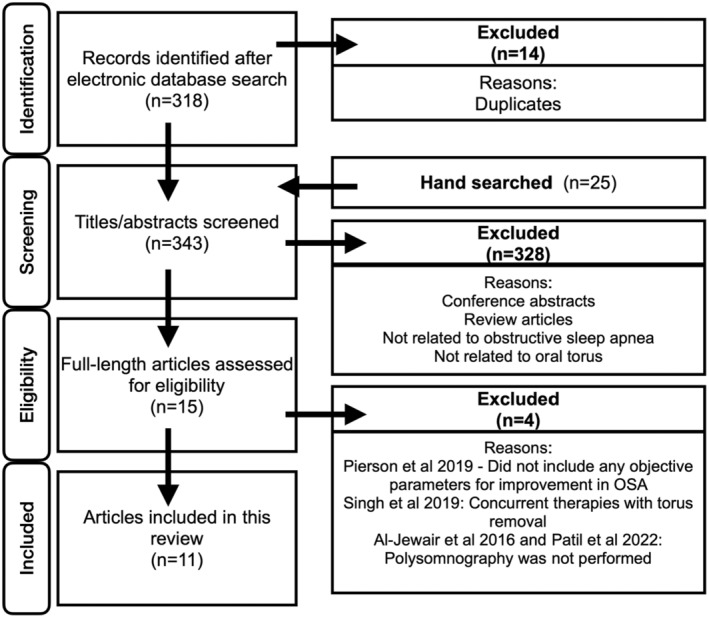 Figure 2
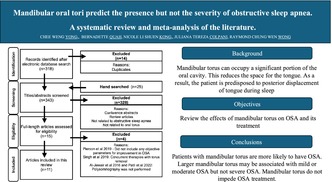 Figure 3
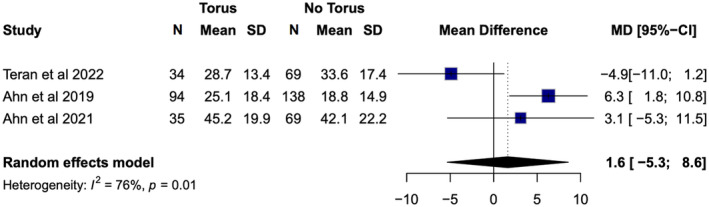 Figure 4
Peer Reviews
No public reviews on file for this paper yet. If you reviewed it on a platform where reviews are public (OpenReview, ICLR, NeurIPS, ICML), you can paste yours below so the community can read it here.
Videos
No videos yet. Explain this paper in a talk, walkthrough, or lecture? Add one.
Taxonomy
TopicsObstructive Sleep Apnea Research · Neuroscience of respiration and sleep · Tracheal and airway disorders