Loss of SCRG1 in chondrocytes inhibits osteoarthritis by promoting autophagy activity in the temporomandibular joint through inhibition of neurokine receptors
JiaJun Zhang, LePing Yuan, YanYan Zhang, HaoYang Jin, YeKe Zhao, XiaoKe Zeng, YanHui Zou, KeYu Wang, Xin Nie

TL;DR
This study shows that reducing SCRG1 in chondrocytes can prevent osteoarthritis by blocking inflammation and promoting autophagy in the temporomandibular joint.
Contribution
The novel finding is that SCRG1 inhibition prevents osteoarthritis by suppressing NGFR and the NF-κB pathway in chondrocytes.
Findings
SCRG1 silencing reduces H2O2-induced inflammation and catabolism in chondrocytes.
SCRG1 downregulation promotes autophagy and inhibits the NF-κB pathway.
Blocking SCRG1 expression inhibits NGFR and prevents joint degeneration in TMJOA.
Abstract
Background: To investigate in vitro how scrapie responsive gene 1 (SCRG1) contributes to the development of temporomandibular joint osteoarthritis (TMJOA). Methods: Western blotting was used to identify protein expression. Proinflammatory cytokine levels were assessed by means of an enzyme-linked immunosorbent test. In order to find out whether chondrocytes expressed protein light chain 3B (LC3B), immunofluorescence was utilized. Results: In the TMJOA in vitro model, hydrogen peroxide (H2O2) treatment increased the expression of SCRG1, stimulated chondrocyte catabolism and inflammatory response, and blocked autophagy. In chondrocytes, SCRG1 silencing reduces the inflammatory response, catabolism, and autophagy inhibition brought on by H2O2. Concurrently, H2O2 induction triggers the nuclear factor (NF)-κB pathway and nerve growth factor receptor (NGFR). When SCRG1 is…
Genes, proteins, chemicals, diseases, species, mutations and cell lines named across the full text — each resolved to its canonical identifier and authoritative record.
Click any figure to enlarge with its caption.
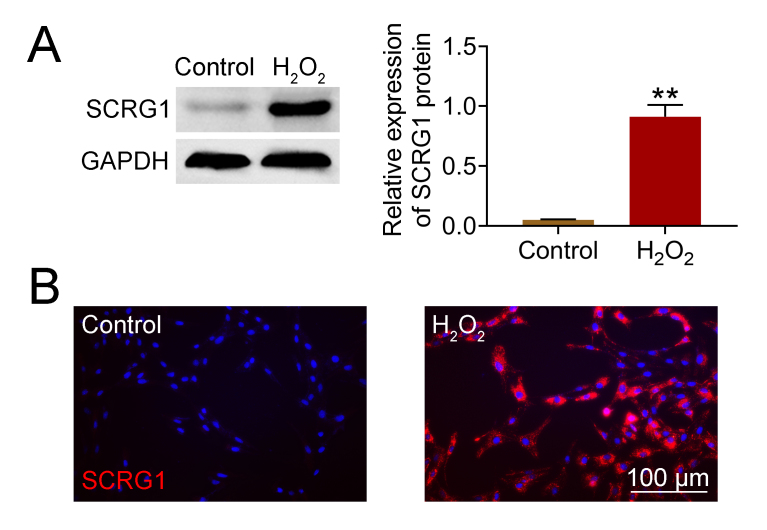 Figure 1
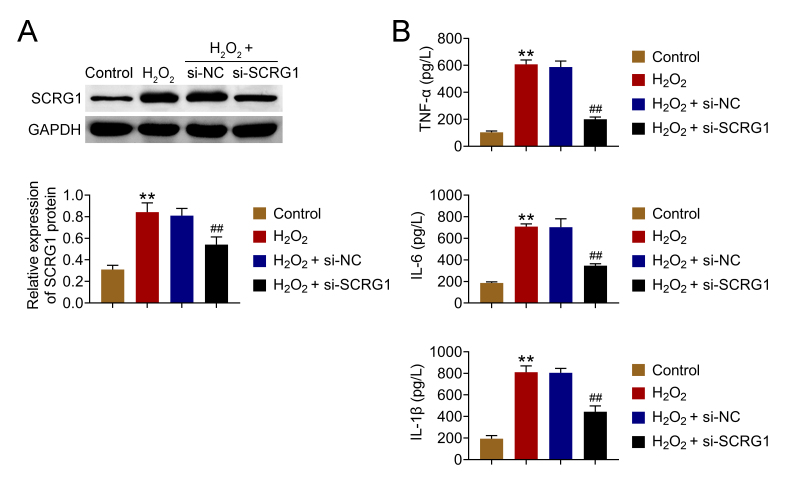 Figure 2
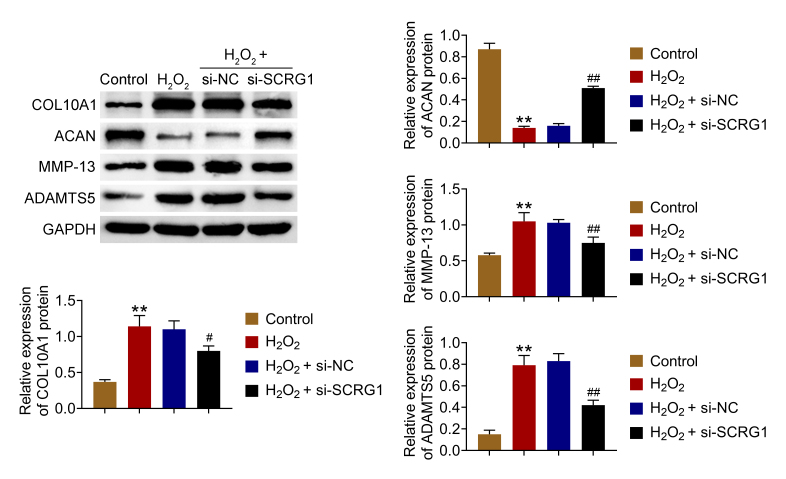 Figure 3
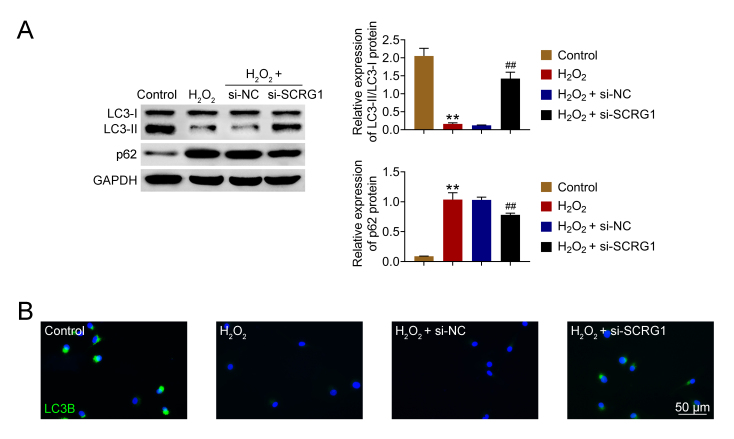 Figure 4
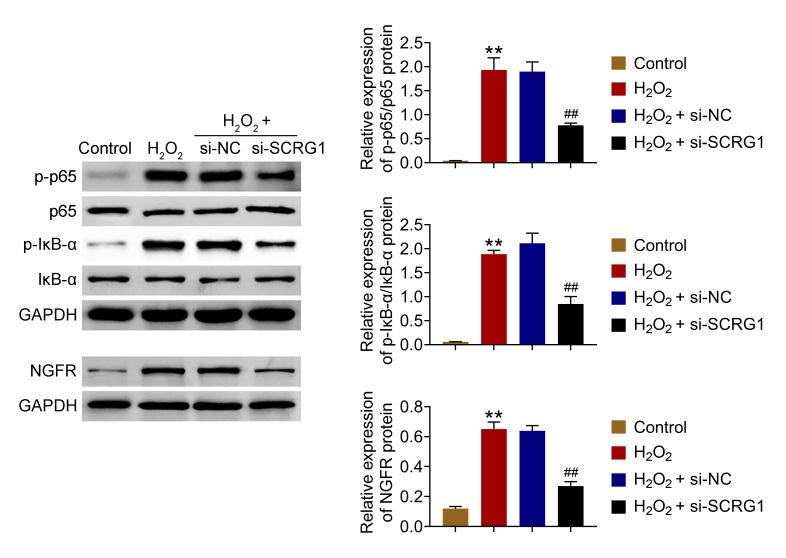 Figure 5
Peer Reviews
No public reviews on file for this paper yet. If you reviewed it on a platform where reviews are public (OpenReview, ICLR, NeurIPS, ICML), you can paste yours below so the community can read it here.
Videos
No videos yet. Explain this paper in a talk, walkthrough, or lecture? Add one.
Taxonomy
TopicsCancer-related molecular mechanisms research · Peroxisome Proliferator-Activated Receptors · RNA regulation and disease