Multidisciplinary treatment of severe spinal deformity complicated with severe cardiopulmonary dysfunction: a case report
Beiyu Xu, Chao Li, Longtao Qi, Yao Zhao, Wence Wu, Chengxian Yang, Ranlv Zhu, Zhengrong Yu, Chunde Li

TL;DR
This case report describes the successful treatment of a 13-year-old boy with severe spinal deformity and life-threatening heart and lung issues using a team-based approach.
Contribution
The paper presents a novel multidisciplinary treatment strategy for severe spinal deformity with cardiopulmonary failure in a high-risk pediatric patient.
Findings
Non-invasive ventilation and Halo-pelvic traction significantly improved the patient's spinal deformity and respiratory function.
Posterior spinal fusion achieved a 69% correction of deformity and resolved cardiopulmonary dysfunction.
Multidisciplinary cooperation was critical for managing a high-risk pediatric patient with severe spinal and cardiopulmonary issues.
Abstract
Severe spinal deformity (Cobb angle > 90°) often leads to cardiopulmonary dysfunction, posing significant surgical risks. We report a rare case of severe kyphoscoliosis with cardiopulmonary failure treated with non-invasive ventilation, anti-shock treatment, Halo-pelvic traction (HPT), and orthopedic surgery, emphasizing the importance of multidisciplinary cooperation. A 13-year-old Boy with genetic suspicion of distal arthrogryposis (Type 5D) presented with Cobb angles of 94° (scoliosis) and 69° (kyphosis), respiratory failure (PO2 36.3 mmHg), and pre-shock status. A multidisciplinary team stabilized the patient using non-invasive ventilation, nutritional optimization and HPT. Post-traction correction rates reached 46.8% (coronal) and 53.6% (sagittal). Subsequent posterior spinal fusion (T1-L5) achieved 69% correction, resolving cardiopulmonary dysfunction and resulting in a highly…
Genes, proteins, chemicals, diseases, species, mutations and cell lines named across the full text — each resolved to its canonical identifier and authoritative record.
Click any figure to enlarge with its caption.
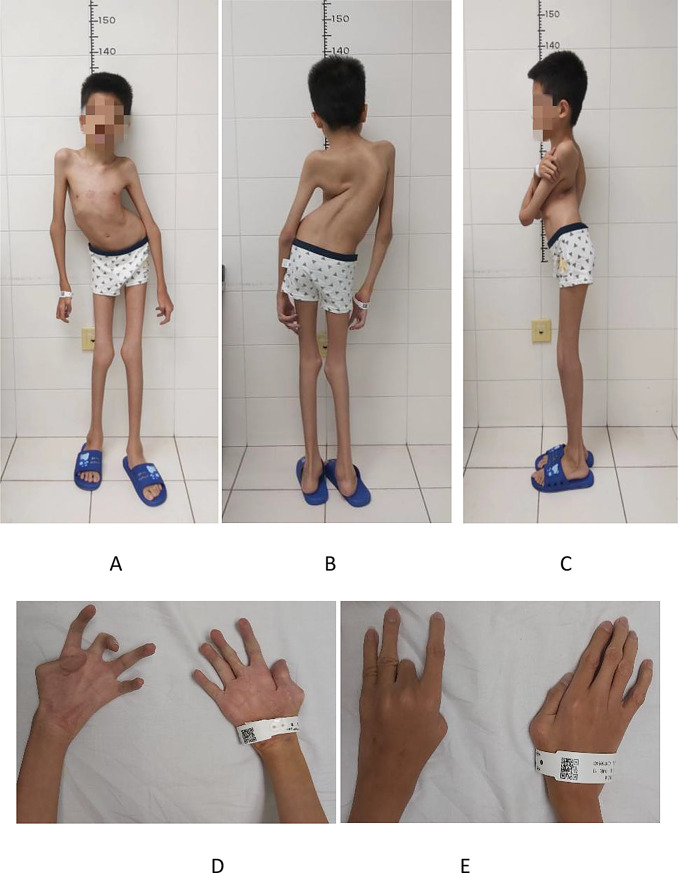 Figure 1
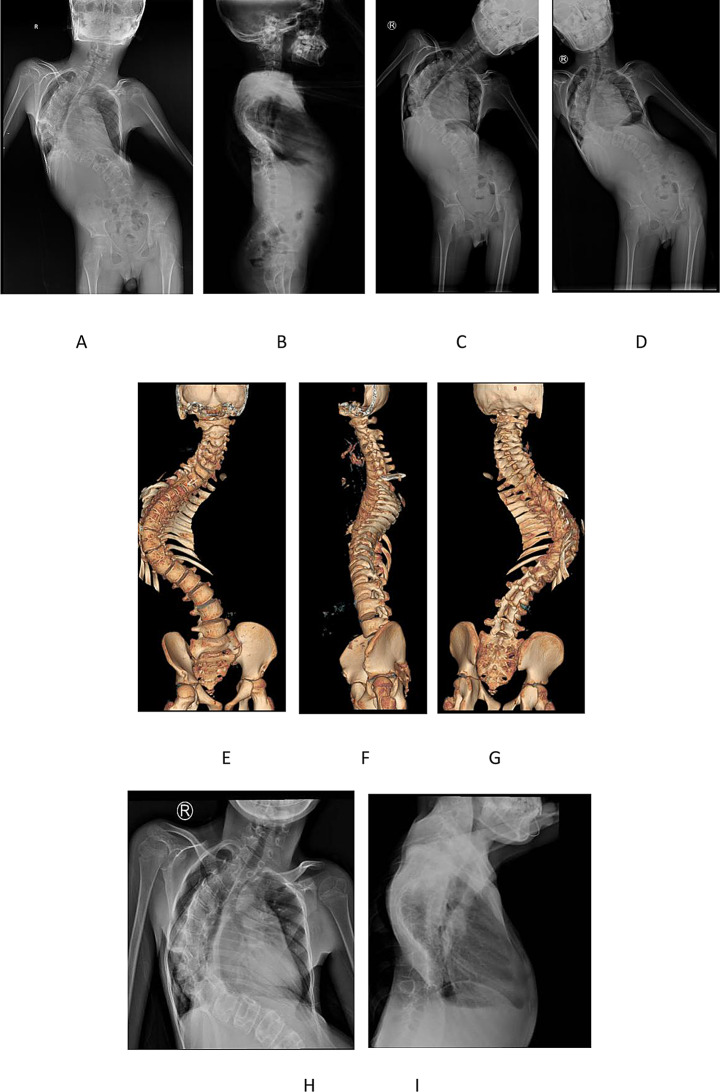 Figure 2
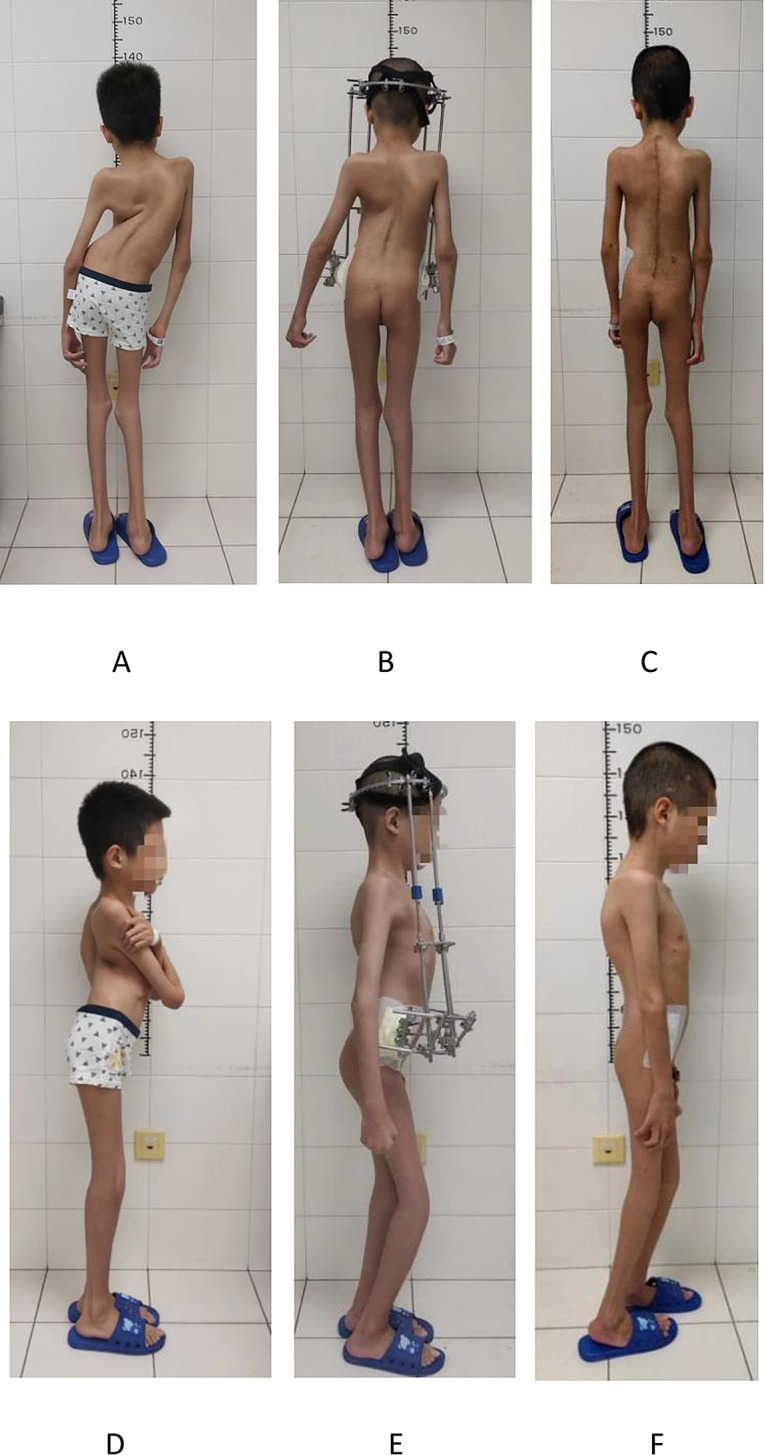 Figure 3
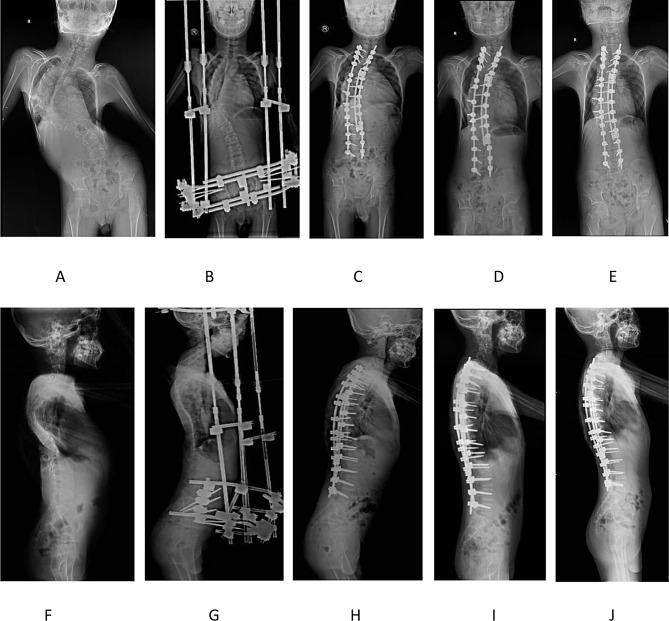 Figure 4
Peer Reviews
No public reviews on file for this paper yet. If you reviewed it on a platform where reviews are public (OpenReview, ICLR, NeurIPS, ICML), you can paste yours below so the community can read it here.
Videos
No videos yet. Explain this paper in a talk, walkthrough, or lecture? Add one.
Taxonomy
TopicsScoliosis diagnosis and treatment · Spinal Fractures and Fixation Techniques · Spinal Dysraphism and Malformations