Disease pathogenicity in Hutchinson–Gilford progeria syndrome mice: insights from lung-associated alterations
Jingjing Wang, Yuelin Guan, Yue Wang, Junyi Tan, Zhongkai Cao, Yuhan Ding, Langping Gao, Haidong Fu, Xiangjun Chen, Jianyu Lin, Ning Shen, Xudong Fu, Fangqin Wang, Jianhua Mao, Lidan Hu

TL;DR
This study explores lung changes in mice with a rare aging disease, revealing new insights into how the lungs are affected and their role in disease progression.
Contribution
The study highlights previously overlooked lung pathologies in HGPS and identifies specific molecular and histological changes.
Findings
Lung tissues showed elevated Progerin, abnormal NAD metabolism, and cellular senescence markers.
Transcriptomic analysis revealed down-regulated genes linked to extracellular space and immune response.
Lung fibrosis, inflammation, and alveolar wall thickening were observed in HGPS mouse models.
Abstract
Hutchinson–Gilford progeria syndrome (HGPS) is a rare genetic disorder characterized by accelerated aging, impaired growth, disrupted lipid metabolism, and reduced lifespan. Prior research has primarily focused on cardiovascular manifestations, our research sheds light on multiple organs that underwent significant age-related changes validated by tissue cross-sections H&E, Masson's trichrome, and β-galactosidase staining. Among these pathologies tissues, the lung was severely affected and substantiated by clinical data of pulmonary anomalies from our HGPS patients. Biochemical and histological analyses of lung tissue from the HGPS mouse model revealed elevated Progerin expression, abnormal NAD metabolism, cellular senescence markers (higher level of p16 and p27, lower level of ki67), and various age-related morphology changes, including fibrosis, inflammation, and thickening of…
Genes, proteins, chemicals, diseases, species, mutations and cell lines named across the full text — each resolved to its canonical identifier and authoritative record.
Click any figure to enlarge with its caption.
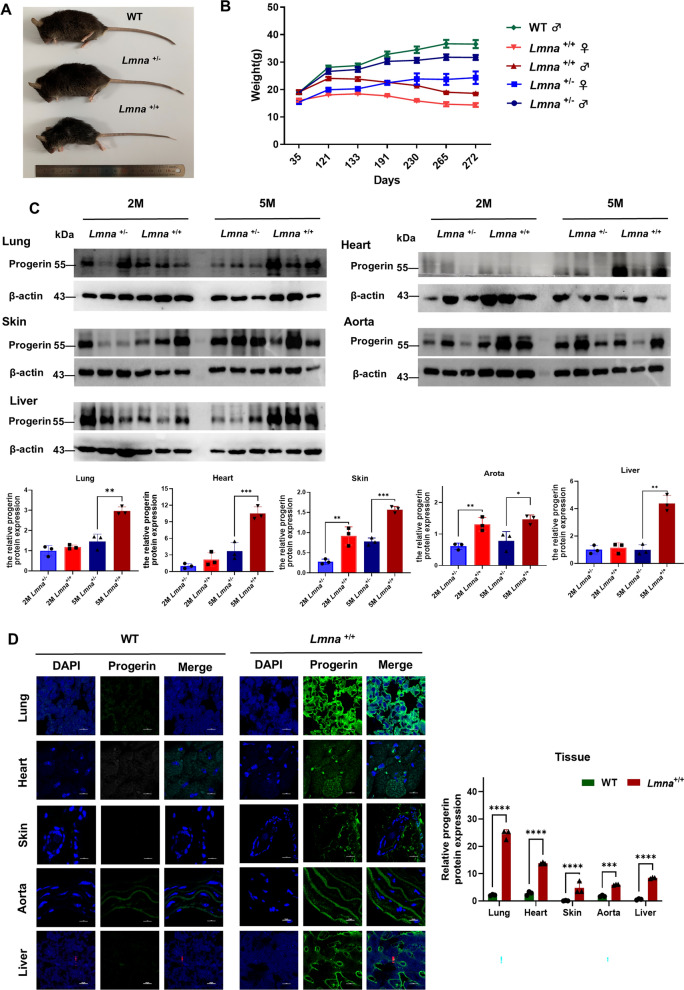 Figure 1
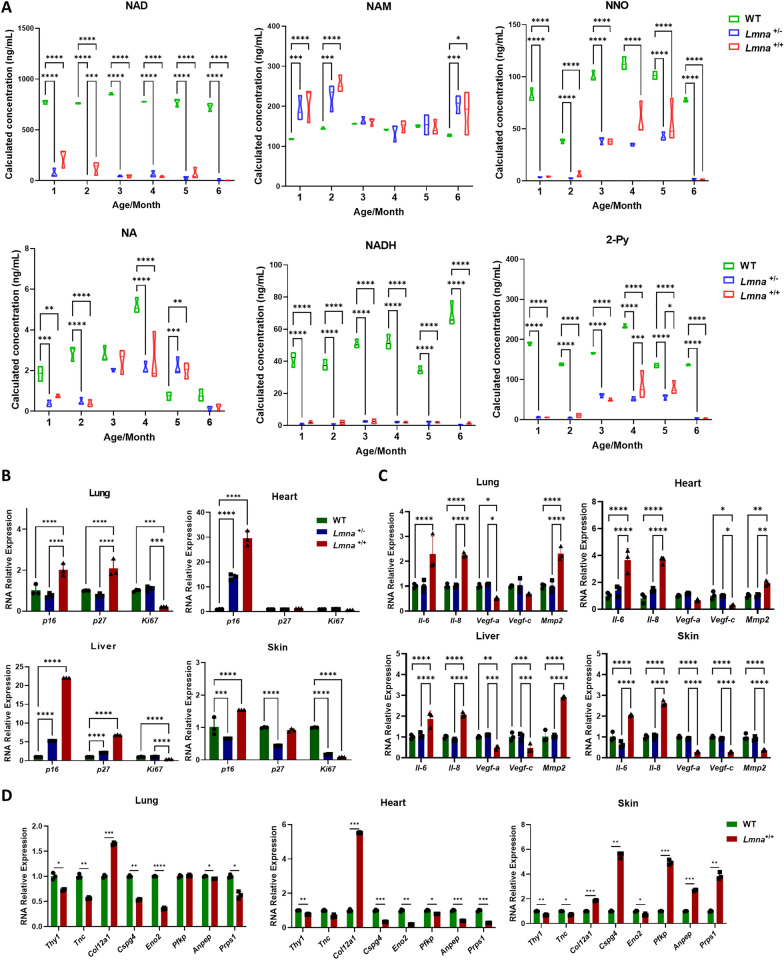 Figure 2
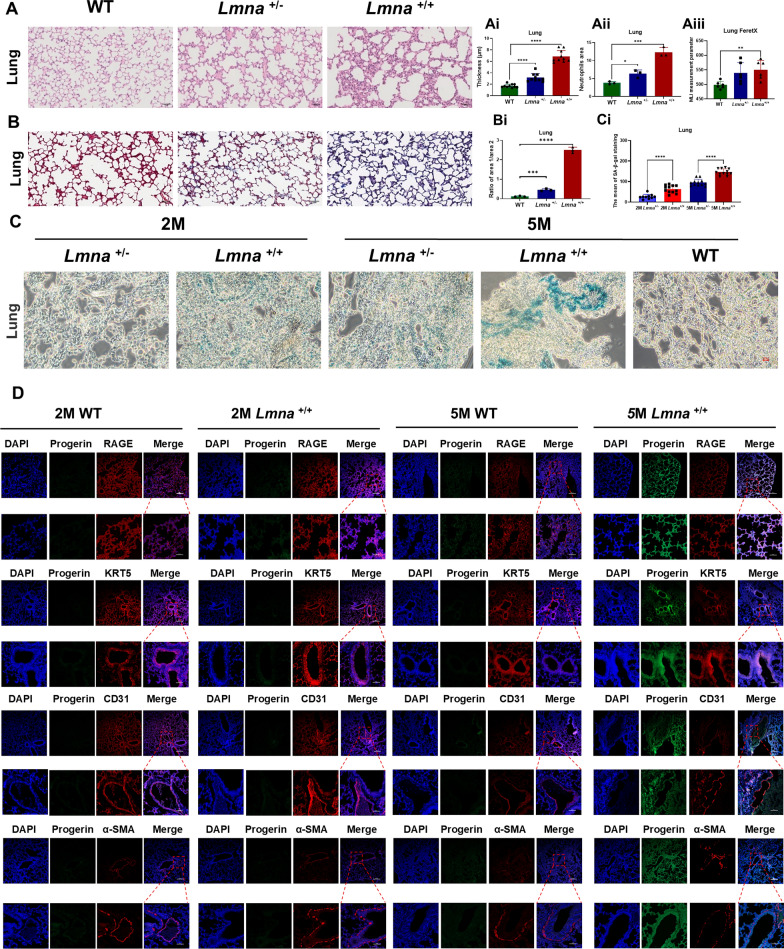 Figure 3
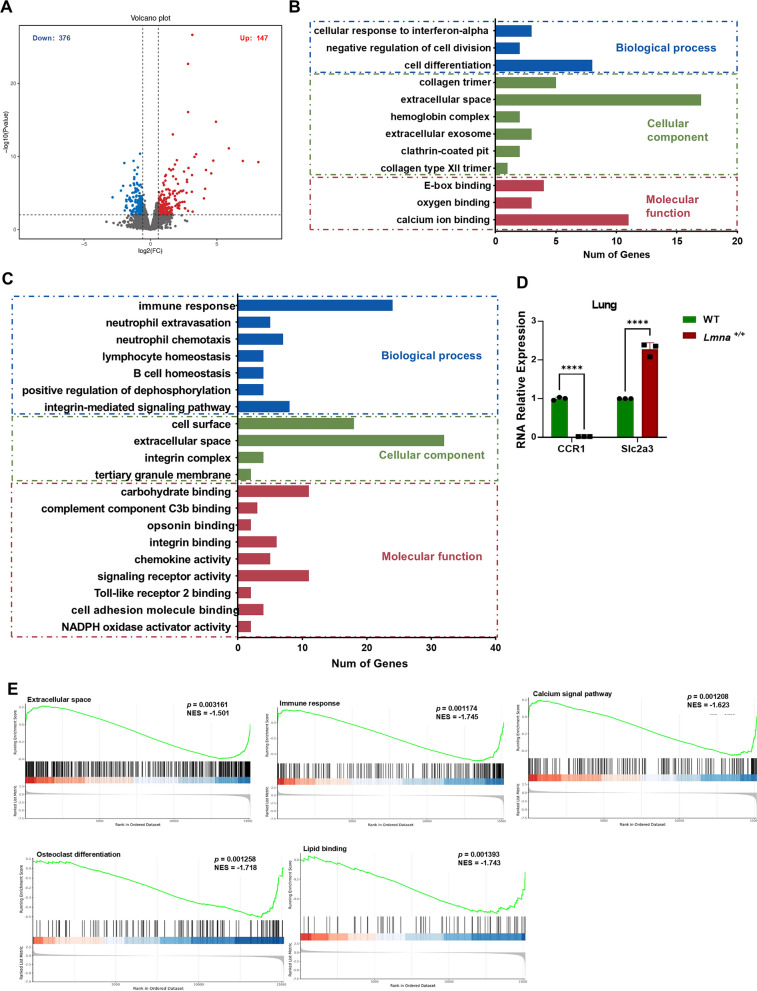 Figure 4
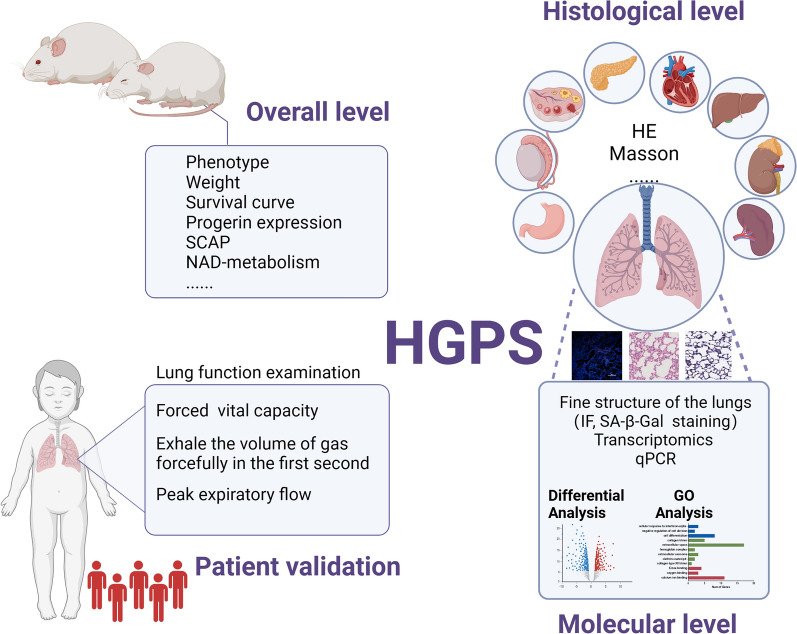 Figure 5
Peer Reviews
No public reviews on file for this paper yet. If you reviewed it on a platform where reviews are public (OpenReview, ICLR, NeurIPS, ICML), you can paste yours below so the community can read it here.
Videos
No videos yet. Explain this paper in a talk, walkthrough, or lecture? Add one.
Taxonomy
TopicsNuclear Structure and Function · RNA Research and Splicing · RNA modifications and cancer