Aurantio-obtusin improves obesity and protects hepatic inflammation by rescuing mitochondrial damage in overwhelmed brown adipose tissue
Ruiyu Wu, Runping Liu, Ranyun Chen, Yijie Li, Xiaoyong Xue, Yinhao Zhang, Fanghong Li, Jiaorong Qu, Lingling Qin, Chen Wang, Xiaojiaoyang Li

TL;DR
Aurantio-obtusin (AO) helps reduce obesity and liver inflammation by repairing mitochondrial damage in brown fat tissue and preventing harmful signals from reaching the liver.
Contribution
AO is shown to reverse mitochondrial damage in brown adipose tissue and block mtDNA transfer to the liver, offering a novel therapeutic strategy for obesity-related inflammation.
Findings
AO improves mitochondrial metabolism in brown adipose tissue and reduces hepatic inflammation in obese mice.
AO prevents mtDNA release and EV-mediated STING activation, protecting against liver inflammation.
BAT transplants from AO-treated mice protect recipient mice from hepatic inflammation.
Abstract
Obesity is frequently linked to chronic systamic inflammation and presents significant challenges to public health. Aurantio-obtusin (AO) boosted the brown adipose tissue (BAT) thermogenesis in diet-induced obesity. However, the specific mechanisms by which injured mitochondria-related damage signals derived from overwhelmed BAT can transmit to liver and exacerbate metabolic disorders and whether AO can reverse this process remain unknown. After applying high-fat diet and glucose-fructose water (HFHS)-induced obesity mice, different BAT transplant procedures and primary BAT adipocytes, we investigated the anti-obesity effects and mechanism of AO through RNA sequencing and biology techniques. AO improved whole-body lipid accumulation, mitochondrial metabolism in BAT and hepatic inflammation in HFHS-induced obesity mice. Interscapular transplant of BAT-derived from obese donor mice…
Genes, proteins, chemicals, diseases, species, mutations and cell lines named across the full text — each resolved to its canonical identifier and authoritative record.
Click any figure to enlarge with its caption.
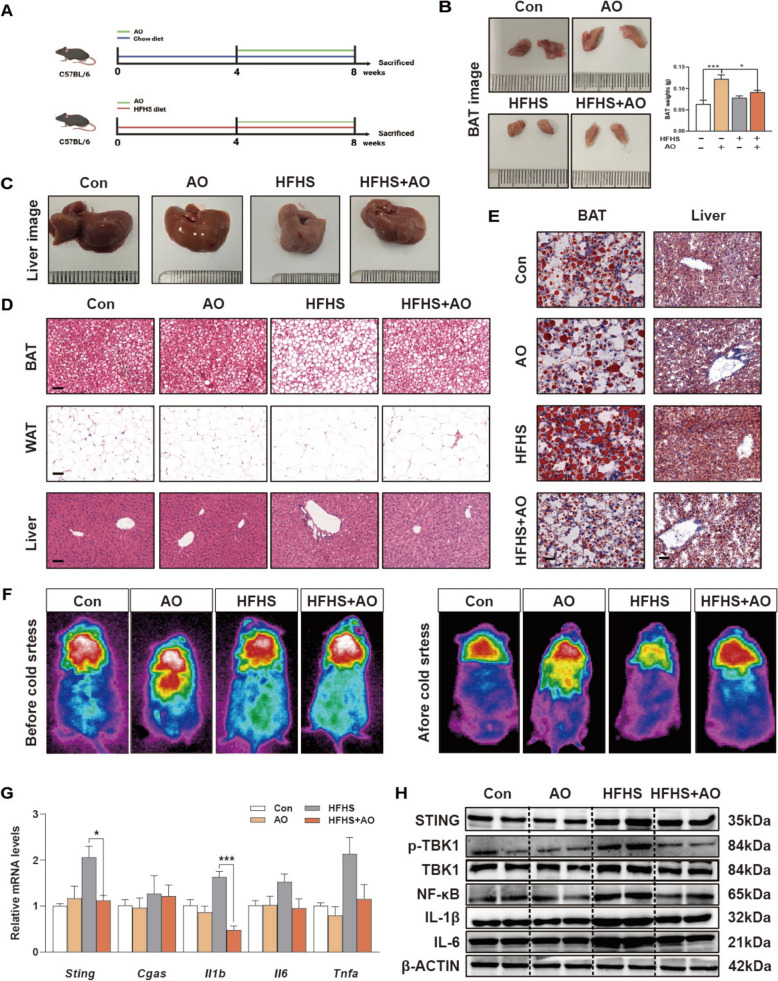 Figure 1
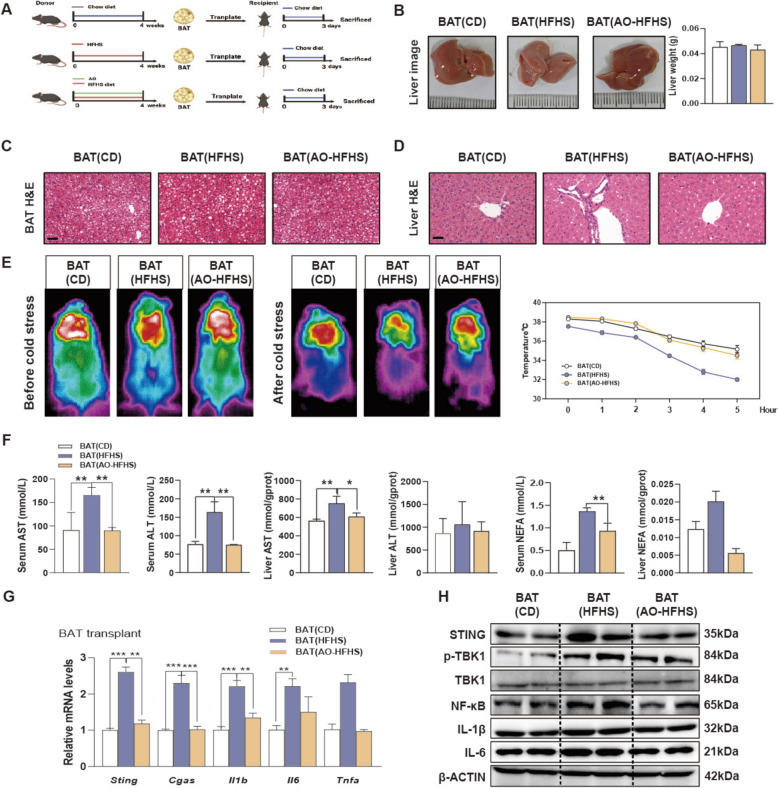 Figure 2
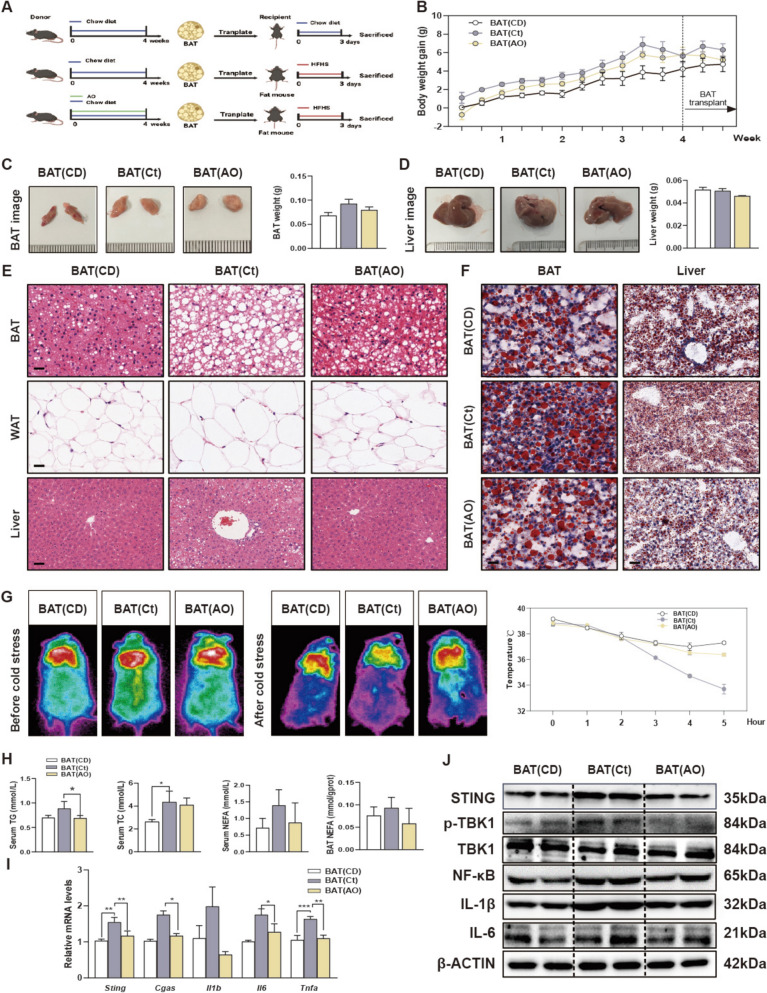 Figure 3
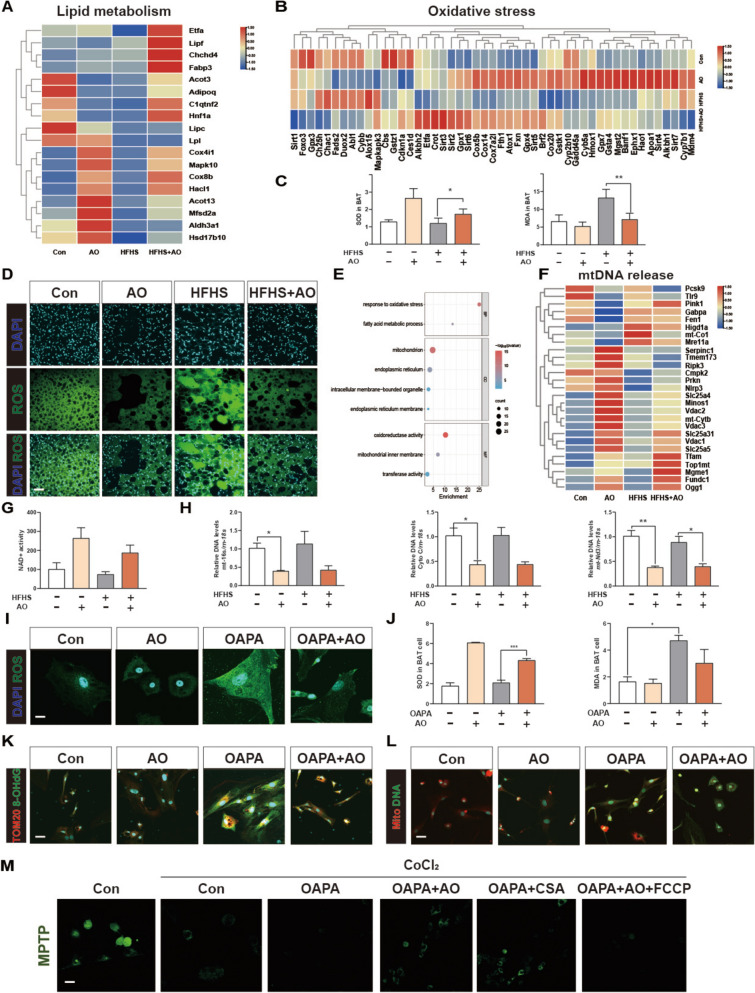 Figure 4
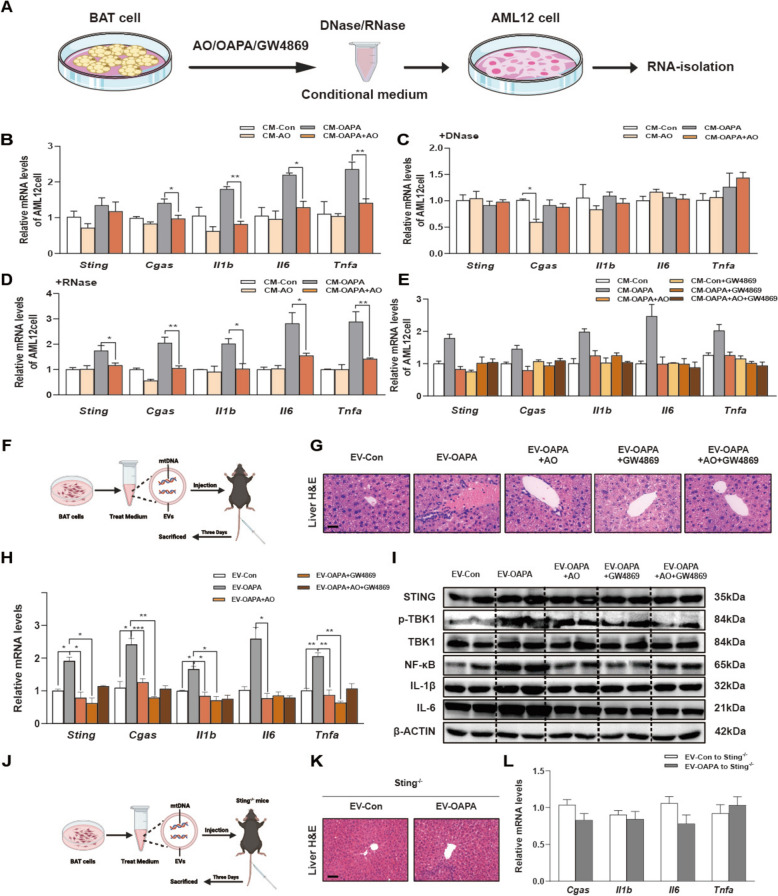 Figure 5
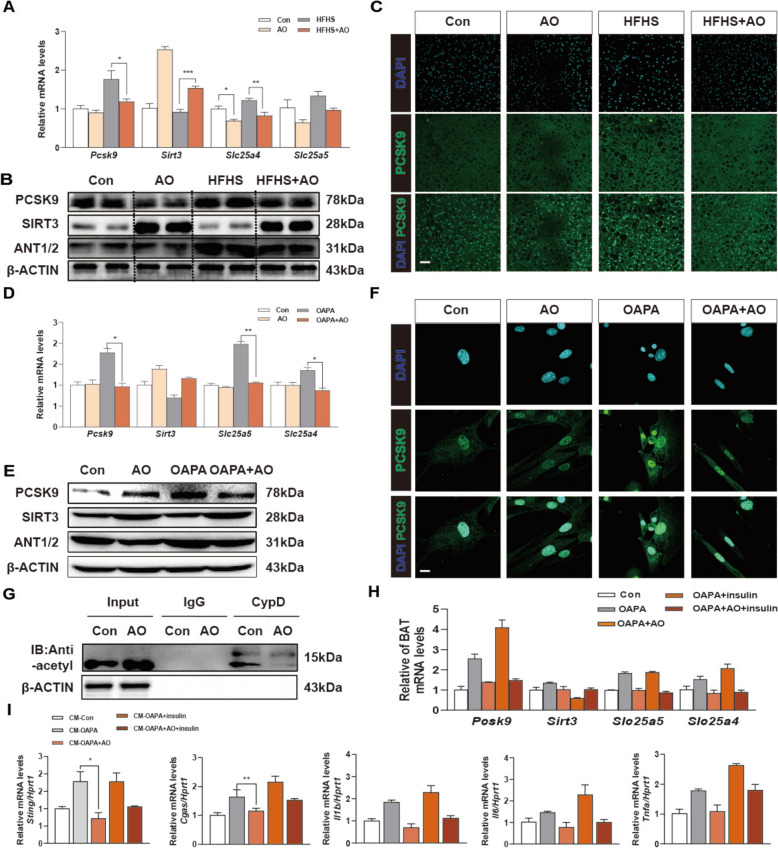 Figure 6
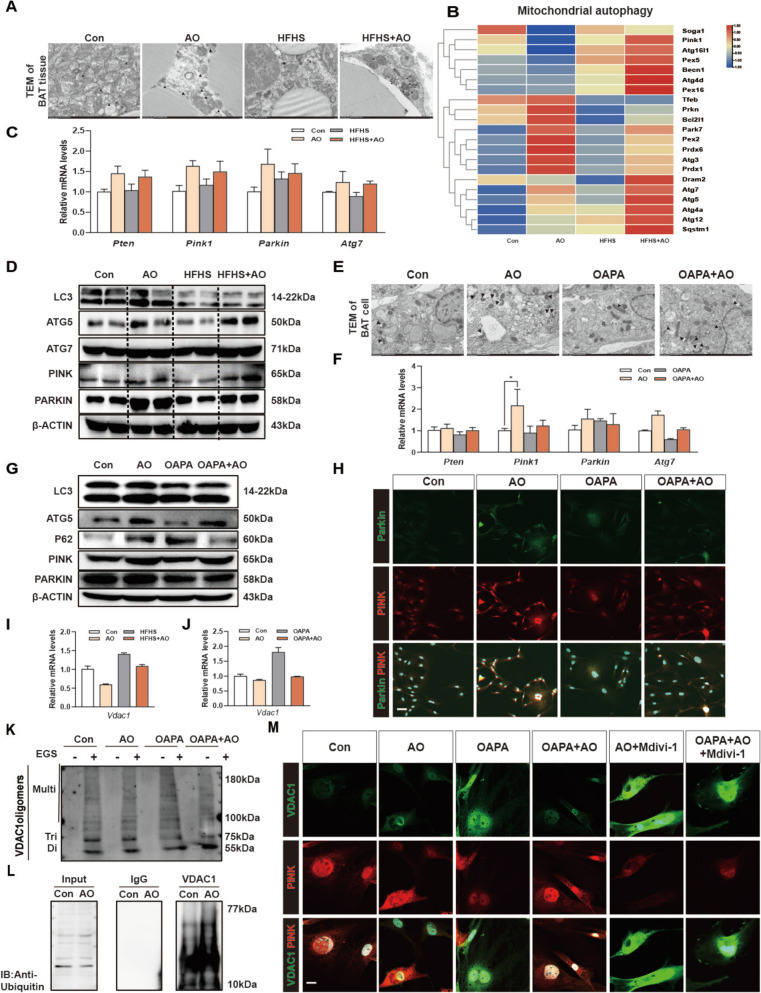 Figure 7
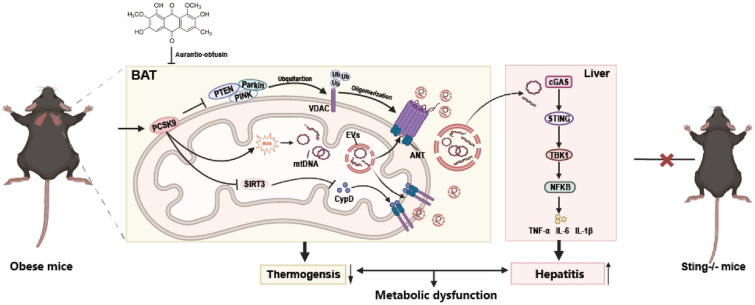 Figure 8
Peer Reviews
No public reviews on file for this paper yet. If you reviewed it on a platform where reviews are public (OpenReview, ICLR, NeurIPS, ICML), you can paste yours below so the community can read it here.
Videos
No videos yet. Explain this paper in a talk, walkthrough, or lecture? Add one.
Taxonomy
TopicsAdipose Tissue and Metabolism · Adipokines, Inflammation, and Metabolic Diseases · Sirtuins and Resveratrol in Medicine