Targets for the diagnosis of Acanthamoeba eye infections include four cyst wall proteins and the mannose-binding domain of the trophozoite mannose-binding protein
Bharath Kanakapura Sundararaj, Manish Goyal, John Samuelson

TL;DR
Researchers identified four cyst wall proteins and a specific domain in Acanthamoeba that can be used to better diagnose eye infections caused by this amoeba.
Contribution
The study introduces four cyst wall proteins and a mannose-binding domain as novel diagnostic targets for Acanthamoeba infections.
Findings
Antibodies to four cyst wall proteins (Jonah, Luke, Leo, and laccase) efficiently detect Acanthamoeba cysts in most isolates.
Antibodies to the mannose-binding domain identify trophozoites from all tested isolates.
Laccase released during encystation was detected using an enzyme-linked immunoassay.
Abstract
Acanthamoebae, which are free-living amoebae, cause corneal inflammation (keratitis) and blindness, if not quickly diagnosed and effectively treated. The walls of Acanthamoeba cysts contain cellulose and have two layers connected by conical ostioles. Cysts are identified by in vivo confocal microscopy of the eye or calcofluor-white- or Giemsa-labeling of corneal scrapings, both of which demand great expertise. Trophozoites, which use a mannose-binding protein to adhere to keratinocytes, are identified in eye cultures that delay diagnosis and treatment. We recently used structural and experimental methods to characterize cellulose-binding domains of Luke and Leo lectins, which are abundant in the inner layer and ostioles. However, no antibodies have been made to these lectins or to a Jonah lectin and a laccase, which are abundant in the outer layer. Here, confocal microscopy of rabbit…
Genes, proteins, chemicals, diseases, species, mutations and cell lines named across the full text — each resolved to its canonical identifier and authoritative record.
Click any figure to enlarge with its caption.
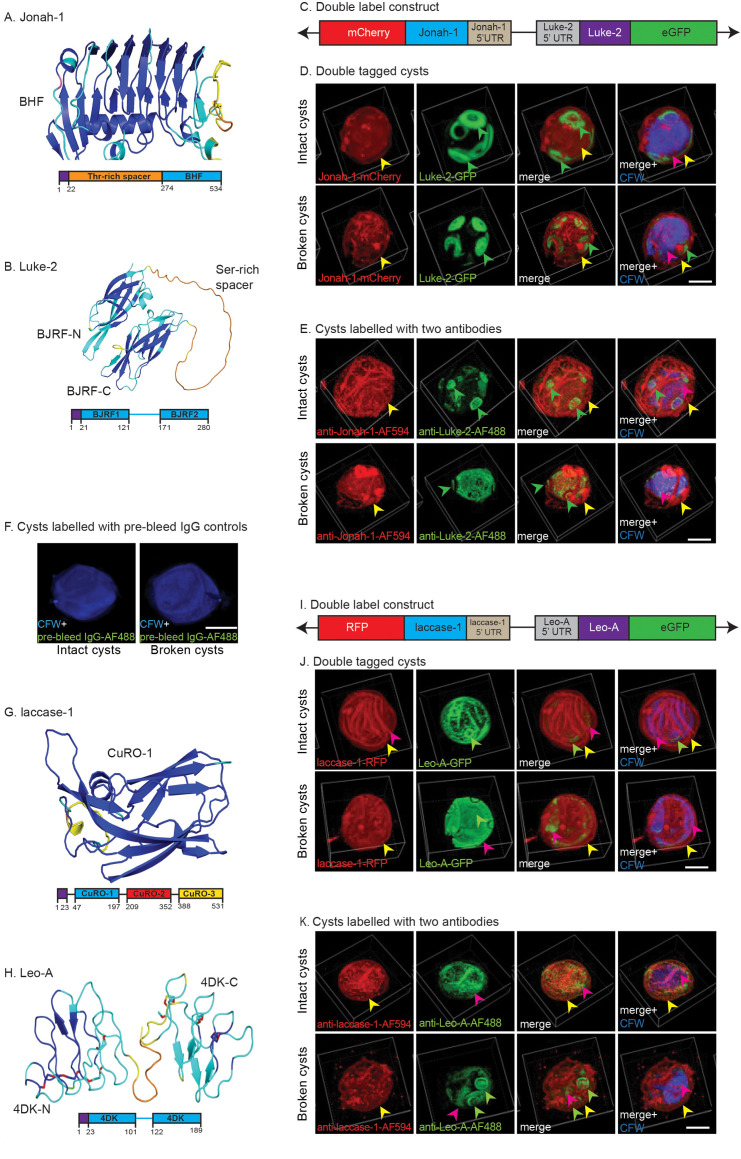 Figure 1
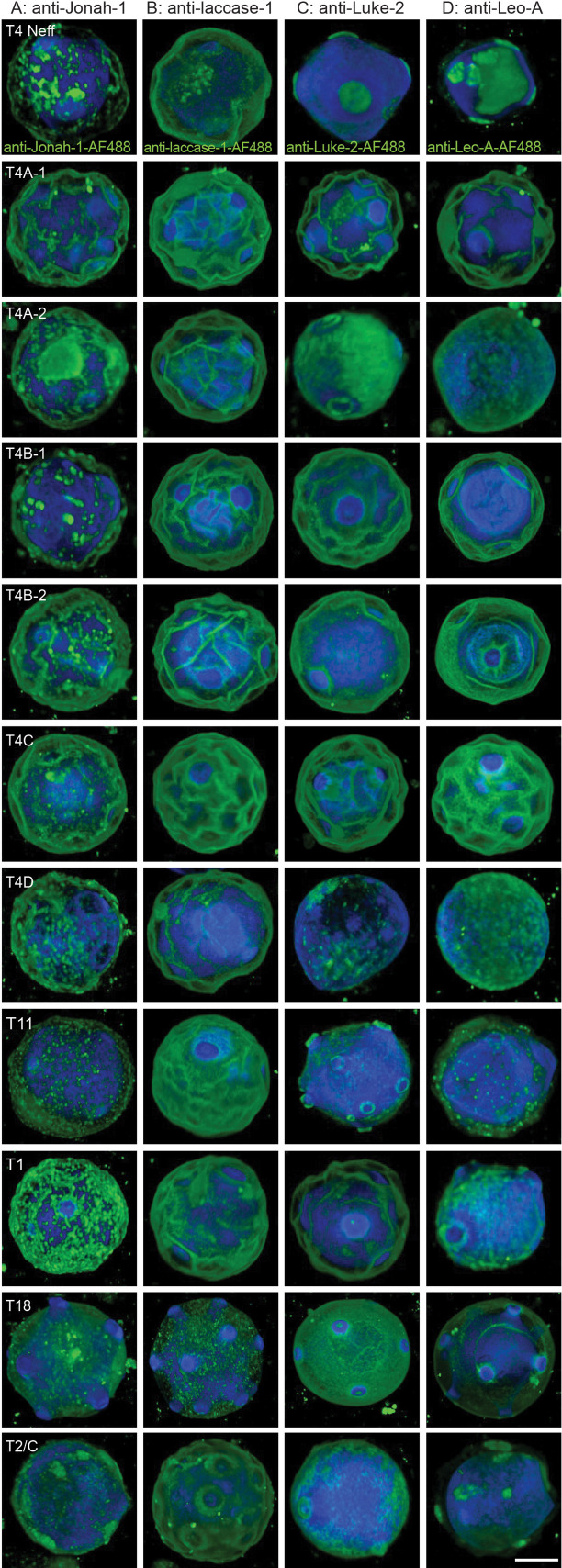 Figure 2
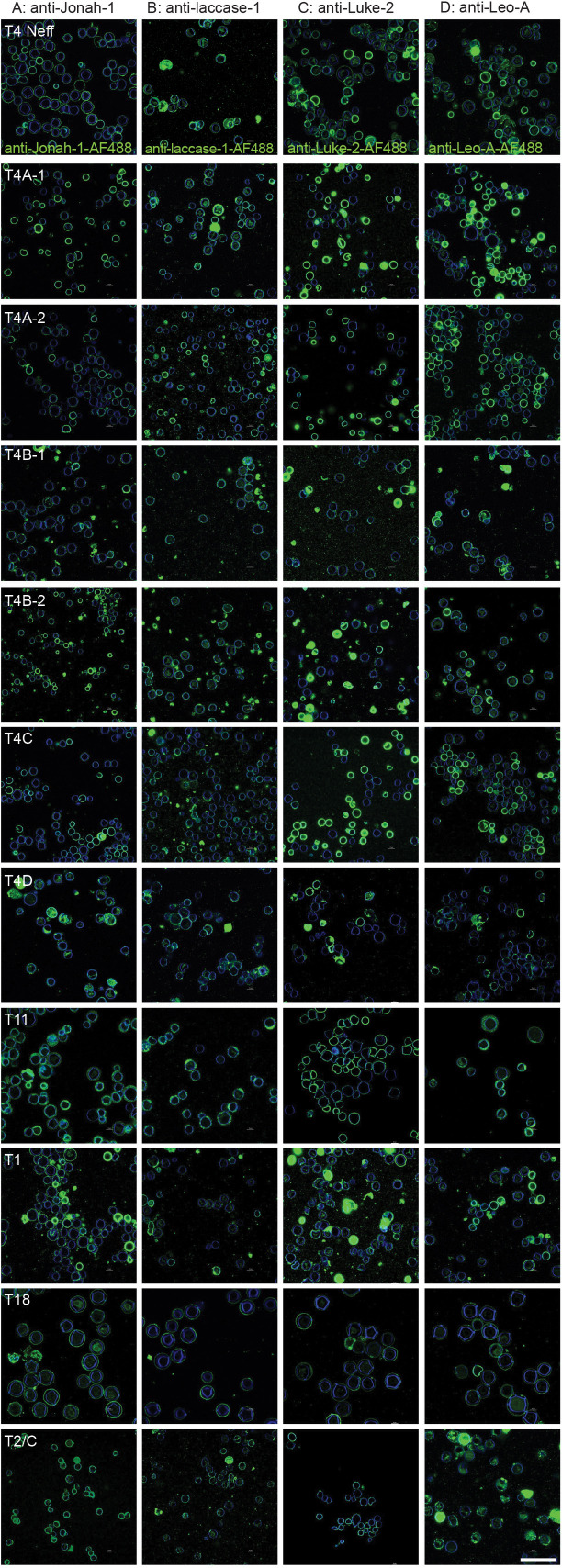 Figure 3
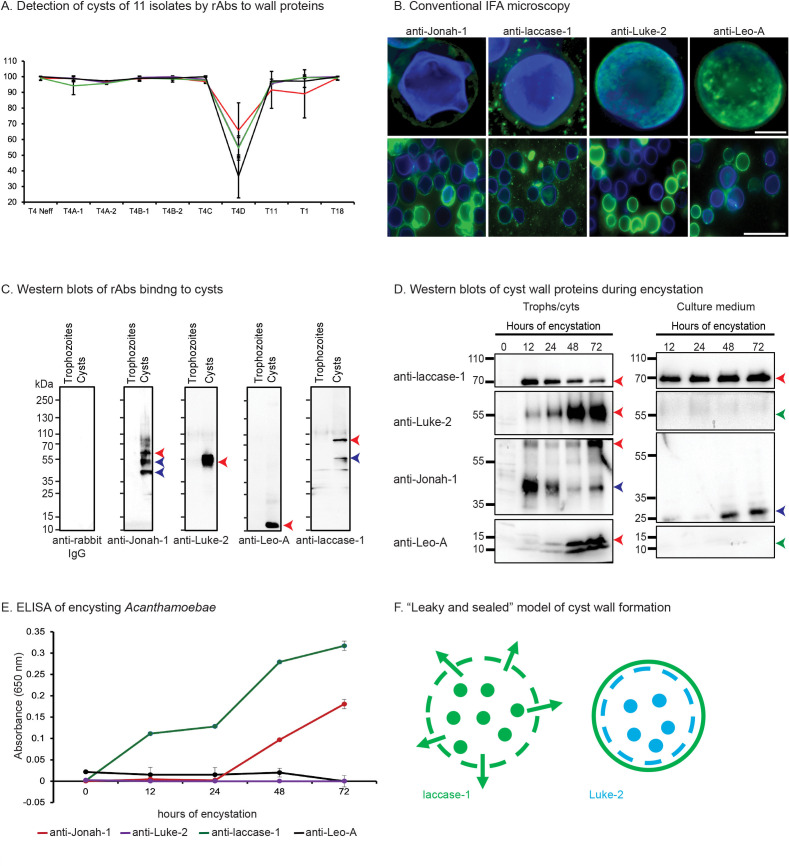 Figure 4
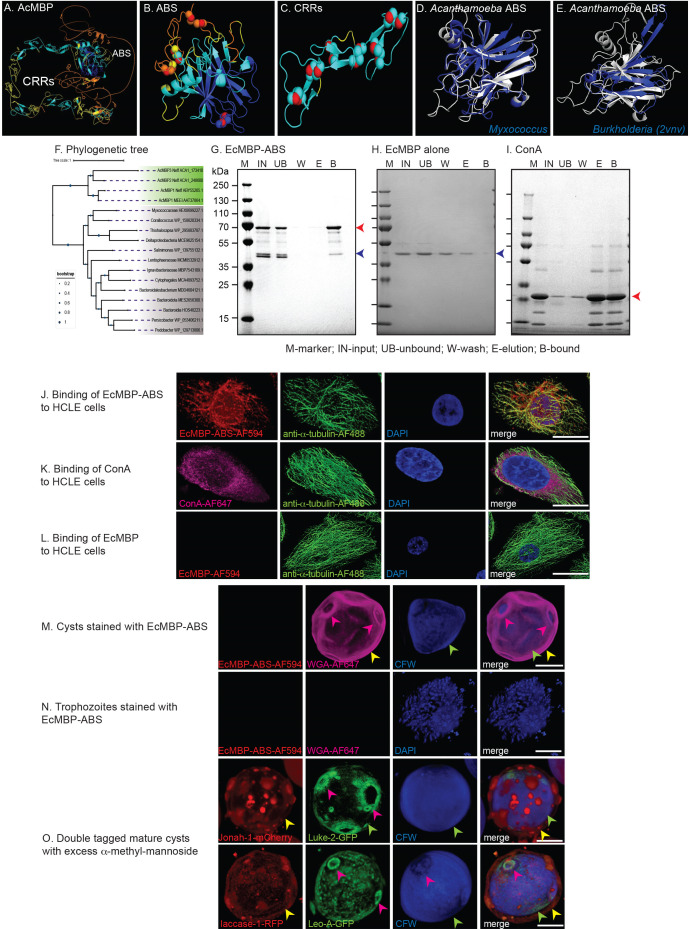 Figure 5
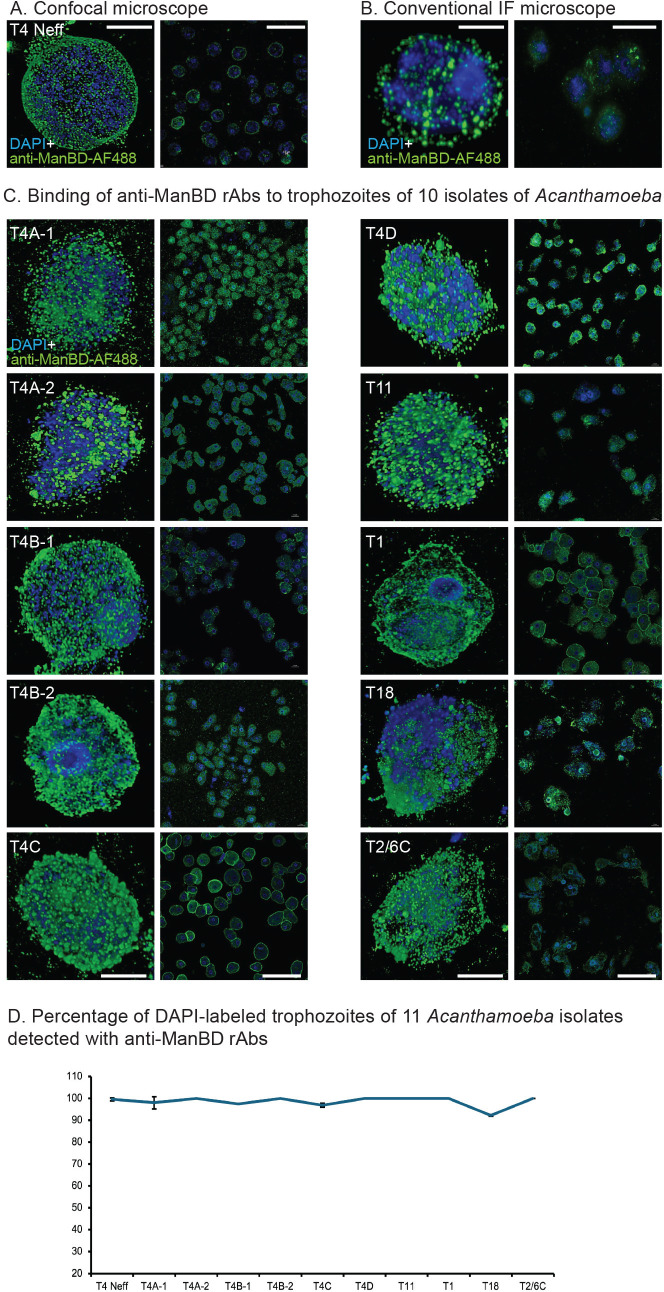 Figure 6
Peer Reviews
No public reviews on file for this paper yet. If you reviewed it on a platform where reviews are public (OpenReview, ICLR, NeurIPS, ICML), you can paste yours below so the community can read it here.
Videos
No videos yet. Explain this paper in a talk, walkthrough, or lecture? Add one.
Taxonomy
TopicsLegionella and Acanthamoeba research · Heme Oxygenase-1 and Carbon Monoxide · Vibrio bacteria research studies