Case Report: A giant ruptured splenic hydatic cyst in a patient with a complete situs inversus: Diagnostic challenge and intra-operative difficulties
Amina Chaka, Wael Boujelbène, Amin Chaabouni, Mohamed Ali Bahloul, Nizar Kardoun, Salah Boujelben, Silvio Buscemi, Wael Boujelbène, Selmy Awad, Wael Boujelbène

TL;DR
A rare case of a ruptured splenic hydatid cyst in a patient with complete situs inversus is reported, highlighting the diagnostic and surgical challenges involved.
Contribution
This case report presents a rare clinical scenario involving a complicated splenic hydatid cyst in a patient with situs inversus.
Findings
A 50-year-old patient with situs inversus had a giant ruptured splenic hydatid cyst.
Surgical intervention was complicated by the anatomical inversion and cyst rupture.
The patient recovered well post-splenectomy with appropriate treatment.
Abstract
The splenic localization of hydatid cysts is extremely rare. A 50-year-old obese female who consults with a painful and febrile syndrome of the right hypochondrium. Abdominal ultrasound and a CT scan computed tomography revealed a complete situs inversus, a mass of the right hypochondrium measuring 152 mm with membrane detachment, and infiltration of the surrounding fat, evoking a type II complicated splenic hydatic cyst. The patient was operated on in an emergency via midline laparotomy. Exploration revealed situs inversus, an angiant cyst of the spleen. Exposition of the splenic pedicle is difficult. The samples were then infected. Total splenectomy was performed. The postoperative period was unproblematic, and the patient was discharged with antibiotic and antiparasitic treatment and habitual vaccination.
Genes, proteins, chemicals, diseases, species, mutations and cell lines named across the full text — each resolved to its canonical identifier and authoritative record.
Click any figure to enlarge with its caption.
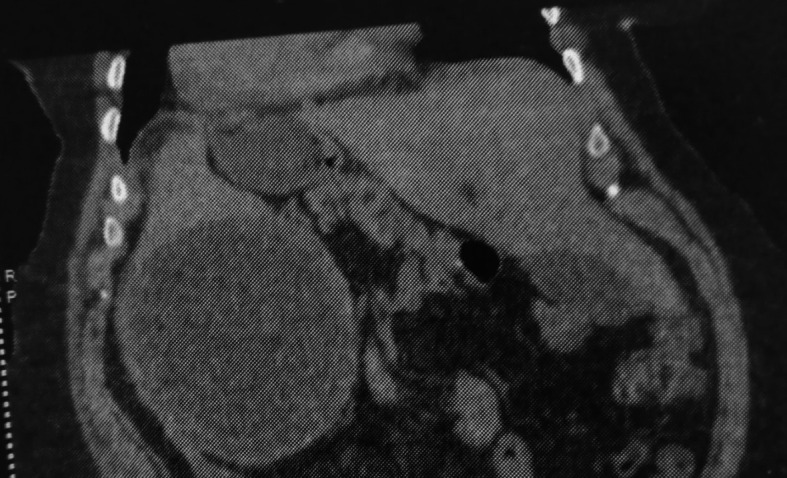 Figure 1
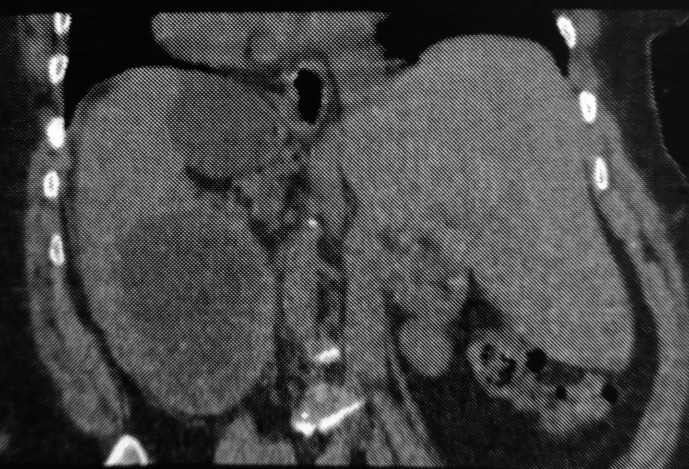 Figure 2
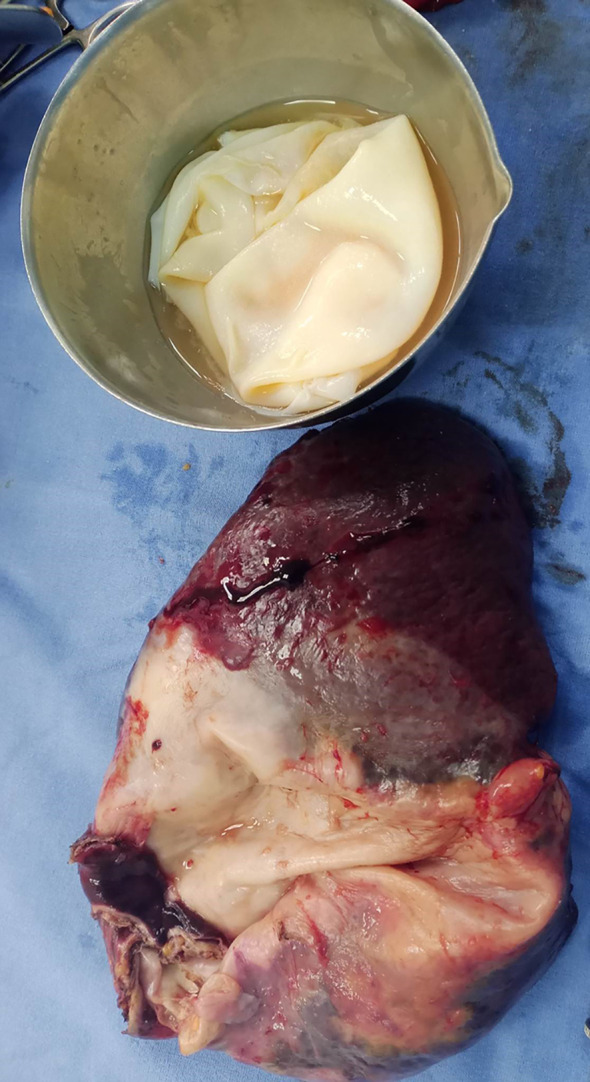 Figure 3
Peer Reviews
No public reviews on file for this paper yet. If you reviewed it on a platform where reviews are public (OpenReview, ICLR, NeurIPS, ICML), you can paste yours below so the community can read it here.
Videos
No videos yet. Explain this paper in a talk, walkthrough, or lecture? Add one.
Taxonomy
TopicsCongenital Anomalies and Fetal Surgery · Amoebic Infections and Treatments · Intestinal Malrotation and Obstruction Disorders