Rational Design of Stapled Covalent Peptide Modifiers of Oncoprotein E6 from Human Papillomavirus
Cole Emanuelson, Yuta Naro, Olivia Shade, Melinda Liu, Sagar D. Khare, Alexander Deiters

TL;DR
Scientists designed a new type of peptide that can target and modify the E6 protein from HPV, which is involved in causing cervical cancer.
Contribution
The paper introduces a new class of stapled covalent peptides that specifically target HPV-16 E6 with potential therapeutic applications.
Findings
A stapled peptide was developed to mimic E6AP's LxxLL domain and covalently label a cysteine in HPV-16 E6.
Acrylamide- and haloacetamide-based warheads showed reactivity and specificity for E6 modification.
Structure-based modeling explained warhead reactivity and staple positioning effects on binding affinity.
Abstract
Human Papillomavirus (HPV) is linked to multiple cancers, most significantly cervical cancer, for which HPV infection is associated with nearly all cases. Essential to the oncogenesis of HPV is the function of the viral protein E6 and its role in degrading the cell cycle regulator p53. Degradation of p53, and the resultant loss of cell cycle control, is mediated by E6 recruitment of the E3 ubiquitin ligase E6AP and subsequent ubiquitination of p53. Here, we report the design of a stapled peptide that mimics the LxxLL α-helical domain of E6AP to bind and covalently label a cysteine residue specific to HPV-16 E6. Several acrylamide- and haloacetamide-based warheads were evaluated for reactivity and specificity, and a panel of hydrocarbon-stapled peptides was evaluated for enhanced binding affinity and increased proteolytic stability. Structure-based modeling was used to rationalize the…
Genes, proteins, chemicals, diseases, species, mutations and cell lines named across the full text — each resolved to its canonical identifier and authoritative record.
Click any figure to enlarge with its caption.
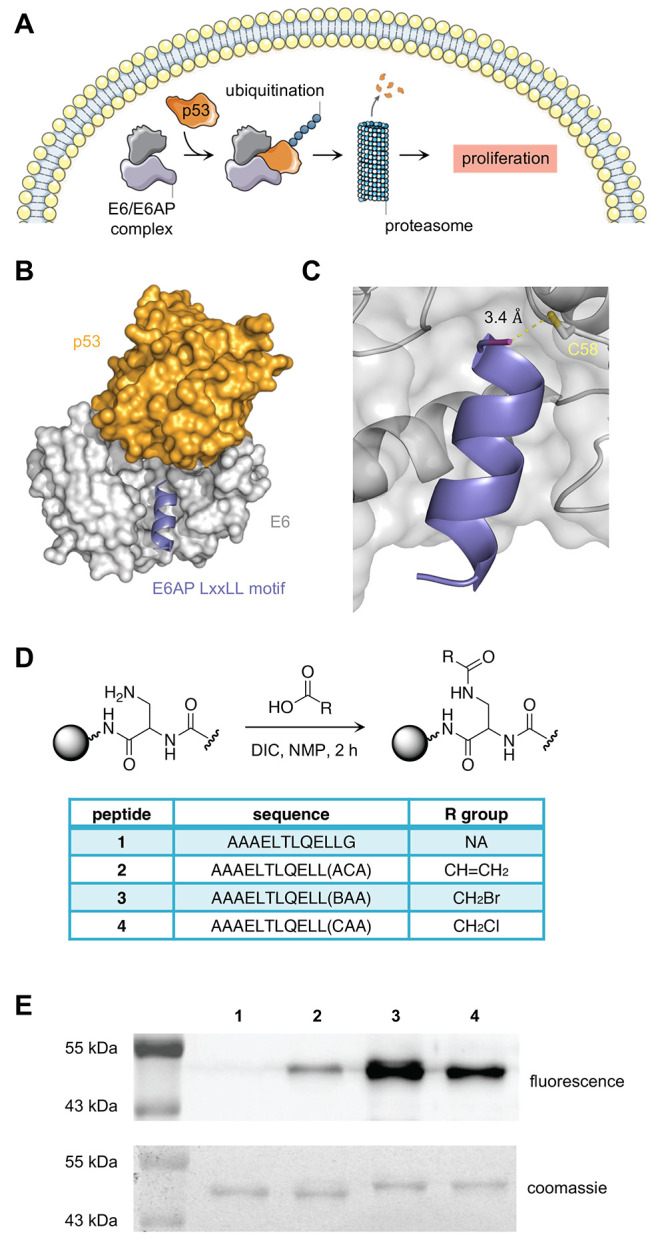 Figure 1
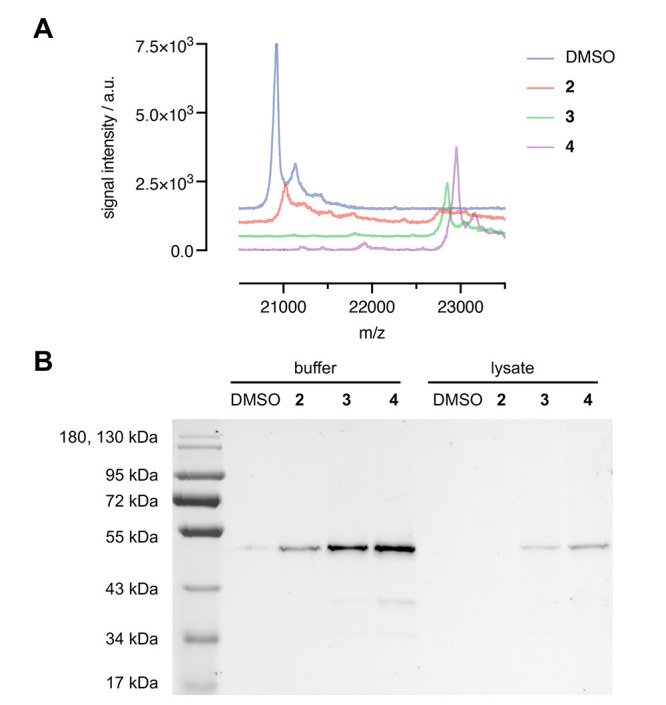 Figure 2
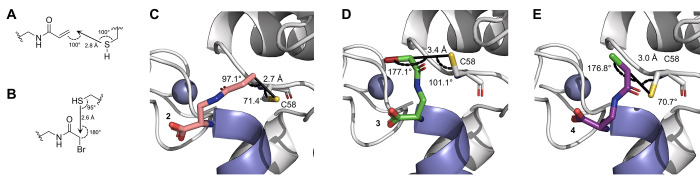 Figure 3
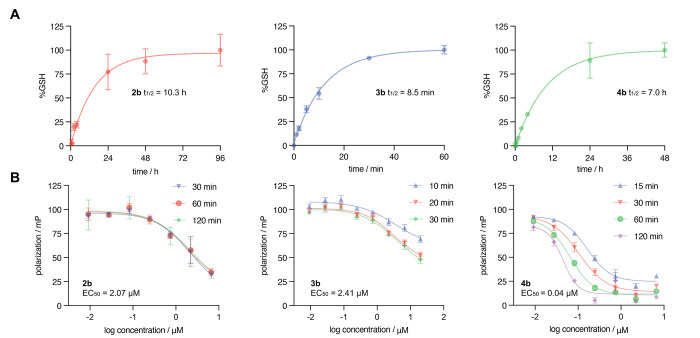 Figure 4
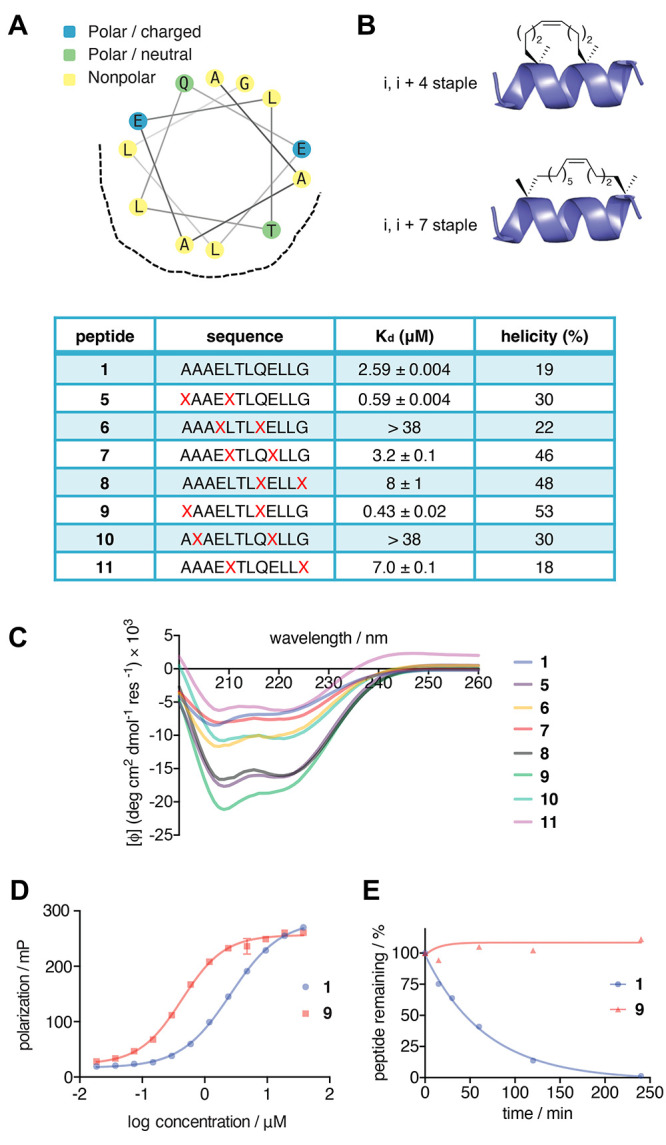 Figure 5
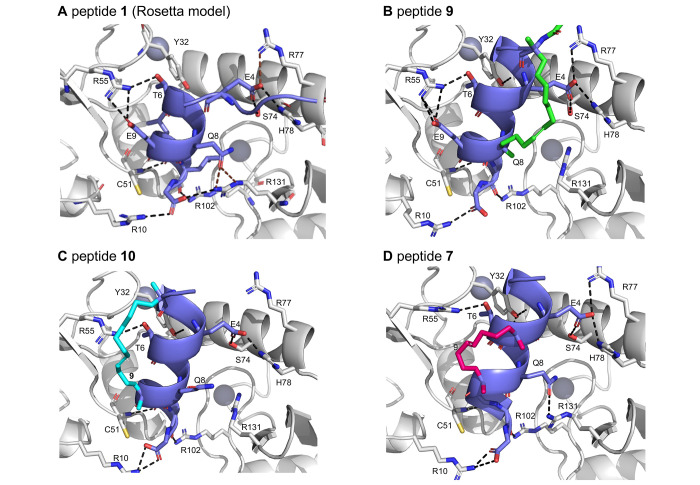 Figure 6
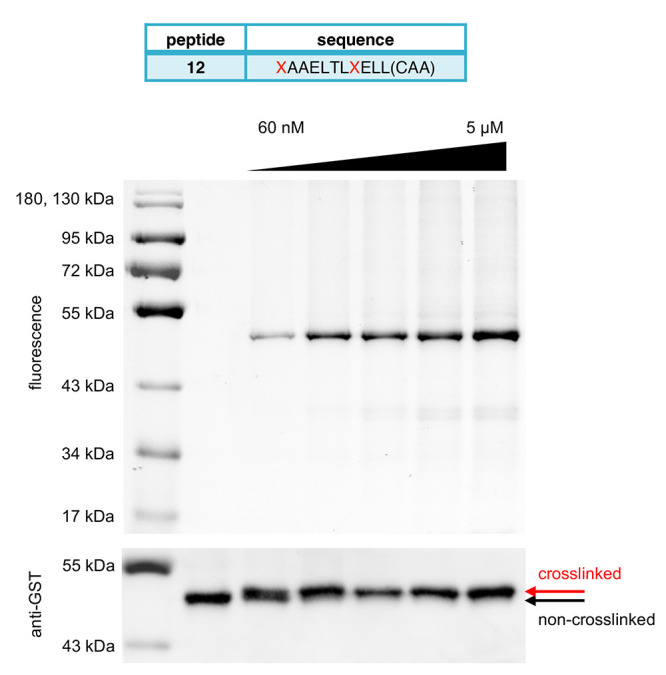 Figure 7
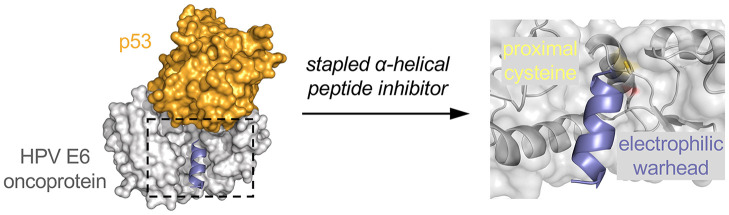 Figure 8
Peer Reviews
No public reviews on file for this paper yet. If you reviewed it on a platform where reviews are public (OpenReview, ICLR, NeurIPS, ICML), you can paste yours below so the community can read it here.
Videos
No videos yet. Explain this paper in a talk, walkthrough, or lecture? Add one.
Taxonomy
TopicsClick Chemistry and Applications · Chemical Synthesis and Analysis · Monoclonal and Polyclonal Antibodies Research