Diurnal fluctuations in the content of soluble sugars and the expression of the TAI and LIN6 invertase genes and the STP1 sugar transporter gene in the leaves of the tomato (Solanum lycopersicum L.)
M.A. Filyushin, A.V. Shchennikova, E.Z. Kochieva

TL;DR
This study examines how sugar levels and related gene expression in tomato leaves change throughout the day, revealing patterns linked to circadian rhythms and plant stress resistance.
Contribution
The paper provides new insights into the diurnal regulation of invertase and sugar transporter genes in tomato leaves and their connection to sugar content.
Findings
The content of soluble sugars and the expression of TAI, LIN6, and STP1 genes in tomato leaves follow a circadian rhythm.
TAI gene expression is highest in ripe fruits, while LIN6 and STP1 transcripts are minimal in leaves.
qRT-PCR analysis shows synchronized diurnal fluctuations in TAI, LIN6, and STP1 gene expression levels.
Abstract
The content of hexoses (fructose, glucose) essential for the fruit of the tomato (Solanum lycopersicum L.) is regulated by the joint activity of sucrose hydrolysis enzymes (including invertases), invertase inhibitors, and sugar transporters. In addition to fruit taste, soluble sugars are closely related to the stress resistance of the tomato plant. In this work, we determined the diurnal dynamics of the content of soluble sugars (sucrose, fructose and glucose) and the expression of genes for sucrose hydrolysis enzymes (vacuolar invertase TAI, cell wall invertase LIN6) and the hexose transporter (STP1) in the leaves of the tomato variety Korneevsky. It was shown that both the amount of sugars and the level of transcripts of the TAI, LIN6 and STP1 genes depend on the circadian rhythm and correspond to the biological processes occurring in the plant at different periods of the day. The…
Genes, proteins, chemicals, diseases, species, mutations and cell lines named across the full text — each resolved to its canonical identifier and authoritative record.
Click any figure to enlarge with its caption.
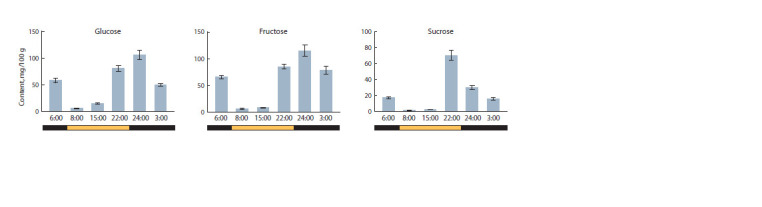 Figure 1
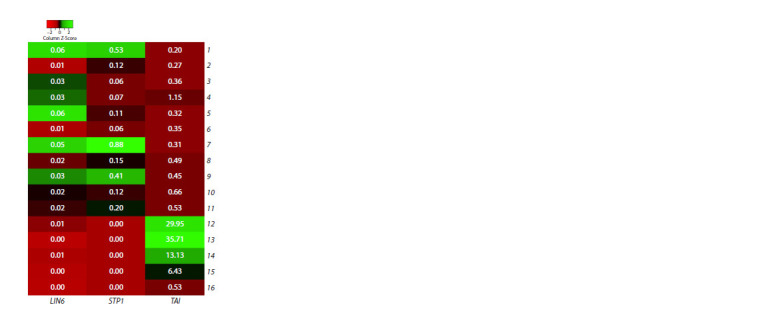 Figure 2
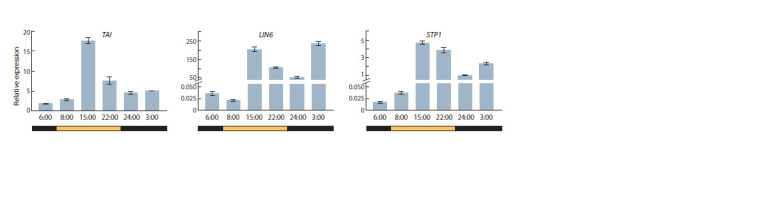 Figure 3
Peer Reviews
No public reviews on file for this paper yet. If you reviewed it on a platform where reviews are public (OpenReview, ICLR, NeurIPS, ICML), you can paste yours below so the community can read it here.
Videos
No videos yet. Explain this paper in a talk, walkthrough, or lecture? Add one.
Taxonomy
TopicsPlant nutrient uptake and metabolism · Plant Molecular Biology Research · Plant Physiology and Cultivation Studies