The lowest chromosome number in the family Pteromalidae (Hymenoptera: Chalcidoidea): the karyotype and other genetic features of Pachycrepoideus vindemmiae (Rondani, 1875)
V.E. Gokhman, A.S. Ryabinin, R.A. Bykov, Yu.Yu. Ilinsky

TL;DR
This study reveals that the parasitoid Pachycrepoideus vindemmiae has the lowest chromosome number in its family and provides insights into its genetic features.
Contribution
The study reports the lowest chromosome number in the Pteromalidae family and confirms the absence of specific endosymbiotic bacteria in a particular strain.
Findings
Pachycrepoideus vindemmiae has n = 4 and 2n = 8 chromosomes, the lowest in the Pteromalidae family.
All chromosomes in the species are metacentric with distinct size differences.
The hitman strain lacks endosymbiotic bacteria such as Arsenophonus, Cardinium, Rickettsia, Spiroplasma, and Wolbachia.
Abstract
Various genetic features of the hitman strain of the widespread parasitoid of Drosophilidae (Diptera), Pachycrepoideus vindemmiae (Rondani, 1875) (Pteromalidae, Pachyneurinae) were studied. This strain was established and is maintained at the Institute of Cytology and Genetics of the Siberian Branch of the Russian Academy of Sciences (Novosibirsk, Russia). An analysis of air-dried chromosome preparations from prepupae of this parasitoid showed that it has n = 4 and 2n = 8 in males and females, respectively, which is the lowest known chromosome number in the family Pteromalidae. All chromosomes in the karyotype of this species are metacentric. The first and second chromosomes are of similar size, the remaining ones are substantially shorter. The same results were obtained for an additional strain of this species kept at the Moscow State University (Moscow, Russia). A comparison of the…
Genes, proteins, chemicals, diseases, species, mutations and cell lines named across the full text — each resolved to its canonical identifier and authoritative record.
Click any figure to enlarge with its caption.
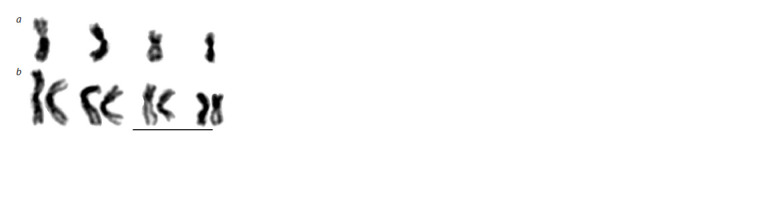 Figure 1
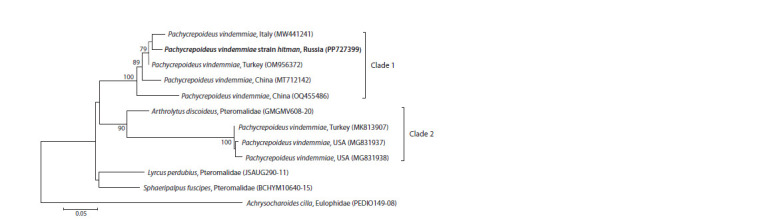 Figure 2
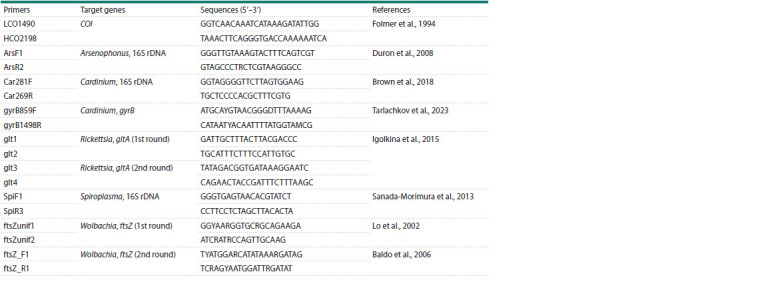 Figure 3
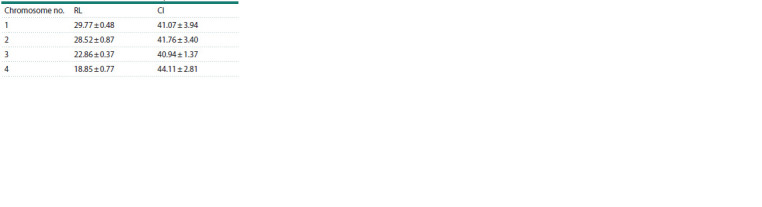 Figure 4
Peer Reviews
No public reviews on file for this paper yet. If you reviewed it on a platform where reviews are public (OpenReview, ICLR, NeurIPS, ICML), you can paste yours below so the community can read it here.
Videos
No videos yet. Explain this paper in a talk, walkthrough, or lecture? Add one.
Taxonomy
TopicsInsect symbiosis and bacterial influences · Insect-Plant Interactions and Control · Insect behavior and control techniques