Comparative analysis of haplotypes carrying pathogenic variants c.1545T>G, c.2027T>A and c.919-2A>G of the SLC26A4 gene in patients with hearing loss from the Tyva Republic (Southern Siberia)
V.Yu. Danilchenko, M.V. Zytsar, E.A. Panina, K.E. Orishchenko, O.L. Posukh

TL;DR
This study analyzes genetic variants in the SLC26A4 gene linked to hearing loss in the Tyva Republic, showing how these variants are inherited from common ancestors.
Contribution
The study identifies specific haplotypes associated with three SLC26A4 pathogenic variants in Tuvinian patients, supporting a founder effect in their prevalence.
Findings
Each pathogenic variant in SLC26A4 has a distinct haplotype background inherited from different founder ancestors.
The high prevalence of SLC26A4-related hearing loss in Tuva is attributed to a cumulative founder effect.
Genotyping data from STRs and SNPs helped reconstruct haplotypes for the analyzed pathogenic variants.
Abstract
Pathogenic variants in the SLC26A4 gene (OMIM #605646), leading to non-syndromic recessive hearing loss type 4 (DFNB4) and Pendred syndrome, significantly contribute to the etiology of hearing loss in many populations of the world. The spectrum and prevalence of different pathogenic SLC26A4 variants are characterized by wide ethnogeographical variability. A high frequency of some of them in certain regions of the world may indicate either their independent origin or be a consequence of the founder effect. The proportion of SLC26A4-associated hearing loss in Tuvinian patients (the Tyva Republic, Southern Siberia) is one of the highest in the world (28.2 %) and the vast majority of mutant SLC26A4 alleles are represented by three pathogenic variants c.919-2A>G, c.2027T>A and c.1545T>G (69.3, 17.5 and 8.0 %, respectively). Their overall carrier frequency in the Tuvinian population reaches…
Genes, proteins, chemicals, diseases, species, mutations and cell lines named across the full text — each resolved to its canonical identifier and authoritative record.
Click any figure to enlarge with its caption.
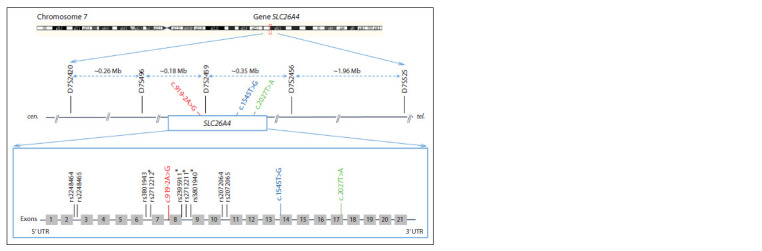 Figure 1
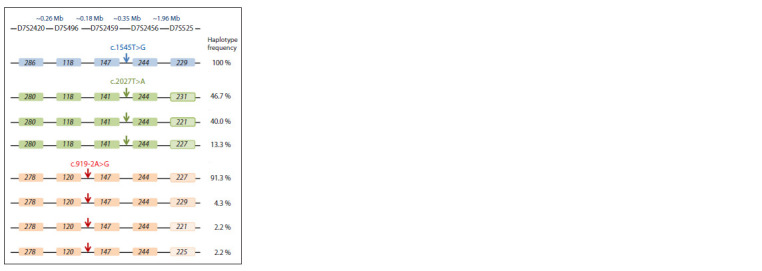 Figure 2
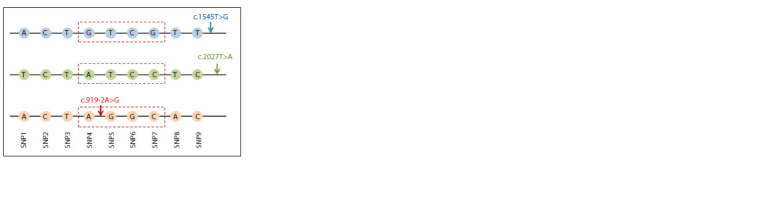 Figure 3
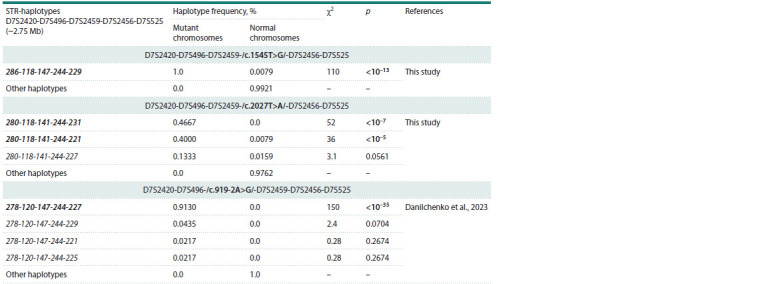 Figure 4
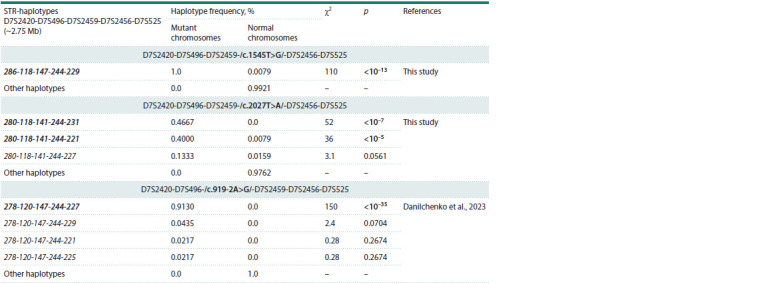 Figure 5
Peer Reviews
No public reviews on file for this paper yet. If you reviewed it on a platform where reviews are public (OpenReview, ICLR, NeurIPS, ICML), you can paste yours below so the community can read it here.
Videos
No videos yet. Explain this paper in a talk, walkthrough, or lecture? Add one.
Taxonomy
TopicsHearing, Cochlea, Tinnitus, Genetics · Connexins and lens biology · Ion channel regulation and function