Histogram analysis of continuous-time random walk and restrictive spectrum imaging for identifying hepatocellular carcinoma and intrahepatic cholangiocarcinoma
Bo Dai, Yihang Zhou, Lei Shen, Hanhan Li, Ting Fang, Jiayin Pan, Yan Wang, Wei Mao, Xiaopeng Song, Fengshan Yan, Meiyun Wang

TL;DR
This study compares advanced imaging techniques to distinguish between two types of liver cancer, finding that combining methods improves accuracy.
Contribution
The study introduces the combined use of CTRW and RSI histogram parameters for improved liver cancer subtype differentiation.
Findings
RSI's f1 40th percentile showed the highest accuracy in distinguishing cancer types.
Combining CTRW and RSI improved diagnostic performance with higher sensitivity and specificity.
Whole-lesion histogram parameters provided better insights than mean values alone.
Abstract
To compare the ability and potential additional value of various diffusion models, including continuous-time random walk (CTRW), restrictive spectrum imaging (RSI), and diffusion-weighted imaging (DWI), as well as their associated histograms, in distinguishing the pathological subtypes of liver cancer. 40 patients with liver cancer were included in this study. Histogram metrics were derived from CTRW (D, α, β), RSI (f1, f2, f3), and DWI (ADC) parameters across the entire tumor volume. Statistical analyses included the Chi-square test, independent samples t-test, Mann-Whitney U test, ROC, logistic regression, and Spearman correlation. Patients with hepatocellular carcinoma exhibited higher values in f1 median, f1 20th, f1 40th, and f1 60th compared to patients with intrahepatic cholangiocarcinoma, whereas Dmean, Dmedian, D40th, D60th, and D80th percentiles were lower (P<0.05). Among…
Genes, proteins, chemicals, diseases, species, mutations and cell lines named across the full text — each resolved to its canonical identifier and authoritative record.
Click any figure to enlarge with its caption.
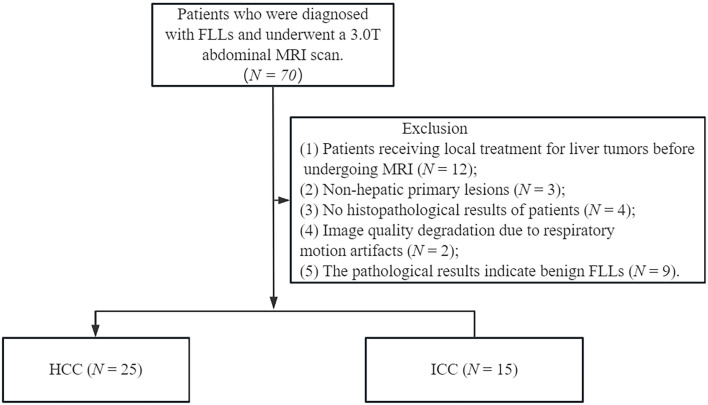 Figure 1
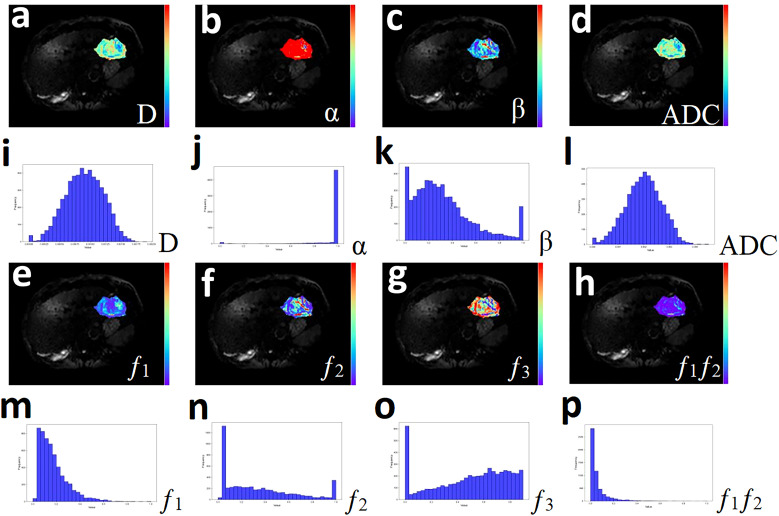 Figure 2
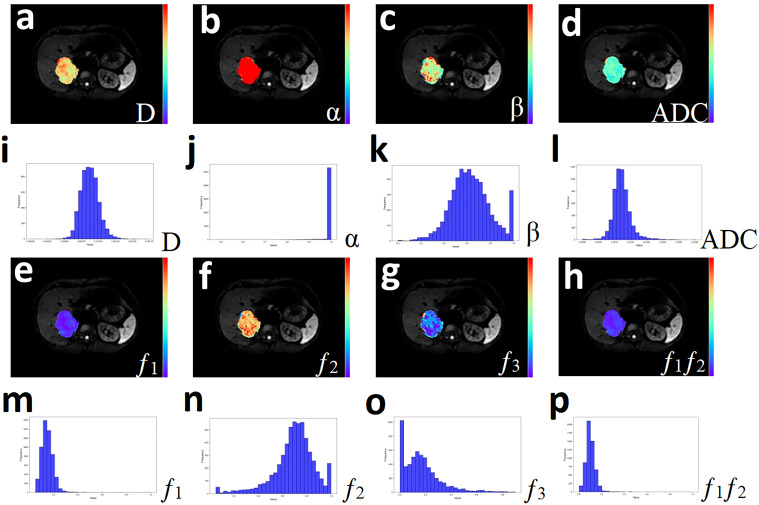 Figure 3
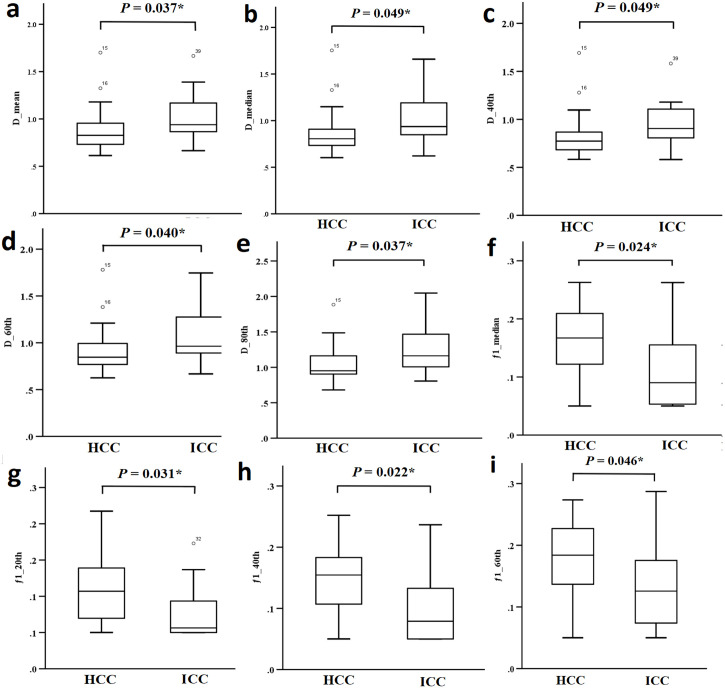 Figure 4
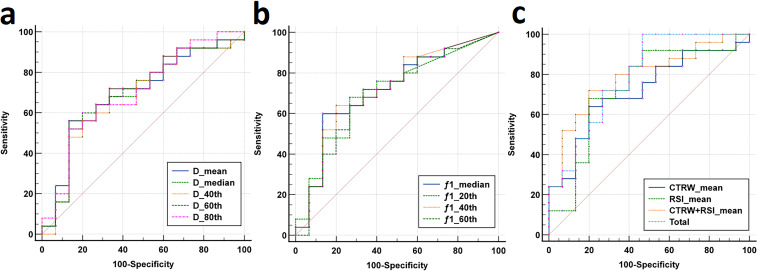 Figure 5
Peer Reviews
No public reviews on file for this paper yet. If you reviewed it on a platform where reviews are public (OpenReview, ICLR, NeurIPS, ICML), you can paste yours below so the community can read it here.
Videos
No videos yet. Explain this paper in a talk, walkthrough, or lecture? Add one.
Taxonomy
TopicsCholangiocarcinoma and Gallbladder Cancer Studies · Hepatocellular Carcinoma Treatment and Prognosis · Liver Disease Diagnosis and Treatment