Raynaud’s Phenomenon After Fasciectomy for Dupuytren’s Contracture: A Case Report
Arpita Devashetty, Alex Nicholls

TL;DR
A man developed Raynaud’s phenomenon in his finger six months after surgery for Dupuytren’s contracture, highlighting a rare delayed complication.
Contribution
This is the first reported case of Raynaud’s phenomenon following fasciectomy for Dupuytren’s contracture.
Findings
Raynaud’s phenomenon occurred six months post-fasciectomy in a nonsmoking patient with no traditional risk factors.
Conservative management with cold avoidance effectively controlled symptoms and prevented recurrence.
The case suggests a potential delayed vascular complication from fasciectomy that surgeons should be aware of.
Abstract
Open fasciectomy is a widely accepted treatment for Dupuytren’s contracture, with known complications such as vascular and nerve injury, stiffness, and recurrence. However, delayed vascular complications beyond these known risks remain largely unexplored. A 57-year-old nonsmoking man underwent open fasciectomy for Dupuytren’s contracture of the little finger. Six months postoperatively, he developed Raynaud’s phenomenon in the operated finger, characterized by cold-induced pallor that resolved with rewarming. Examination revealed sluggish circulation in the ulnar digital artery and altered sensation on the ulnar side of the digit. Conservative management with cold avoidance effectively prevented the recurrence of symptoms. This is the first reported case of Raynaud’s phenomenon following fasciectomy for Dupuytren’s contracture. Surgeons should be aware of this potential delayed…
Genes, proteins, chemicals, diseases, species, mutations and cell lines named across the full text — each resolved to its canonical identifier and authoritative record.
Click any figure to enlarge with its caption.
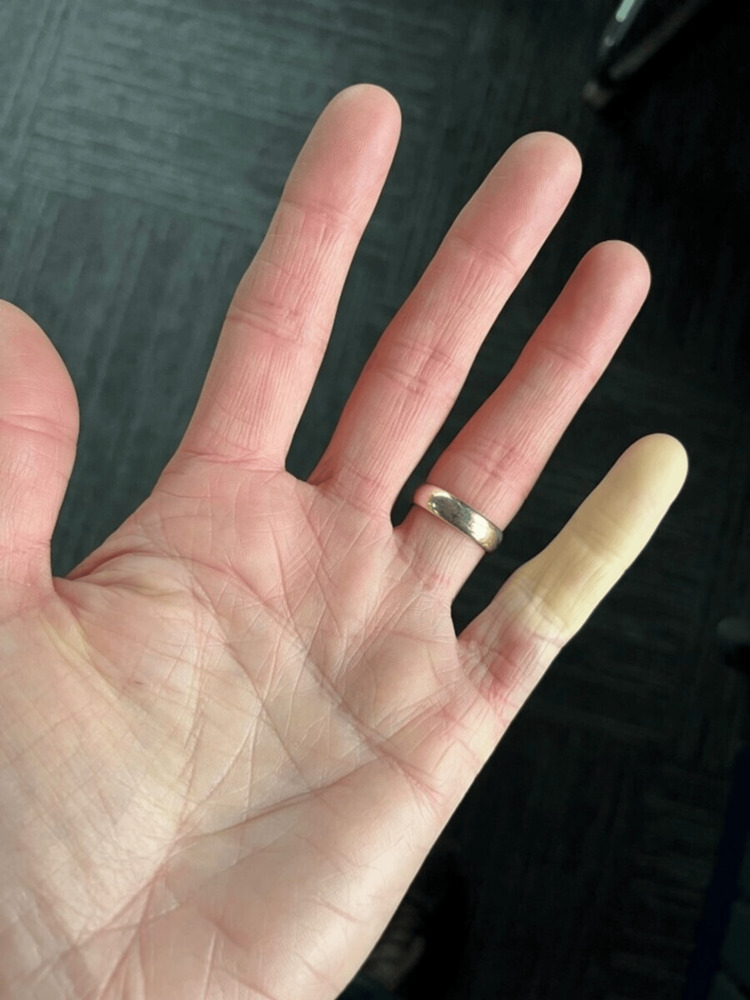 Figure 1
Peer Reviews
No public reviews on file for this paper yet. If you reviewed it on a platform where reviews are public (OpenReview, ICLR, NeurIPS, ICML), you can paste yours below so the community can read it here.
Videos
No videos yet. Explain this paper in a talk, walkthrough, or lecture? Add one.
Taxonomy
TopicsDupuytren's Contracture and Treatments · Genital Health and Disease · Chemotherapy-related skin toxicity
Introduction
Dupuytren’s disease manifests as a persistent and progressive fibroproliferative condition that affects the palmar fascia, resulting in an intractable and progressively debilitating flexion contracture of the fingers [1]. Open fasciectomy is a widely accepted and effective treatment for Dupuytren’s contracture, although it has been associated with complication rates of up to 26% [2]. Early complications include arterial or nerve injury, infection, skin necrosis, and wound dehiscence, while delayed complications may involve stiffness, recurrence, pseudoaneurysm, and inclusion cysts [3,4]. To date, no cases of Raynaud’s phenomenon following fasciectomy have been reported in the literature.
Raynaud’s phenomenon is characterized by vasospasms of the arteries in the extremities, often triggered by cold exposure [5]. It is classified into primary Raynaud’s phenomenon, which occurs without an underlying disease, and secondary Raynaud’s phenomenon, which is associated with conditions such as autoimmune diseases, vascular disorders, and repetitive hand trauma [5]. Additional risk factors include smoking, certain medications (e.g., beta-blockers and chemotherapy agents), exposure to vibrating tools, and occupational hazards leading to microvascular damage [5,6]. Research has linked Raynaud’s to repeated hand injuries, particularly those caused by occupational hazards such as the use of vibrational tools, which can lead to vascular damage over time [6]. However, it has not been described as a postoperative complication.
Case presentation
A 57-year-old Caucasian man presented with a flexion contracture in the proximal interphalangeal joint (PIPJ) of his left little finger, gradually developing over one year without prior injury. He is a nonsmoker and works as an IT professional.
Examination revealed a palpable pre-tendinous cord in the left little finger, causing a 31° contracture at the PIPJ, measured with a goniometer. There was no involvement of the metacarpophalangeal (MP) or distal interphalangeal (DIP) joints, and he retained full active flexion. Houston’s tabletop test, which assesses the severity of Dupuytren’s contracture by determining if the patient can fully flatten their hand on a flat surface, was negative. This was due to compensatory MP joint hyperextension. There were no signs of palmar disease.
The fasciectomy was performed under general anesthesia using a pneumatic arm tourniquet and loupe magnification. A Brunner zigzag incision was made, revealing a well-defined pre-tendinous cord over the proximal phalanx with discrete oblique strands extending bilaterally across the PIPJ into the flexor sheath. The cord was fully excised, preserving transverse fibers where possible. Neurovascular bundles were identified and protected throughout. The PIPJ contracture was completely corrected, and perfusion to the finger returned within 30 seconds after tourniquet release, with a capillary refill time (CRT) of less than two seconds. The skin incision was closed with simple interrupted 5-0 nylon sutures.
Six months post-surgery, the patient was satisfied with the outcome but reported that, in the past month, his left little finger became pale after prolonged cold exposure, improving with rewarming (Figure 1). Examination revealed a pink, warm finger with a CRT of under two seconds, similar to the other fingers. However, a digital Allen’s test, which assesses arterial blood flow by sequentially occluding and releasing pressure on the radial and ulnar arteries, showed sluggish circulation in the ulnar digital artery. This was accompanied by a slightly altered sensation on the ulnar side of the finger. A diagnosis of Raynaud’s phenomenon was made, and the patient was advised to avoid cold exposure, which successfully prevented recurrence.
Patient’s own photograph during an episode of cold exposure, demonstrating characteristic pallor in the little finger
Discussion
Raynaud’s phenomenon has not previously been reported as a postoperative complication. However, a case report described a similar occurrence in a 57-year-old Japanese man after a collagenase clostridium histiolyticum (CCH) injection, resulting in persistent painful, pale hands following cold exposure for two years [7]. The authors hypothesized that CCH-induced damage to the perineurium in small veins may impair cold-induced vasodilation (CIVD), potentially leading to Raynaud’s phenomenon. We propose that, in the same way, surgical trauma could also alter this vasodilatory response.
Vibration white finger (VWF), a form of secondary Raynaud’s phenomenon, typically arises from prolonged use of vibrating tools or machinery, causing repetitive trauma [6]. A previous study found an association between VWF and Dupuytren’s disease, reporting a 19.9% increase in Dupuytren’s prevalence among men aged 50-85 with VWF, suggesting a plausible etiological relationship between Dupuytren’s and Raynaud’s [6,8].
While acute vascular injury is a recognized complication of fasciectomy [2], delayed vascular problems such as Raynaud’s phenomenon have not been described. The absence of traditional risk factors, such as smoking or prior injury, in our case suggests the surgical trauma to the neurovascular bundles likely disrupted autoregulation, accentuated by reduced circulation in the ulnar digital artery, rendering the patient more susceptible to cold temperatures.
Conclusions
This is the first reported case of Raynaud’s phenomenon following fasciectomy for Dupuytren’s contracture. We propose that surgical trauma to the digital neurovascular structures may impair CIVD, predisposing patients to vasospasm. This case highlights the importance of postoperative vascular monitoring and clinician awareness of delayed complications. Surgeons should consider discussing the potential for cold-induced vascular dysfunction with patients undergoing fasciectomy, particularly those with existing vascular sensitivity. Early recognition and patient education on cold avoidance can mitigate symptoms and improve postoperative outcomes.
The reference list from the paper itself. Each links out to its DOI / PubMed record.
- 1A clinical report of the effect of mechanical stress on functional results after fasciectomy for Dupuytren's contracture J Hand Ther Evans RB Dell PC Fiolkowski P 331339152002 https://www.jhandtherapy.org/article/S 0894-1130(02)80004-7/abstract 1244934710.1016/s 0894-1130(02)80004-7 · doi ↗ · pubmed ↗
- 2The complications of Dupuytren's contracture surgery J Hand Surg Am Bulstrode NW Jemec B Smith PJ 102110253020051618206210.1016/j.jhsa.2005.05.008 · doi ↗ · pubmed ↗
- 3Results of partial fasciectomy for Dupuytren disease in 261 consecutive patients Ann Plast Surg Coert JH Nérin JP Meek MF 13175720061679930110.1097/01.sap.0000205819.53215.52 · doi ↗ · pubmed ↗
- 4Complications of the operative treatment of Dupuytren's disease Hand Clin Boyer MI Gelberman RH 161166151999 https://www.sciencedirect.com/science/article/abs/pii/S 0749071221004480?via%3Dihub 10050251 · pubmed ↗
- 5Raynaud's phenomenon-an update on diagnosis, classification and management Clin Rheumatol Pauling JD Hughes M Pope JE 331733303820193142081510.1007/s 10067-019-04745-5 · doi ↗ · pubmed ↗
- 6Vibration white finger and Dupuytren's contracture: are they related?Occup Med Thomas PR Clarke D 15515842199210.1093/occmed/42.3.1551345125 · doi ↗ · pubmed ↗
- 7Vascular complication after collagenase injection and manipulation for Dupuytren's contracture: a case report JMA J Kawano Y Hagiwara T Tanaka N 196199220193361503210.31662/jmaj.2018-0063 PMC 7889785 · doi ↗ · pubmed ↗
- 8Dupuytren's disease and exposure to vibration: systematic review and meta-analysis Joint Bone Spine Mathieu S Naughton G Descatha A Soubrier M Dutheil F 2032078720203206174010.1016/j.jbspin.2020.02.001 · doi ↗ · pubmed ↗