Exploring GVS as a display modality: cutaneous sensations and cue association maintenance
David R. Temple, Lanna N. Klausing, Brady C. Hogoboom, Abhishek Datta, Torin K. Clark

TL;DR
This study explores how Galvanic Vestibular Stimulation (GVS) can be used as a display modality by investigating how people perceive and remember different GVS cues.
Contribution
The study provides new evidence that GVS cues are primarily perceived through vestibular sensations and can be associated with responses for at least three hours.
Findings
Topical anesthetic did not affect frequency and amplitude modulated GVS thresholds, but affected polarity modulated thresholds.
Subjects could distinguish six different GVS cues and maintain their associations for three hours.
Results support the viability of GVS as a display modality due to robust cue perception and memory.
Abstract
Recent studies have investigated the potential use of Galvanic Vestibular Stimulation (GVS) as an alternative display modality. Such a GVS display could allow for parallel processing of information under increasing demands on other modalities (e.g., visual, auditory, or tactile), and perhaps be preferrable to other displays in certain circumstances (e.g., covert night operations). Prior studies quantified how precisely humans distinguish GVS cues modulated in the frequency, amplitude, or polarity of the sinusoidal burst of current, found cues to be robust to various environments, and have limited degradations in maintaining posture. Questions still arise though as to: (1) whether those receiving GVS cues respond primarily to vestibular or potentially cutaneous sensations, and (2) if multiple cues can be associated with different responses and if that capability can be maintained, which…
Genes, proteins, chemicals, diseases, species, mutations and cell lines named across the full text — each resolved to its canonical identifier and authoritative record.
Click any figure to enlarge with its caption.
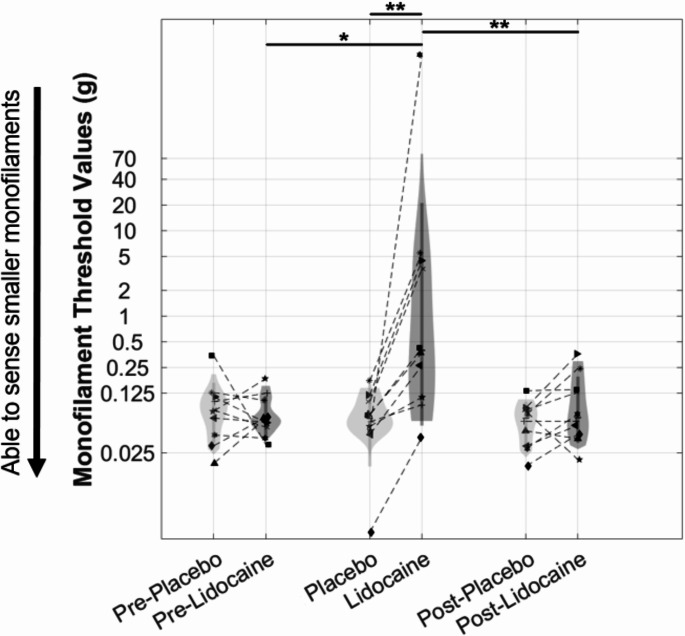 Figure 1
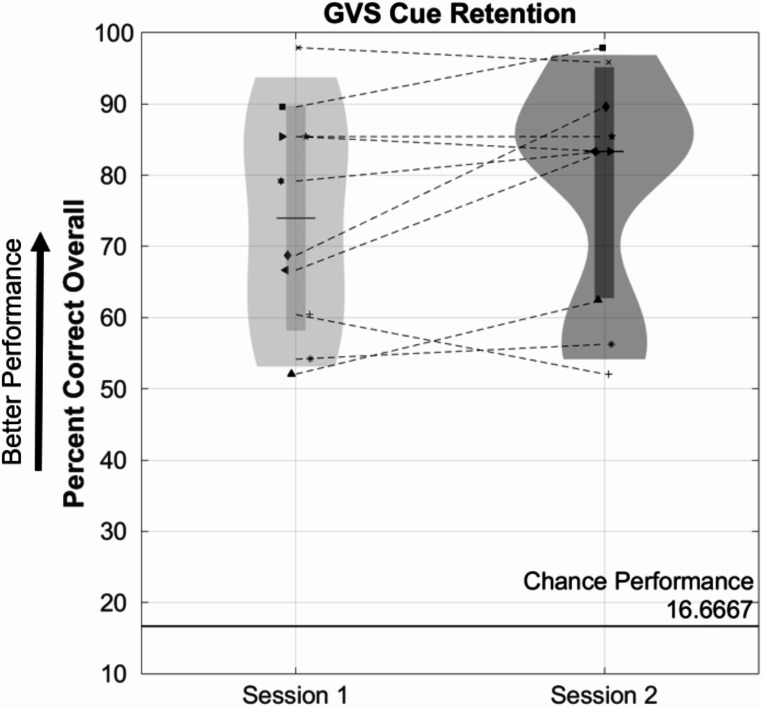 Figure 2
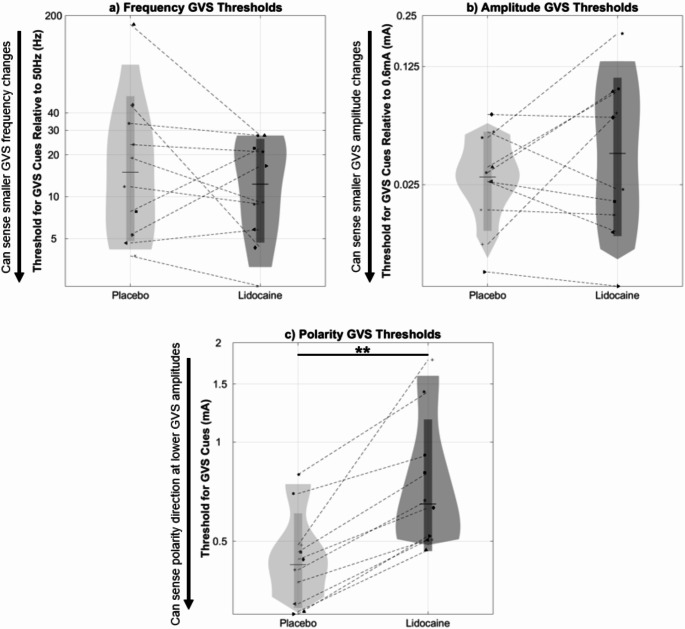 Figure 3
Peer Reviews
No public reviews on file for this paper yet. If you reviewed it on a platform where reviews are public (OpenReview, ICLR, NeurIPS, ICML), you can paste yours below so the community can read it here.
Videos
No videos yet. Explain this paper in a talk, walkthrough, or lecture? Add one.
Taxonomy
TopicsTactile and Sensory Interactions · Visual perception and processing mechanisms · Vestibular and auditory disorders