Pseudohypoparathyroidism: Challenges in Early Recognition and Diagnosis of a Rare Hereditary Disorder
Joana Glória, Mariana Soares, Marta P Soares, Carla Pereira, Maria de Lurdes Sampaio

TL;DR
This paper discusses the challenges in diagnosing pseudohypoparathyroidism, a rare genetic disorder, and highlights the importance of genetic testing for early and accurate identification.
Contribution
The paper presents a case where genetic testing led to the correct diagnosis of PHP1A in an infant initially misdiagnosed with congenital hypothyroidism.
Findings
A maternally inherited GNAS variant was identified through whole exome sequencing in a patient with syndromic features.
PHP1A was confirmed at age five with biochemical evidence of hypocalcemia, hyperphosphatemia, and elevated PTH.
Early genetic testing and multidisciplinary care are crucial for accurate diagnosis and improved outcomes in PHP.
Abstract
Pseudohypoparathyroidism (PHP) is an uncommon endocrine condition marked by an impaired response to parathyroid hormone (PTH), which results in biochemical abnormalities. Clinical manifestations can vary significantly, occasionally resembling other endocrine disorders. Genetic testing plays a critical role in distinguishing PHP from other conditions, as it enables precise diagnosis even when classical features are not initially present. We report the case of a male infant initially diagnosed with congenital hypothyroidism (CH) through neonatal screening and treated with levothyroxine. While growing up, the patient developed syndromic features, including facial dysmorphisms, global developmental delay, behavioural issues, and early-onset obesity. Whole exome sequencing (WES), prompted by the complex phenotype, identified a maternally inherited GNAS variant. This led to the suspicion of…
Genes, proteins, chemicals, diseases, species, mutations and cell lines named across the full text — each resolved to its canonical identifier and authoritative record.
Click any figure to enlarge with its caption.
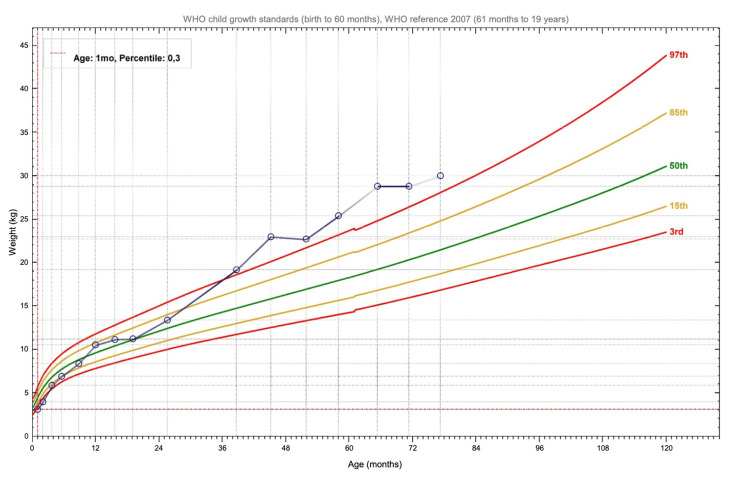 Figure 1
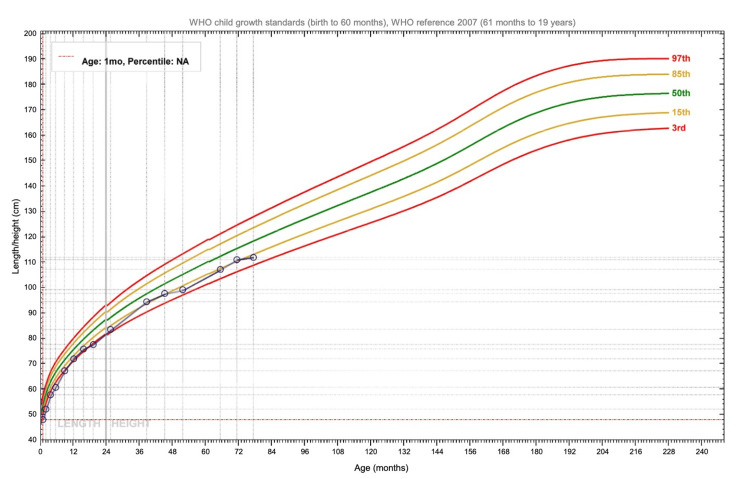 Figure 2
 Figure 3
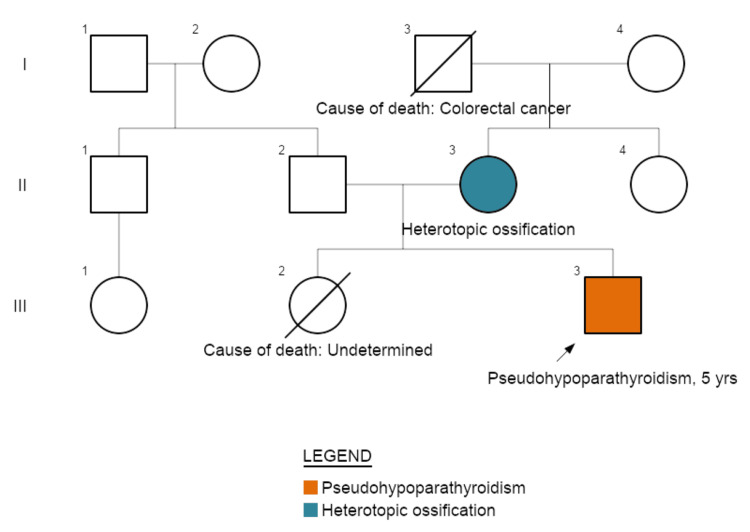 Figure 4
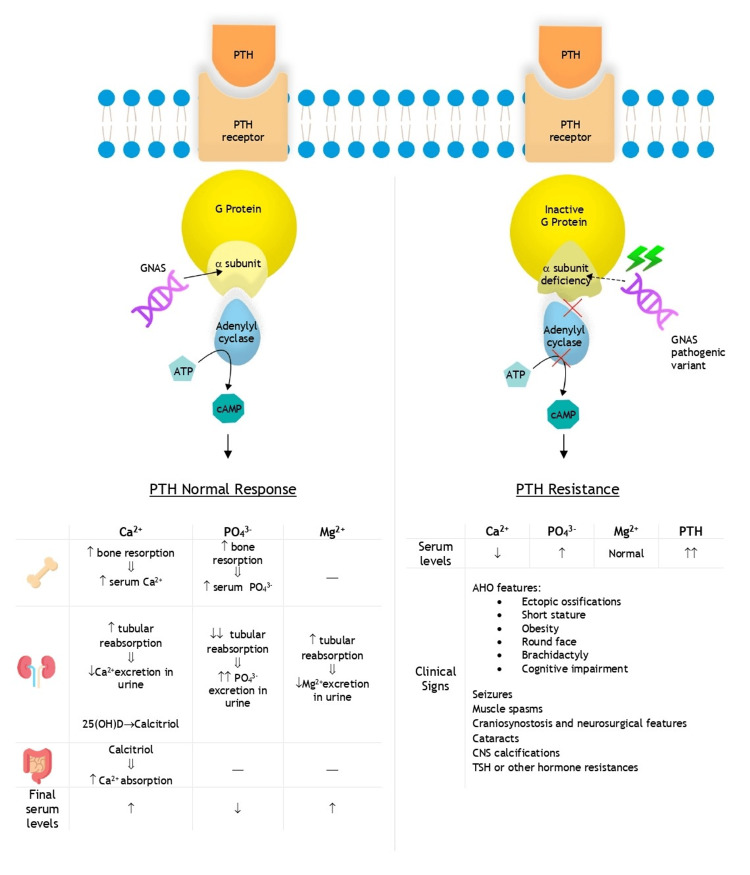 Figure 5
Peer Reviews
No public reviews on file for this paper yet. If you reviewed it on a platform where reviews are public (OpenReview, ICLR, NeurIPS, ICML), you can paste yours below so the community can read it here.
Videos
No videos yet. Explain this paper in a talk, walkthrough, or lecture? Add one.
Taxonomy
TopicsGenetic Syndromes and Imprinting · Congenital heart defects research · Thyroid and Parathyroid Surgery