Deciphering the flapping frequency allometry: unveiling the role of sustained body attitude in the aerodynamic scaling of normal hovering animals
Jeremy Pohly, Chang-kwon Kang, Hikaru Aono

TL;DR
This paper explains why hovering animals flap their wings less rapidly as they grow larger, linking it to maintaining body posture during flight.
Contribution
The study identifies sustained body attitude as a key factor in the scaling of flapping frequency during hovering.
Findings
Negative allometry of flapping frequency is necessary to maintain body attitude during hovering.
The lift coefficient and reduced frequency remain constant with mass, enabling aerodynamic mechanisms like leading-edge vortex formation.
Abstract
Hovering flight helps facilitate feeding, pollination, and courtship. Observed only in smaller flying animals, hover kinematic characteristics are diverse except for the decreasing flapping frequency with the animal size. Although studies have shown that these wing patterns enable distinct unsteady aerodynamic mechanisms, the role of flapping frequency scaling remains a source of disagreement. Here we show that negative allometry of the flapping frequency is required to sustain body attitude during hovering, consistent with experimental data of hovering animals, from fruit flies to hummingbirds, reported in the literature. The derived scaling model reveals that the lift coefficient and reduced frequency remain invariant with mass, enabling leading-edge vortex formation and wake-capture for a wide range of fliers to hover. Summary: The frequency allometry from the sustained body…
Genes, proteins, chemicals, diseases, species, mutations and cell lines named across the full text — each resolved to its canonical identifier and authoritative record.
Click any figure to enlarge with its caption.
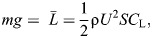 Figure 1
 Figure 2
 Figure 3
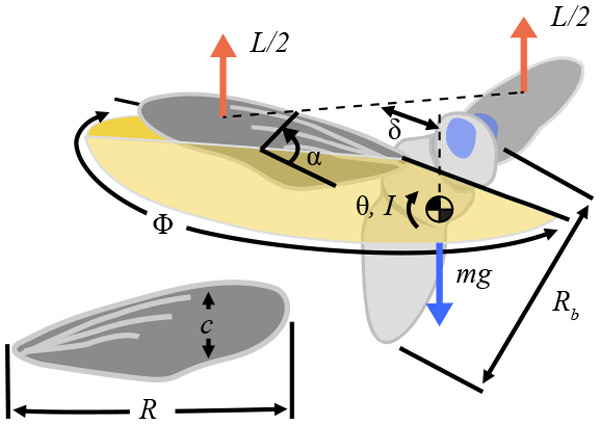 Figure 4
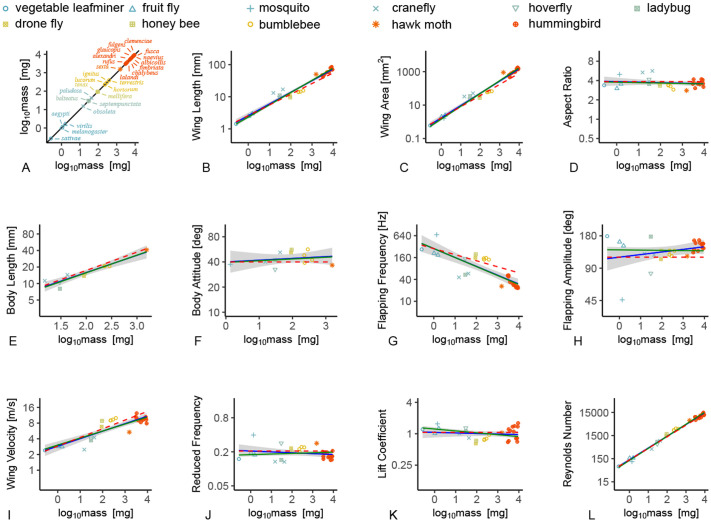 Figure 5
 Figure 6
 Figure 7
 Figure 8
 Figure 9
 Figure 10
 Figure 11
 Figure 12
 Figure 13
 Figure 14
 Figure 15
 Figure 16
 Figure 17
 Figure 18
 Figure 19
 Figure 20
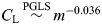 Figure 21
 Figure 22
 Figure 23
 Figure 24
 Figure 25
 Figure 26
 Figure 27
 Figure 28
 Figure 29
 Figure 30
 Figure 31
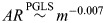 Figure 32
 Figure 33
Peer Reviews
No public reviews on file for this paper yet. If you reviewed it on a platform where reviews are public (OpenReview, ICLR, NeurIPS, ICML), you can paste yours below so the community can read it here.
Videos
No videos yet. Explain this paper in a talk, walkthrough, or lecture? Add one.
Taxonomy
TopicsBiomimetic flight and propulsion mechanisms · Fluid Dynamics and Turbulent Flows · Hydrology and Sediment Transport Processes