Kinetic modelling reveals the presence of multistability in normal and stressful conditions in translational initiation mechanism
Guturu L. Harika, Krishnamachari Sriram

TL;DR
This paper uses mathematical modeling to show how protein synthesis initiation is regulated through complex feedback mechanisms under normal and stressful conditions.
Contribution
The study reveals multistability in translation initiation dynamics using kinetic modeling and structural analysis.
Findings
The model exhibits ultrasensitivity and bistability under normal conditions.
Under integrated stress response, the model shows tristability linked to translation recovery and attenuation.
Hidden feedback loops regulate translation initiation and termination dynamics.
Abstract
Protein synthesis involves translation initiation, elongation, termination, and ribosome recycling, and each step is controlled intricately by many signaling proteins. Translation initiation can be compactly categorized into two mechanisms: primary and secondary. The primary mechanism involves the recruitment of three important eukaryotic initiation factors, eIF2-GDP, eIF5, and eIF2B, and their interactions, followed by the GDP-GTP exchange by eIF2B to form an active dimer eIF2-GTP. The dimer binds with Met-tRNA to form a robust ternary complex (TC). The secondary mechanism closely mirrors the primary reaction mechanism, except that the interactions of eIF2B and eIF5 happen with the TC to form complexes. These interactions happen with high fidelity and precision, failing which fail-safe mechanisms are invoked instantaneously to delay the initiation process. In this work, we build a…
Genes, proteins, chemicals, diseases, species, mutations and cell lines named across the full text — each resolved to its canonical identifier and authoritative record.
Click any figure to enlarge with its caption.
 Figure 1
 Figure 2
 Figure 3
 Figure 4
 Figure 5
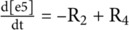 Figure 6
 Figure 7
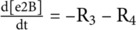 Figure 8
 Figure 9
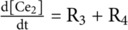 Figure 10
 Figure 11
 Figure 12
 Figure 13
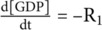 Figure 14
 Figure 15
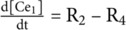 Figure 16
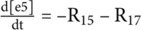 Figure 17
 Figure 18
 Figure 19
 Figure 20
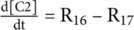 Figure 21
 Figure 22
 Figure 23
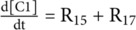 Figure 24
 Figure 25
 Figure 26
 Figure 27
 Figure 28
 Figure 29
 Figure 30
 Figure 31
 Figure 32
 Figure 33
 Figure 34
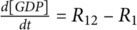 Figure 35
 Figure 36
 Figure 37
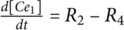 Figure 38
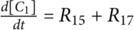 Figure 39
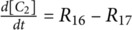 Figure 40
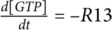 Figure 41
 Figure 42
 Figure 43
 Figure 44
 Figure 45
 Figure 46
 Figure 47
 Figure 48
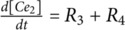 Figure 49
 Figure 50
Peer Reviews
No public reviews on file for this paper yet. If you reviewed it on a platform where reviews are public (OpenReview, ICLR, NeurIPS, ICML), you can paste yours below so the community can read it here.
Videos
No videos yet. Explain this paper in a talk, walkthrough, or lecture? Add one.
Taxonomy
TopicsRNA and protein synthesis mechanisms · Protein Structure and Dynamics · CRISPR and Genetic Engineering