Fatty acid biomarkers reveal the interaction between two highly migratory species in the Southern Humboldt System: the swordfish and its prey, the jumbo squid
Marco Quispe-Machaca, Fabián Guzmán-Rivas, Patricio Barría Martínez, Christian Ibáñez, Ángel Urzúa

TL;DR
This study uses fatty acid profiles to understand the predator-prey relationship between swordfish and jumbo squid in the Humboldt Current System.
Contribution
The study identifies specific fatty acids as potential biomarkers of trophic interactions between swordfish and jumbo squid.
Findings
Fatty acid profiles in the digestive gland of jumbo squid show moderate similarity to those in swordfish organs.
Key fatty acids like EPA and DHA are common in both species, suggesting their role in energy storage and migration.
The high content of bioenergetic fatty acids supports the energy demands of migratory and reproductive processes.
Abstract
Marine trophodynamics refer to the transfer of energy from prey to predators. In marine invertebrates and fishes, the nutrients obtained through the consumption of food and/or prey are stored as energy reserves in certain tissues and/or organs including the liver, muscle, or gonads, and that these are subsequently used as bioenergetic fuel for highly energy-demanding fundamental physiological processes. In the southern Humboldt Current System, the interaction between two highly migratory resources and top species has been observed: the swordfish (Xiphias gladius) and its prey the jumbo squid (Dosidicus gigas). Because of this trophic interaction, these species store large amounts of energy (as lipids and fatty acids) in their main organs. However, how the fatty acid profile varies in the various organs of the predator and its prey is still unknown, as is its potential use as trophic…
Genes, proteins, chemicals, diseases, species, mutations and cell lines named across the full text — each resolved to its canonical identifier and authoritative record.
Click any figure to enlarge with its caption.
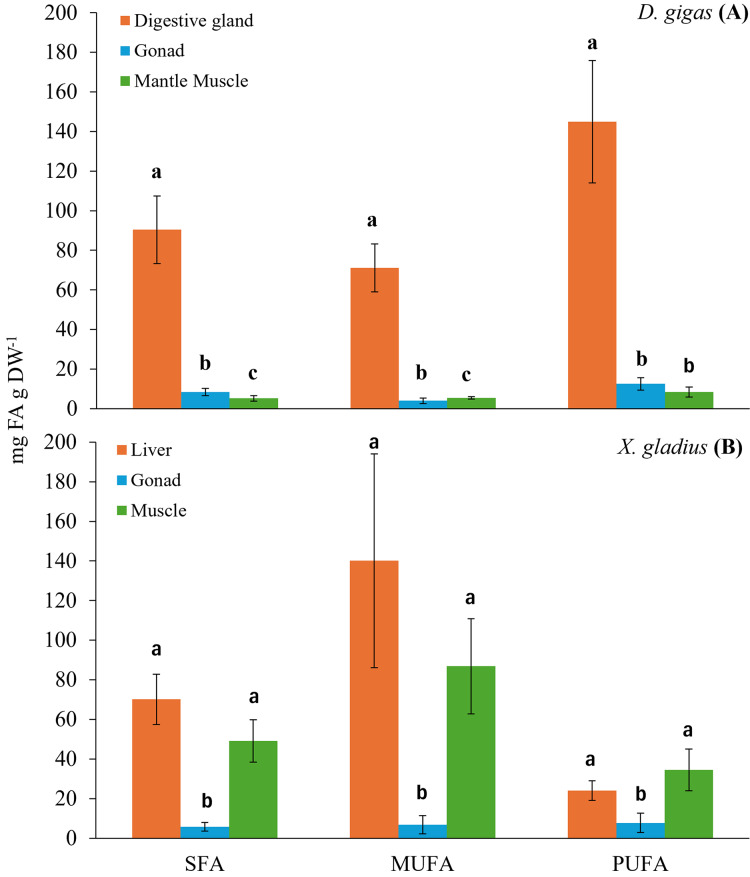 Figure 1
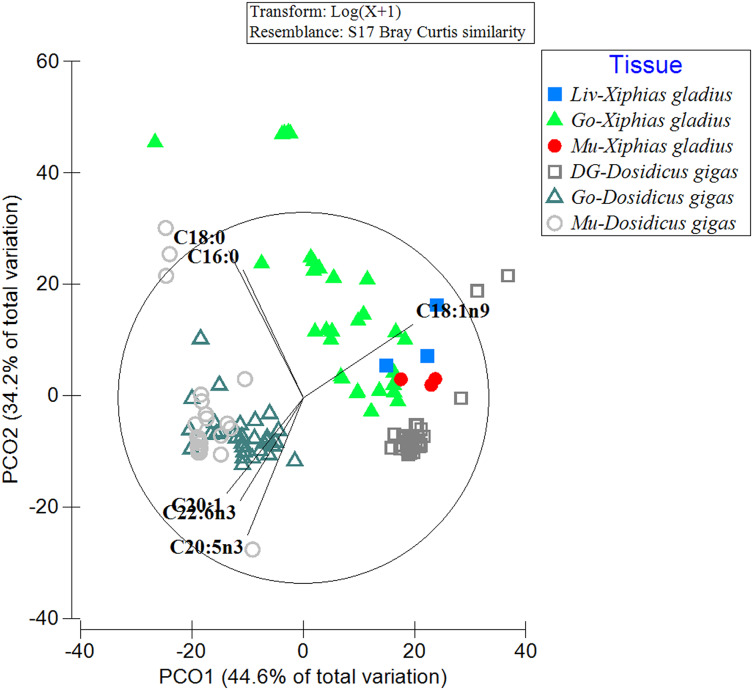 Figure 2
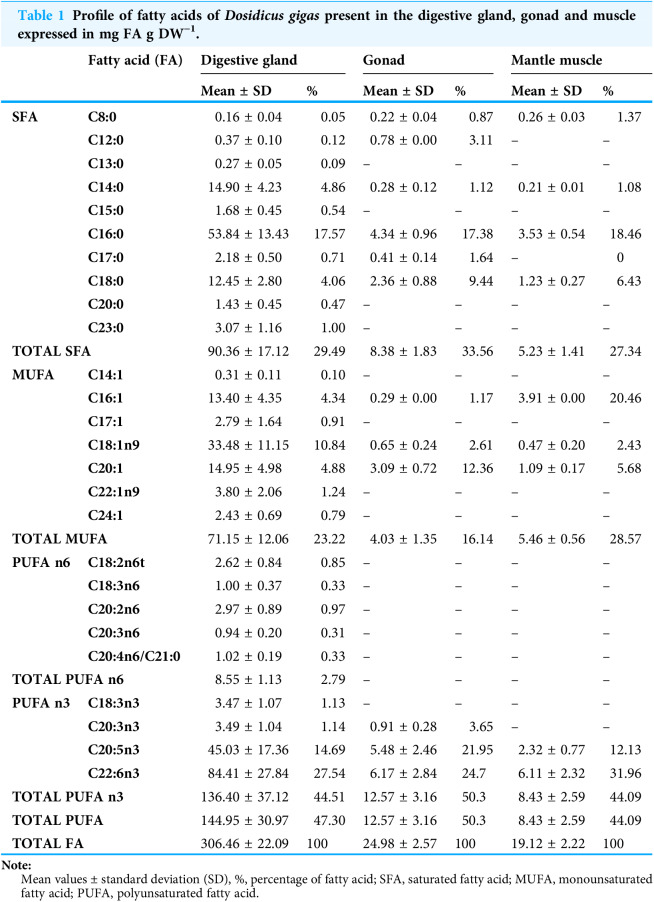 Figure 3
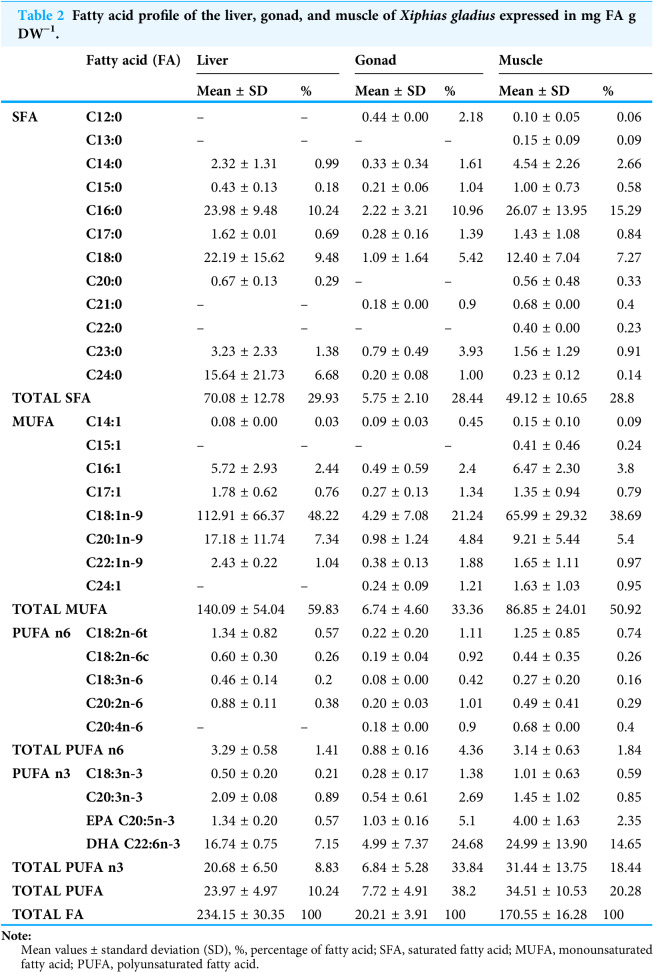 Figure 4
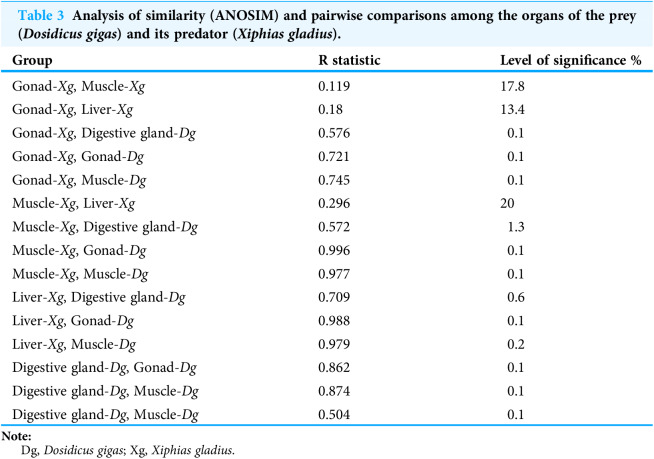 Figure 5
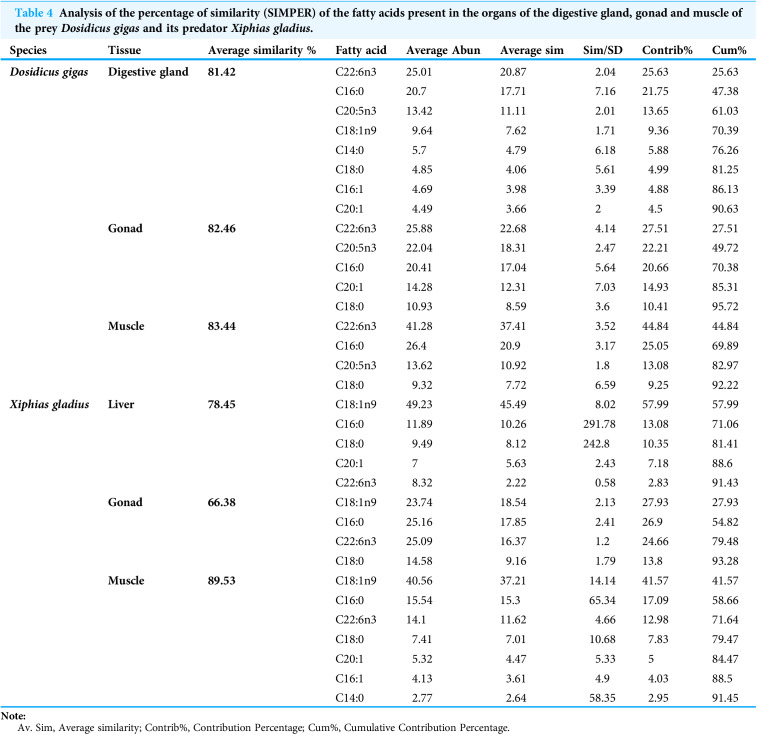 Figure 6
Peer Reviews
No public reviews on file for this paper yet. If you reviewed it on a platform where reviews are public (OpenReview, ICLR, NeurIPS, ICML), you can paste yours below so the community can read it here.
Videos
No videos yet. Explain this paper in a talk, walkthrough, or lecture? Add one.
Taxonomy
TopicsCephalopods and Marine Biology · Marine and fisheries research · Aquaculture Nutrition and Growth