Factors Explaining the Severity of Acute Achilles Tendinopathy Among Runners: A Comprehensive Cross-Sectional Analysis
Marie-Hélène Lavallée-Bourget, Laurence Roy-Bélanger, María García-Arrabé, Xavier Laurier, Arielle Tougas, Blaise Dubois, Valérie Bélanger, Jean-Sébastien Roy

TL;DR
This study identifies key factors that explain the severity of Achilles tendinopathy in runners, including pain, fear of movement, and tendon size.
Contribution
The study identifies specific anatomic, biomechanical, and psychological factors that explain AT severity using the VISA-A score.
Findings
Higher kinesiophobia and pain catastrophizing scores are linked to more severe Achilles tendinopathy.
Pain during single-leg jumps and increased tendon cross-sectional area correlate with higher VISA-A scores.
The identified factors explain 47% of the variance in VISA-A scores among runners with acute AT.
Abstract
Achilles tendinopathy (AT) is a prevalent musculoskeletal injury among runners, accounting for approximately 10% of all running-related injuries. AT can result in persistent symptoms and impact the quality of life of runners. The Victorian Institute of Sport Assessment questionnaire (VISA-A) is a widely used self-reported tool for assessing severity of AT. However, the anatomic, biomechanical, psychological, and social factors that influence its score are still poorly understood. The aim of this study is to identify the factors that explain the severity of AT based on the VISA-A score in runners experiencing acute AT. The VISA-A score will be explained by both biological and psychosocial factors. Cross-sectional study. Level 4. Runners with AT were assessed within 3 months of symptoms onset. The potential explanatory factors assessed included sociodemographic characteristics and…
Genes, proteins, chemicals, diseases, species, mutations and cell lines named across the full text — each resolved to its canonical identifier and authoritative record.
Click any figure to enlarge with its caption.
 Figure 1
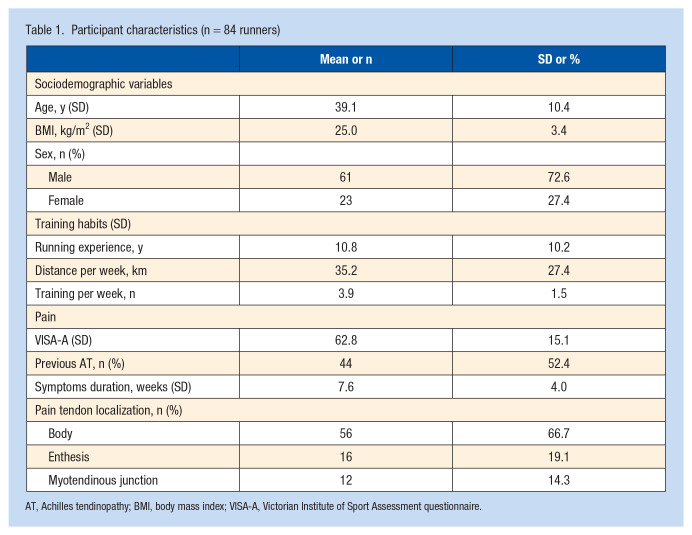 Figure 2
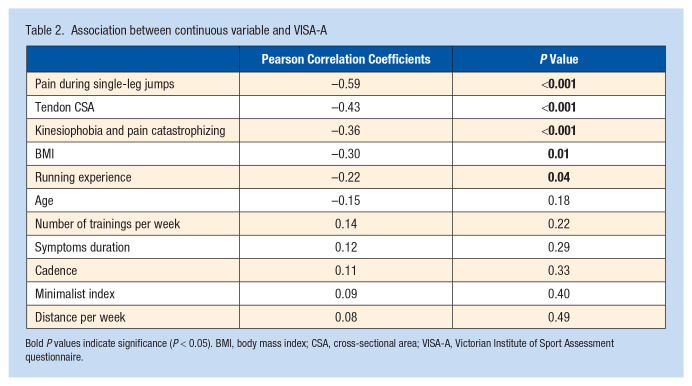 Figure 3
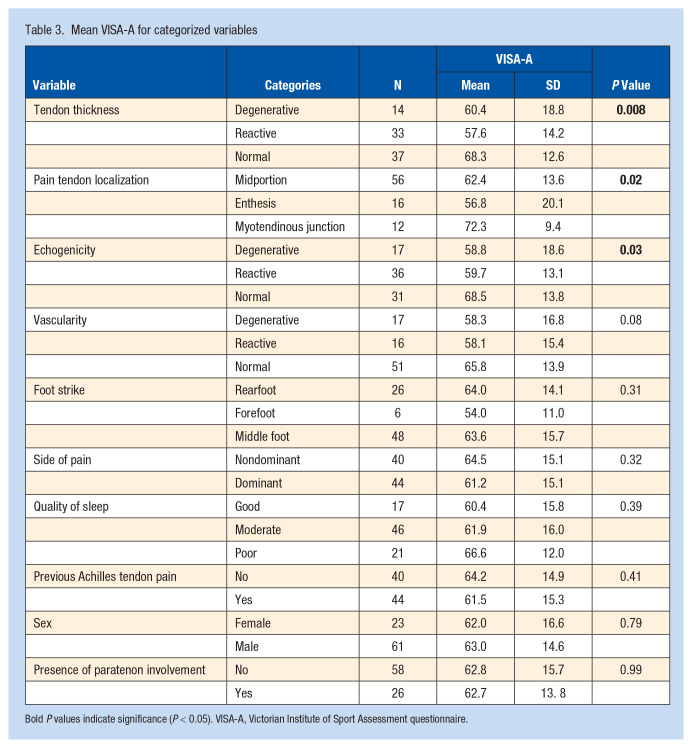 Figure 4
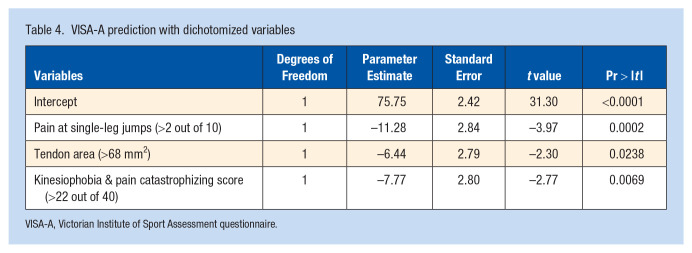 Figure 5
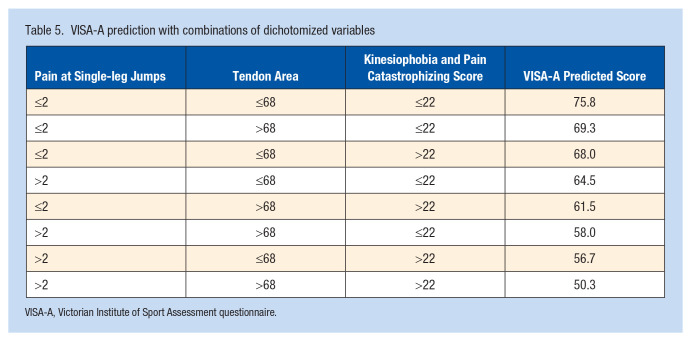 Figure 6
Peer Reviews
No public reviews on file for this paper yet. If you reviewed it on a platform where reviews are public (OpenReview, ICLR, NeurIPS, ICML), you can paste yours below so the community can read it here.
Videos
No videos yet. Explain this paper in a talk, walkthrough, or lecture? Add one.
Taxonomy
TopicsTendon Structure and Treatment · Sports injuries and prevention · Shoulder Injury and Treatment