Towards more efficient synthetic immunomodulators: biological characterization and mechanism of action of monosaccharide-derived TLR4 agonists
Ana Rita Franco, Zaineh Aladailleh, Alessio Romerio, Alice Italia, Federico Lami, Mohammed Monsoor Shaik, Natalia Skupinska, Valentina Artusa, Grisha Pirianov, Francesco Peri

TL;DR
Researchers developed new sugar-based compounds that strongly activate immune pathways and could be used as vaccine adjuvants or cancer treatments.
Contribution
The study introduces glycosylated FP20 derivatives as potent TLR4 agonists with enhanced immunostimulatory properties.
Findings
Glyco-FP20 derivatives activate TLR4/MyD88 and TLR4/TRIF pathways, leading to M1 macrophage polarization and IFN-β production.
These compounds induce GSD-dependent pyroptosis, releasing IL-1β/IL-18 and LDH in macrophages.
Optimized glycosylation of FP20 increases its biological potency for potential use in immunotherapy.
Abstract
Toll-like receptors (TLRs), including TLR4, play a crucial role in innate immunity activation, and small molecular TLR4 activators (agonists) are in the preclinical and clinical phases of development as vaccine adjuvants or tumor immunotherapeutics. Recently, we generated novel glucosamine-derived compounds, FP molecules, that are active as TLR4 agonists. Despite their chemical structure differing from LPS, some of these compounds, including compound FP18, mimicked the biological activity of LPS and its capacity to activate TLR4 and its downstream pathways. In contrast to FP18, compound FP20 showed immunostimulant activity that was only partially due to TLR4 agonism. This activity was mainly associated with NLRP3 inflammasome activation. We generated a panel of glycosylated FP20 derivatives (glyco-FP20) bearing different monosaccharides linked to C6 of the glucosamine. The biological…
Genes, proteins, chemicals, diseases, species, mutations and cell lines named across the full text — each resolved to its canonical identifier and authoritative record.
Click any figure to enlarge with its caption.
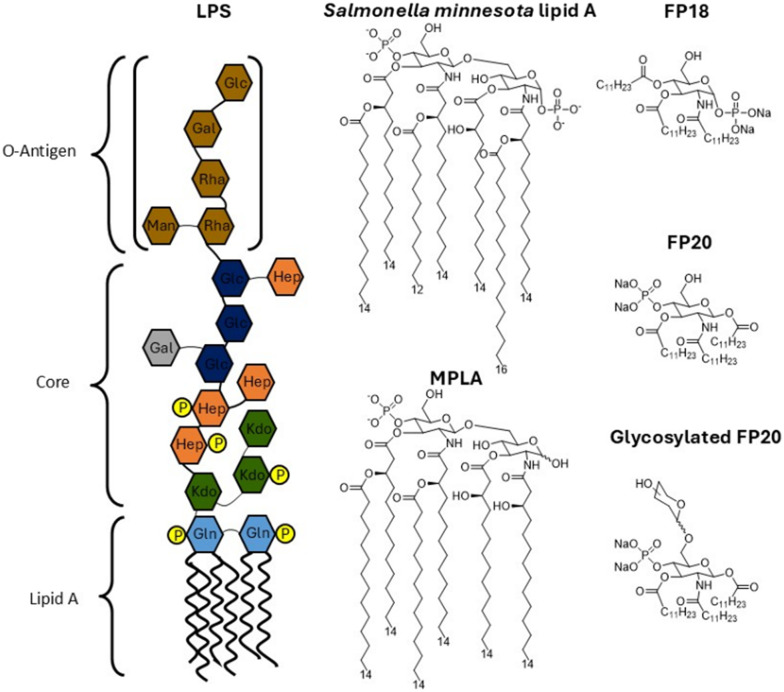 Figure 1
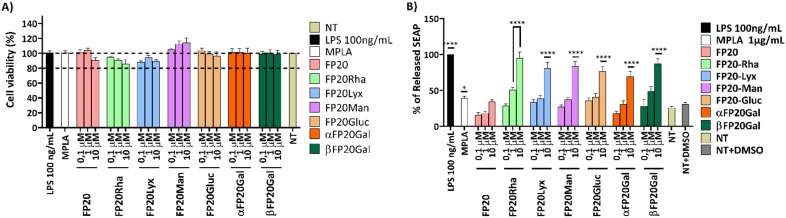 Figure 2
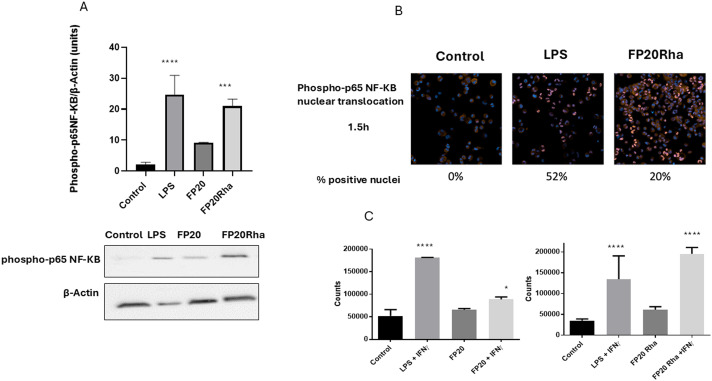 Figure 3
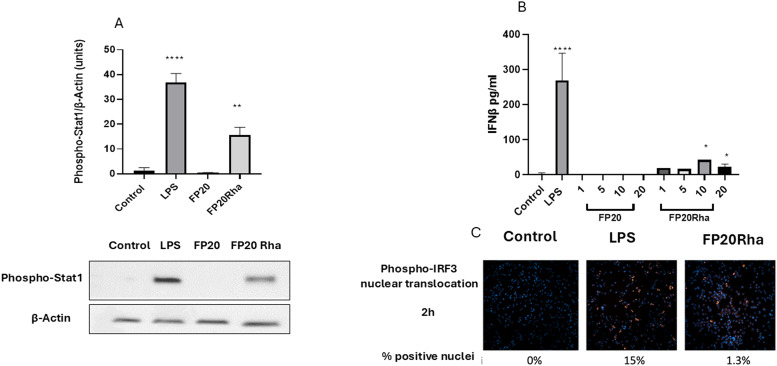 Figure 4
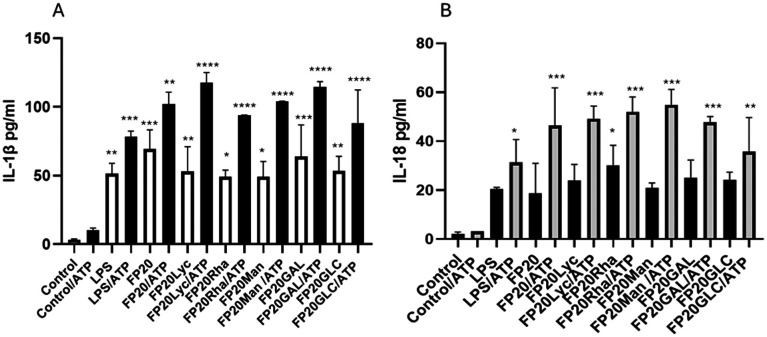 Figure 5
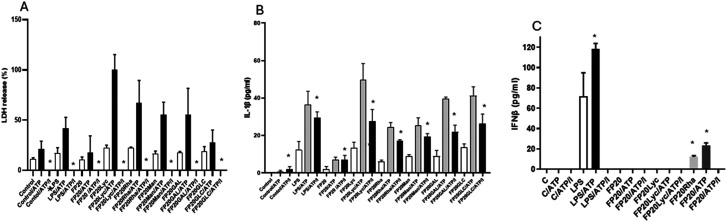 Figure 6
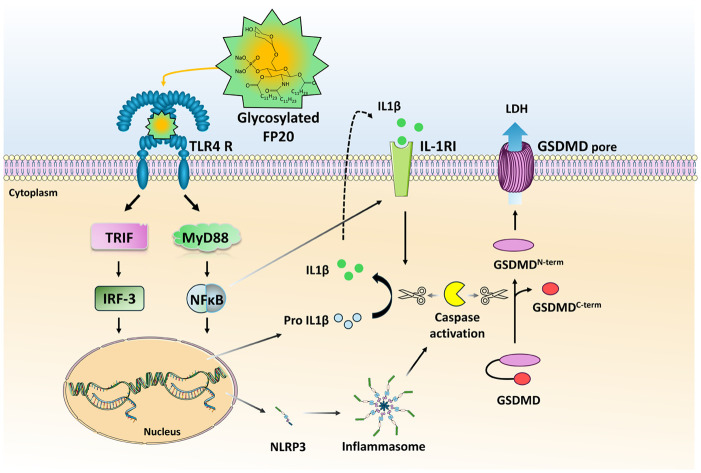 Figure 7
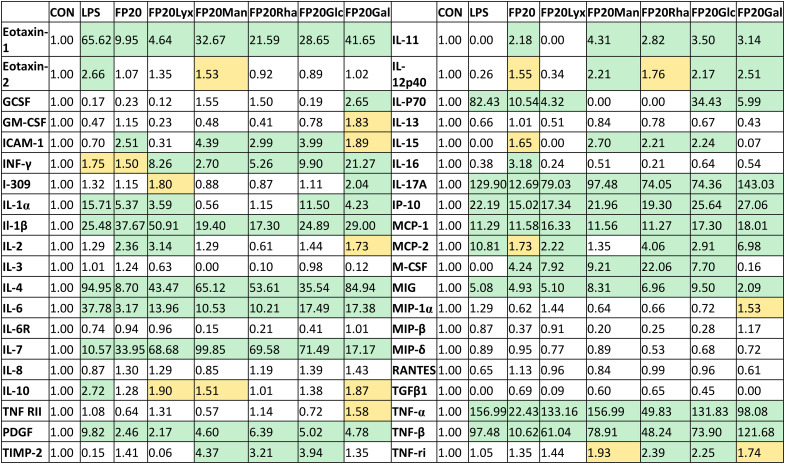 Figure 8
Peer Reviews
No public reviews on file for this paper yet. If you reviewed it on a platform where reviews are public (OpenReview, ICLR, NeurIPS, ICML), you can paste yours below so the community can read it here.
Videos
No videos yet. Explain this paper in a talk, walkthrough, or lecture? Add one.
Taxonomy
TopicsImmune Response and Inflammation · Pediatric health and respiratory diseases · Pneumonia and Respiratory Infections