Comparison of complete mitochondrial genome sequences in the Aporrectodeacaliginosa species group (Annelida, Crassiclitellata, Lumbricidae)
Csaba Csuzdi, Jachoon Koo, Yong Hong

TL;DR
This paper compares the complete mitochondrial genomes of two earthworm species, revealing similarities in structure and supporting their close evolutionary relationship.
Contribution
The first complete mitochondrial genome sequences for Aporrectodea caliginosa and Ap. trapezoides, providing new insights into their genetic structure and phylogeny.
Findings
The mitochondrial genomes of both species have identical gene arrangements and transcriptional directionality.
Phylogenetic analysis supports the monophyly of the family Lumbricidae and the close relationship between Aporrectodea species.
Ap. caliginosa 5 has a unique stop codon in the ND5 gene compared to other samples.
Abstract
We present for the first time the complete mitochondrial genomes (mt genomes) of the earthworms Aporrectodeacaliginosa and Ap.trapezoides (Clitellata, Megadrili) collected in Hungary and Korea, respectively. The complete mt genome of Ap.trapezoides comprised 15,014 base pairs. Lengths of the three complete Ap.caliginosa mt genomes varied between 15,090 and 15,123 bp. All four mt genomes contained 13 protein-coding genes (PCGs), two rRNA genes, 22 tRNA genes, and one major non-coding control region. These mt genome arrangements are identical to those observed in the mt genomes of most earthworms, and all the 37 genes are transcribed from the same directional strand. All 13 PCGs had the same ATG start codon. Most of the PCGs end with TAA or TAG, whereas the remaining end with an incomplete stop codon, T. Stop codons were consistent in the PCGs throughout the mt genomes, except…
Genes, proteins, chemicals, diseases, species, mutations and cell lines named across the full text — each resolved to its canonical identifier and authoritative record.
Click any figure to enlarge with its caption.
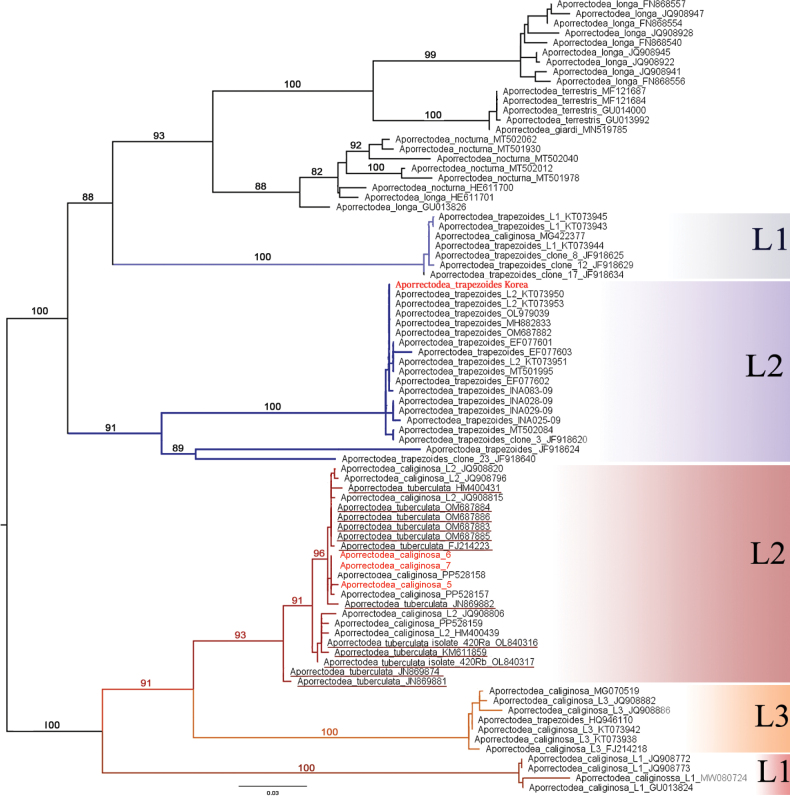 Figure 1
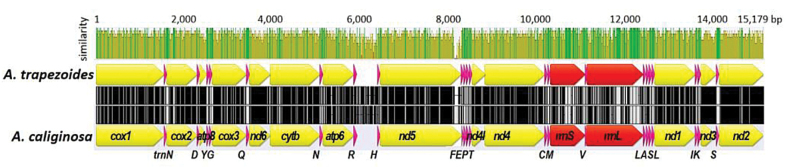 Figure 2
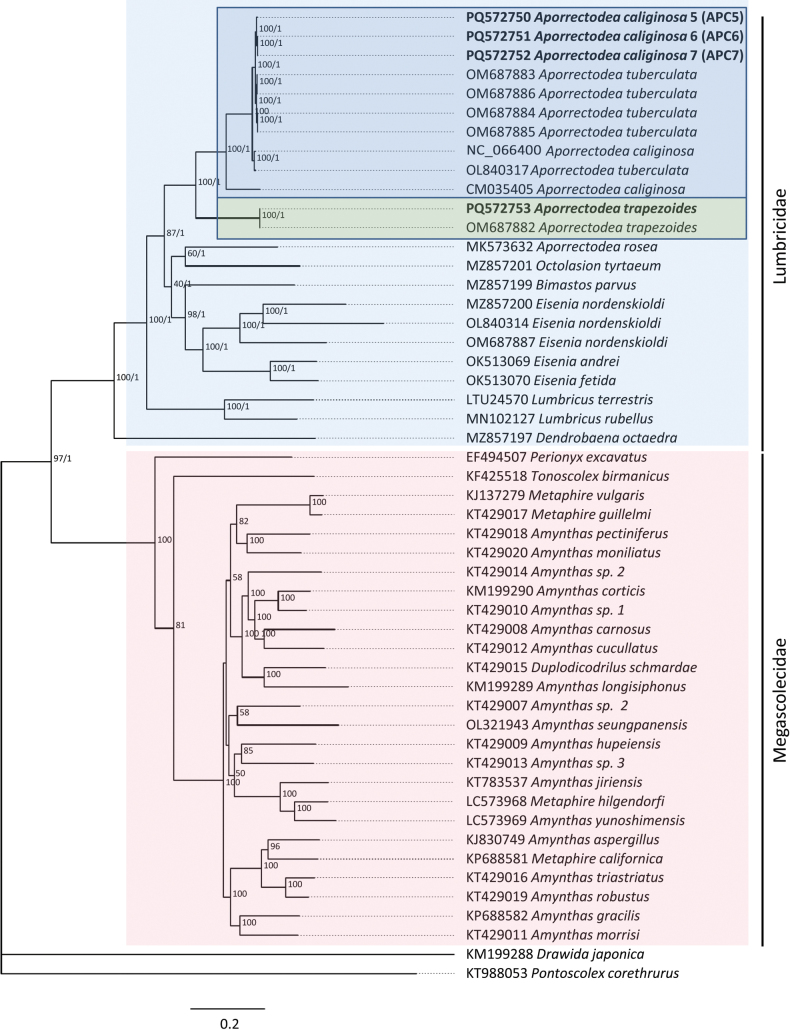 Figure 3
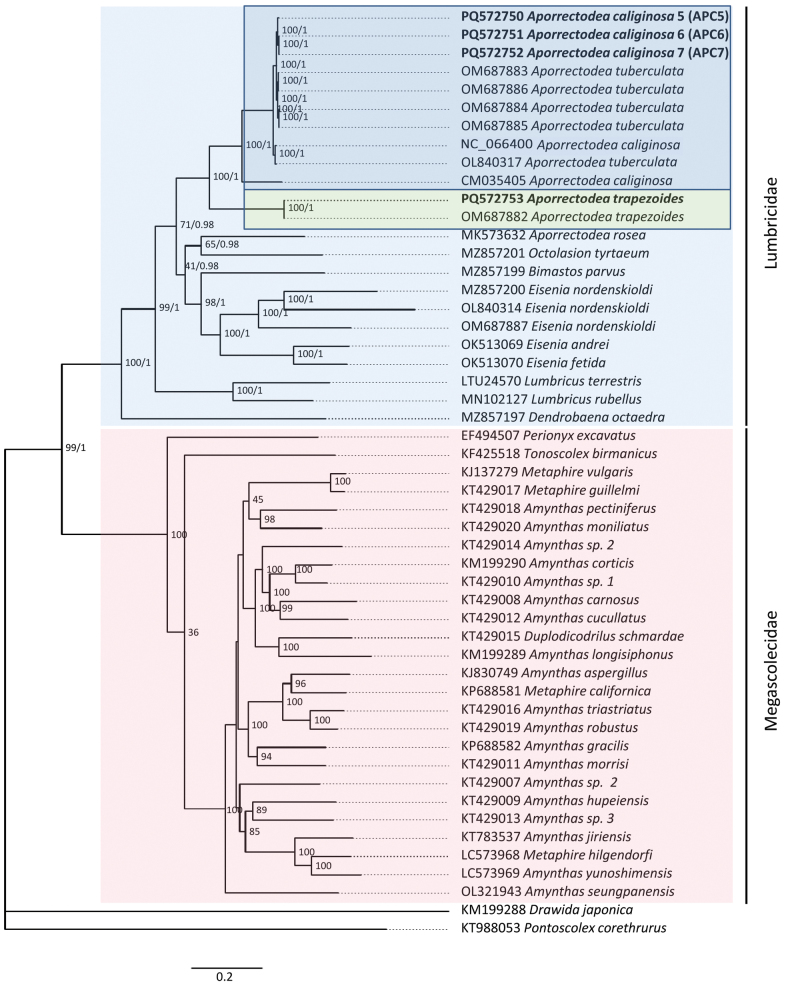 Figure 4
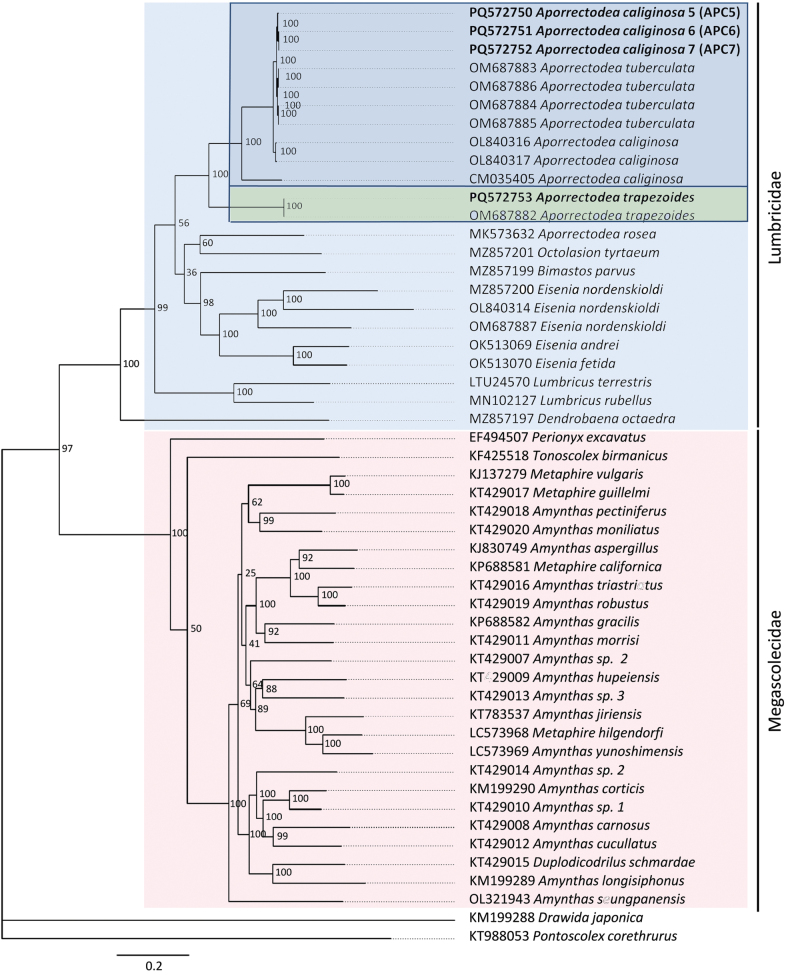 Figure 5
Peer Reviews
No public reviews on file for this paper yet. If you reviewed it on a platform where reviews are public (OpenReview, ICLR, NeurIPS, ICML), you can paste yours below so the community can read it here.
Videos
No videos yet. Explain this paper in a talk, walkthrough, or lecture? Add one.
Taxonomy
TopicsInvertebrate Taxonomy and Ecology · Leech Biology and Applications · Genomics and Phylogenetic Studies