Correction: Dual targeting multiwalled carbon nanotubes for improved neratinib delivery in breast cancer
Amr Selim Abu Lila, Rohini Bhattacharya, Afrasim Moin, Turki Al Hagbani, Marwa Helmy Abdallah, Syed Mohd Danish Rizvi, El-Sayed Khafagy, Talib Hussain, Hosahalli Veerabhadrappa Gangadharappa

TL;DR
This paper corrects a previous study on using carbon nanotubes to improve drug delivery for breast cancer treatment.
Contribution
The correction addresses errors or omissions in the original study's methodology or findings.
Findings
Errors in the original paper have been identified and corrected.
The revised study maintains the focus on improving neratinib delivery using multiwalled carbon nanotubes.
Abstract
Correction for ‘Dual targeting multiwalled carbon nanotubes for improved neratinib delivery in breast cancer’ by Amr Selim Abu Lila et al., RSC Adv., 2023, 13, 24309–24318, https://doi.org/10.1039/D3RA04732F.
Genes, proteins, chemicals, diseases, species, mutations and cell lines named across the full text — each resolved to its canonical identifier and authoritative record.
Click any figure to enlarge with its caption.
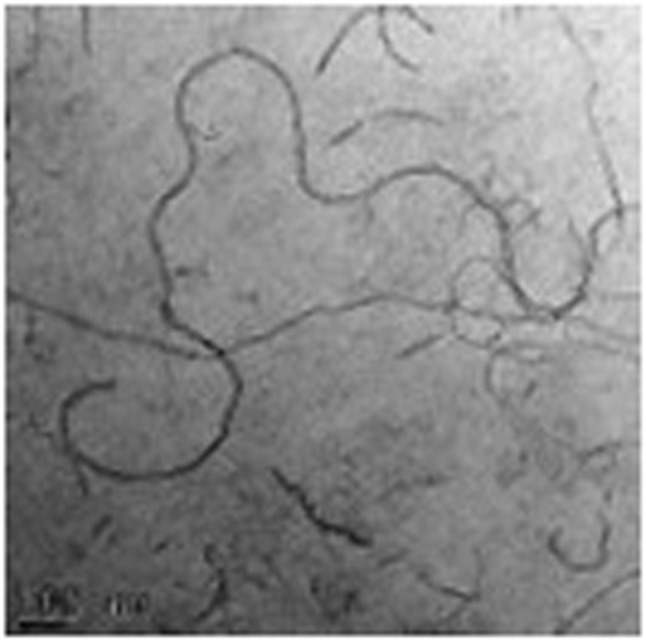 Figure 1
Peer Reviews
No public reviews on file for this paper yet. If you reviewed it on a platform where reviews are public (OpenReview, ICLR, NeurIPS, ICML), you can paste yours below so the community can read it here.
Videos
No videos yet. Explain this paper in a talk, walkthrough, or lecture? Add one.
Taxonomy
TopicsNanoparticle-Based Drug Delivery · Graphene and Nanomaterials Applications · HER2/EGFR in Cancer Research
The authors regret an error in the TEM data in Fig. 3A. During peer review, reviewers requested that the authors include TEM data in their manuscript. As there is no TEM facility in their institution, the authors outsourced the TEM analysis. The authors have provided evidence that they outsourced the TEM analysis and were provided with the image used in Fig. 3A of the original manuscript by a third party. The corrected Fig. 3A is shown below.
The authors regret an error in Section 2.3.5 ‘^1^H-Nuclear magnetic resonance’. In the first sentence, the instrument ‘Agilent 400 MHz FT-NMR spectrophotometer’ should have been written as ‘Agilent 400 MHz FT-NMR spectrometer’. In the second sentence, the solvent used was d-DMSO and not CDCl_3_. The corrected Section 2.3.5 is shown below.
2.3.5. ^1^H-Nuclear magnetic resonance
The instrument used for recording the ^1^H NMR spectrum was an Agilent 400 MHz FT-NMR spectrometer (Agilent Scientific Instruments, Santa Clara, CA, USA) operating at 400 MHz for protons. Samples (6 mg mL^−1^) were first dissolved in d-DMSO by keeping it at 50 °C overnight followed by vortex mixing for several minutes. With the deuterated solvent, i.e., d-DMSO, the sample was scanned in the NMR tubes using tetramethylsilane as an internal standard.
An independent expert has viewed the corrected Fig. 3a and the changes to Section 2.3.5 and confirmed that they are consistent with the discussions and conclusions presented.
The Royal Society of Chemistry apologises for these errors and any consequent inconvenience to authors and readers.