Correction to “Effect of Chirality and Amphiphilicity on the Antimicrobial Activity of Tripodal Lysine-Based Peptides”
Anindyasundar Adak, Valeria Castelletto, Lucas de Mello, Bruno Mendes, Glyn Barrett, Jani Seitsonen, Ian W. Hamley

Abstract
Genes, proteins, chemicals, diseases, species, mutations and cell lines named across the full text — each resolved to its canonical identifier and authoritative record.
Click any figure to enlarge with its caption.
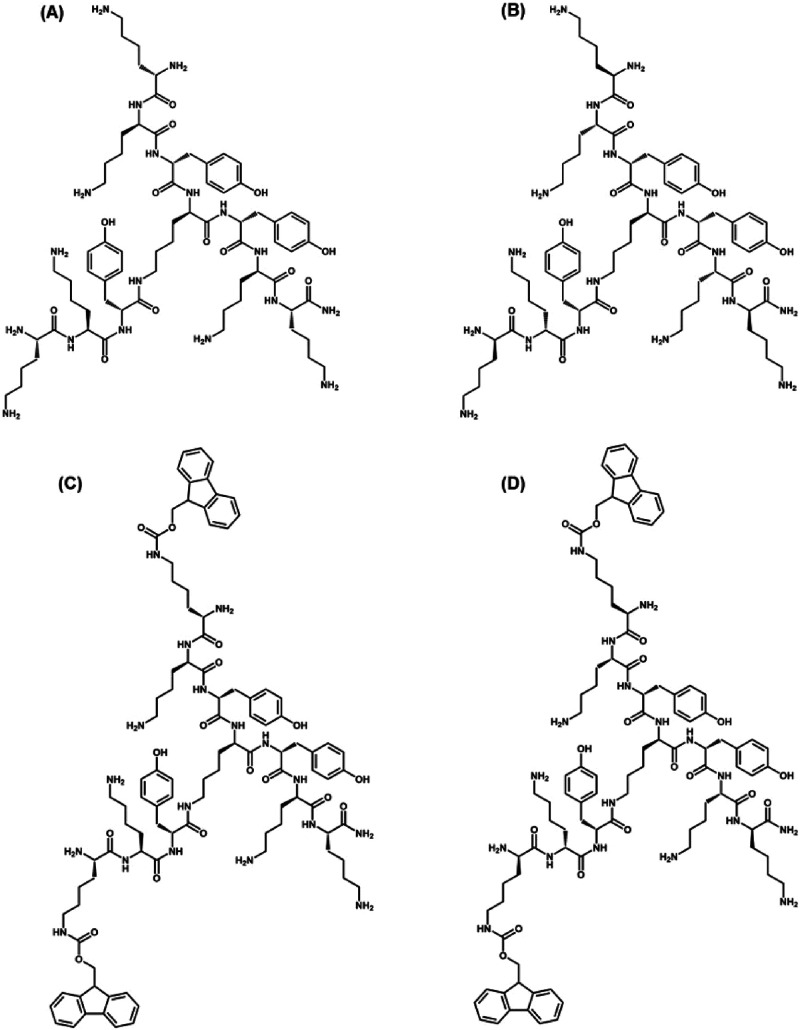 Figure 1
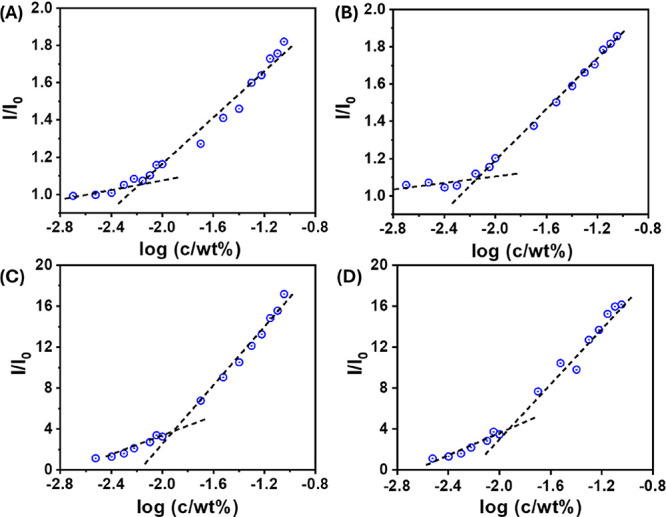 Figure 2
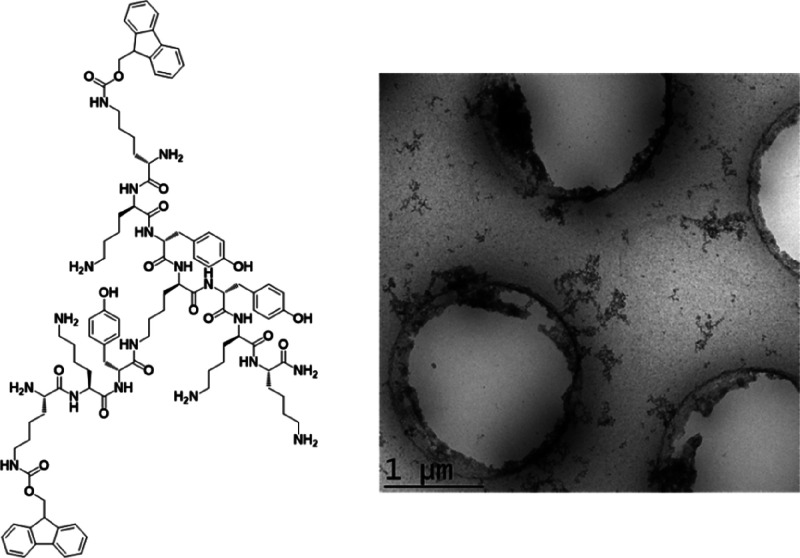 Figure 3
- —Engineering and Physical Sciences Research Council10.13039/501100000266
Peer Reviews
No public reviews on file for this paper yet. If you reviewed it on a platform where reviews are public (OpenReview, ICLR, NeurIPS, ICML), you can paste yours below so the community can read it here.
Videos
No videos yet. Explain this paper in a talk, walkthrough, or lecture? Add one.
Taxonomy
TopicsChemical Synthesis and Analysis · Antimicrobial Peptides and Activities · Biopolymer Synthesis and Applications
In our original article, the molecular structures in Figure 1C and D missed an oxygen atom in the Fmoc groups. The corrected Figure 1 is shown below.
Similarly for the TOC entry, the correct version (for the structure of FTP) is shown below:
In addition, the CAC assay data presented in Figure 3 actually represent plots of (I – I0)/(Imax – I0), where I is the peak fluorescence at a given peptide concentration with ANS, I0 is that of the ANS solution, and Imax is the maximum ANS fluorescence intensity (for the highest peptide concentration). The corrected Figure 3 showing I/I0 is shown below.
The values of CAC reported in the paper are unaffected. It may be noted that I/I0 reaches significantly higher values for the two peptides containing Fmoc due to the contribution to the fluorescence of this group.