Prevalence and associated factors of COVID-19 among biomedical science students of Rivers State University, Port Harcourt, Nigeria: a cross-sectional study
Moore I. Mike-Ogburia, Gift M. Hart, Barynem Vito-Peter, Aisha Dio, Victory C. Nwogu

TL;DR
This study found an 11.4% prevalence of COVID-19 among biomedical students in Nigeria, with noncompliance with facemask use being a key risk factor.
Contribution
The study provides new insights into the prevalence and risk factors of COVID-19 among biomedical science students in Nigeria.
Findings
The prevalence of COVID-19 among students was 11.4%.
Noncompliance with facemask use was a significant independent predictor of infection.
Other hygiene practices showed associations but were not significant in multivariable analysis.
Abstract
Supplemental Digital Content is Available in the Text. The coronavirus disease 2019 (COVID-19) pandemic has profoundly affected global health, emphasizing the need to assess specific populations such as university students to better understand the prevalence of the infection and its determinants. This study investigated the prevalence and associated factors of COVID-19 among biomedical science students at Rivers State University, Port Harcourt, Nigeria. A cross-sectional study was conducted among 220 students from March to August 2022. Data collection was performed using interviewer-administered questionnaires while COVID-19 infection was screened using the Panbio™ COVID-19 Ag Rapid Test Device. Data analysis involved both descriptive and inferential statistics, with statistical significance set at P ≤ .05. The prevalence of COVID-19 was 11.4% (95% CI: 7.8–16.2). Significant…
Genes, proteins, chemicals, diseases, species, mutations and cell lines named across the full text — each resolved to its canonical identifier and authoritative record.
Click any figure to enlarge with its caption.
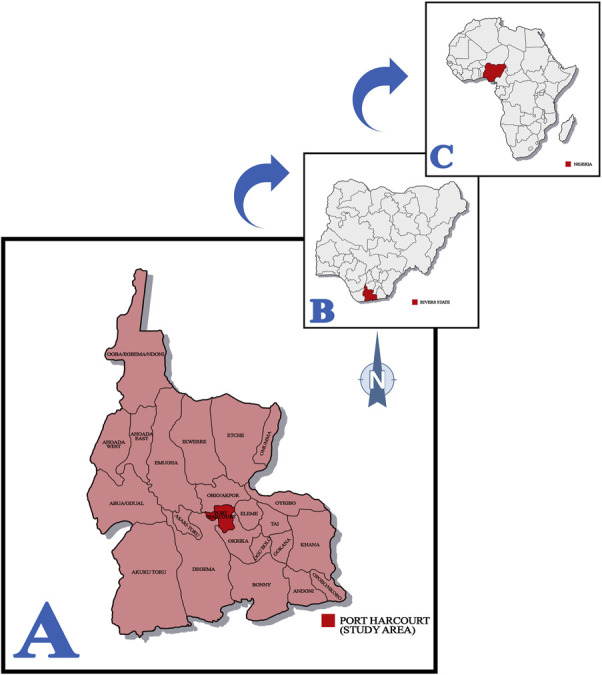 Figure 1
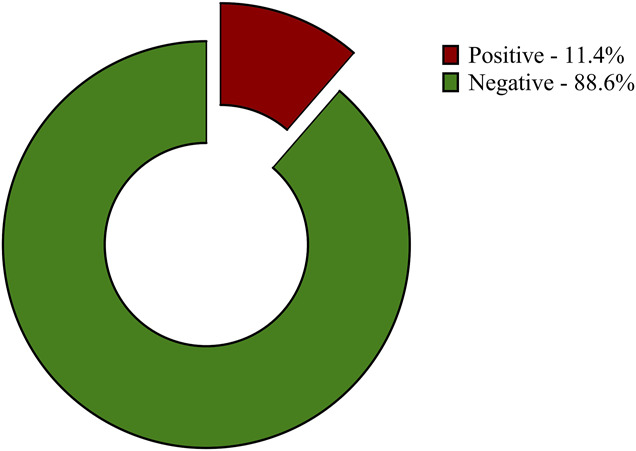 Figure 2
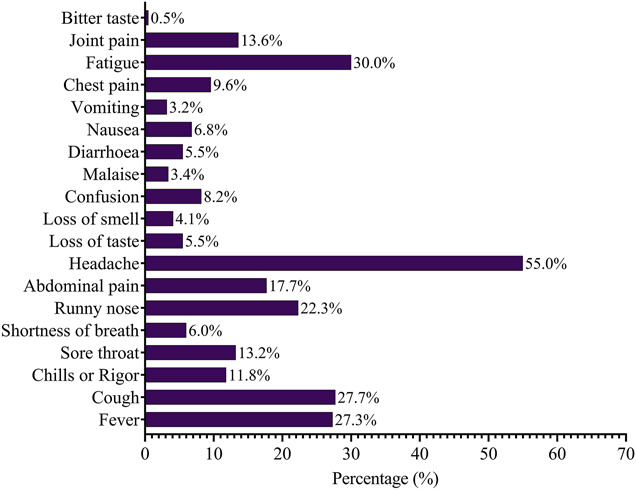 Figure 3
| Variable | N | Positive (%) | Negative (%) | χ2 | Df |
|
| Age | ||||||
| 16–20 | 101 | 11 (10.9) | 90 (89.1) | 2.294 | 2 | .3175 |
| 21–25 | 92 | 13 (14.1) | 79 (85.9) | |||
| ≥26 | 27 | 1 (3.7) | 26 (96.3) | |||
| Total | 220 | 25 (11.4) | 195 (88.6) | |||
| Sex | ||||||
| Male | 79 | 6 (7.59) | 73 (92.4) | 1.738 | 1 | .1874 |
| Female | 141 | 19 (13.5) | 122 (86.5) | |||
| Total | 220 | 25 (11.4) | 195 (88.6) | |||
| Marital status | ||||||
| Single | 210 | 25 (11.9) | 185 (88.1) | 1.343 | 1 | .2465 |
| Married | 10 | 0 (0) | 10 (100) | |||
| Total | 220 | 25 (11.4) | 195 (88.6) | |||
| Academic year | ||||||
| Lower years | 100 | 12 (12) | 88 (88) | 0.07371 | 1 | .7860 |
| Upper years | 120 | 13 (10.8) | 107 (89.2) | |||
| Total | 220 | 25 (11.4) | 195 (88.6) | |||
| Occupation (besides studies) | ||||||
| Unemployed | 138 | 16 (11.6) | 122 (88.4) | 0.01954 | 1 | .8888 |
| Employed | 82 | 9 (11) | 73 (89) | |||
| Total | 220 | 25 (11.4) | 195 (88.6) | |||
| Nature of employment (N = 82) | ||||||
| Unrelated to health | 70 | 7 (10) | 63 (90) | 0.4660 | 1 | .4949 |
| Related to health | 12 | 2 (16.7) | 10 (83.3) | |||
| Total | 82 | 9 (11) | 73 (89) |
| Variable | N | Positive (%) | Negative (%) | χ2 | Df |
|
| Facemask use | ||||||
| Yes | 178 | 15 (8.4) | 163 (91.6) | 7.983 | 1 | .0047 |
| No | 42 | 10 (23.8) | 32 (76.2) | |||
| Total | 220 | 25 (11.4) | 195 (88.6) | |||
| Handwashing practice | ||||||
| Frequent | 89 | 9 (10.1) | 80 (89.9) | 9.218 | 2 | .0100 |
| Occasionally | 112 | 14 (12.5) | 98 (87.5) | |||
| Not at all | 19 | 2 (10.5) | 17 (89.5) | |||
| Total | 220 | 25 (11.4) | 195 (88.6) | |||
| Use of sanitizers | ||||||
| Frequent | 27 | 2 (7.41) | 25 (92.6) | 9.486 | 2 | .0087 |
| Occasionally | 128 | 9 (7.03) | 119 (93) | |||
| Not at all | 65 | 14 (21.5) | 51 (78.5) | |||
| Total | 220 | 25 (11.4) | 195 (88.6) | |||
| COVID-19 vaccination status | ||||||
| Vaccinated | 18 | 3 (16.7) | 15 (83.3) | 0.5473 | 1 | .4594 |
| Unvaccinated | 202 | 22 (10.9) | 180 (89.1) | |||
| Total | 220 | 25 (11.4) | 195 (88.6) | |||
| Mode of transportation to class/school | ||||||
| Walking | 66 | 9 (13.6) | 57 (86.4) | 0.5604 | 2 | .7556 |
| Private vehicle | 25 | 3 (12) | 22 (88) | |||
| Public vehicle | 129 | 13 (10.1) | 116 (89.9) | |||
| Total | 220 | 25 (11.4) | 195 (88.6) | |||
| Nature of accommodation | ||||||
| Hostel | 74 | 14 (18.9) | 60 (81.1) | 6.435 | 2 | .0401 |
| Off-campus lodge | 71 | 6 (8.45) | 65 (91.5) | |||
| Family house | 75 | 5 (6.67) | 70 (93.3) | |||
| Total | 220 | 25 (11.4) | 195 (88.6) | |||
| Number of roommates/flatmates | ||||||
| ≤2 | 65 | 8 (12.3) | 57 (87.7) | 0.08163 | 1 | .7751 |
| >2 | 155 | 17 (11) | 138 (89) | |||
| Total | 220 | 25 (11.4) | 195 (88.6) | |||
| Number of coursemates in class | ||||||
| <100 | 40 | 3 (7.5) | 37 (92.5) | 0.7246 | 1 | .3947 |
| ≥100 | 180 | 22 (12.2) | 158 (87.8) | |||
| Total | 220 | 25 (11.4) | 195 (88.6) | |||
| Number of coursemates on a bench | ||||||
| ≤4 | 32 | 1 (3.1) | 31 (96.9) | 2.523 | 1 | .1122 |
| >4 | 188 | 24 (12.8) | 164 (87.2) | |||
| Total | 220 | 25 (11.4) | 195 (88.6) |
| Variable | cOR [95% CI] | aOR [95% CI] |
|
| Age | |||
| 16–20 (ref) | 0.9167 [0.3885–2.115] | 1 | |
| 21–25 | 1.591 [0.6870–3.712] | 1.874 [0.5193–7.098] | .3426 |
| ≥26 | 0.2708 [0.01485–1.371] | 0.5152 [0.02387–4.219] | .5827 |
| Sex | |||
| Male (ref) | 0.5278 [0.1853–1.313] | 1 | |
| Female | 1.895 [0.7618–5.397] | 1.635 [0.5895–5.121] | .3651 |
| Academic year | |||
| Lower years (ref) | 1.122 [0.4817–2.596] | 1 | |
| Upper years | 0.8910 [0.3851–2.076] | 0.8012 [0.2275–2.656] | .7213 |
| Occupation | |||
| Unemployed | 1.064 [0.4552–2.629] | 0.7862 [0.3047–2.091] | .6205 |
| Employed (ref) | 0.9401 [0.3804–2.197] | 1 | |
| Facemask use | |||
| Yes (ref) | 0.2945 [0.1223–0.7309] | 1 | |
| No | 3.396 [1.368–8.179] | 4.350 [1.379–14.13] | .0124 |
| Handwashing practice | |||
| Frequent (ref) | 0.8086 [0.3277–1.886] | 1 | |
| Occasionally | 1.260 [0.5463–2.971] | 0.8923 [0.3277–2.472] | .8231 |
| Not at all | 0.9105 [0.1388–3.462] | 0.3956 [0.04609–2.283] | .3359 |
| Use of sanitizers | |||
| Frequent (ref) | 0.5913 [0.09145–2.173] | 1 | |
| Occasionally | 1.357 [0.5736–3.468] | 2.189 [0.4810–16.09] | .3612 |
| Not at all | 0.8916 [0.3107–2.242] | 1.100 [0.1879–9.000] | .9196 |
| COVID-19 vaccination status | |||
| Vaccinated (ref) | 1.636 [0.3591–5.461] | 1 | |
| Unvaccinated | 0.6111 [0.1831–2.784] | 0.6976 [0.1719–3.768] | .6386 |
| Mode of transportation to class/school | |||
| Walking (ref) | 1.362 [0.5481–3.205] | 1 | |
| Private vehicle | 1.072 [0.2403–3.430] | 1.694 [0.2914–8.398] | .5289 |
| Public vehicle | 0.7378 [0.3185–1.721] | 1.132 [0.3750–3.599] | .8281 |
| Nature of accommodation | |||
| Hostel | 1.500 [0.6200–3.498] | 2.215 [0.5937–9.044] | .2453 |
| Off-campus lodge | 1.333 [0.5522–3.102] | 2.354 [0.5349–11.18] | .2644 |
| Family house (ref) | 0.4464 [0.1436–1.158] | 1 | |
| Number of roommates/flatmates | |||
| ≤2 (ref) | 1.139 [0.4433–2.717] | 1 | |
| >2 | 0.8777 [0.3681–2.256] | 1.288 [0.3279–5.356] | .7209 |
| Number of coursemates in class | |||
| <100 (ref) | 0.5823 [0.1330–1.797] | 1 | |
| ≥100 | 1.717 [0.5566–7.521] | 1.577 [0.3523–8.778] | .5690 |
| Number of coursemates on a bench | |||
| ≤4 (ref) | 0.2204 [0.01212–1.106] | 1 | |
| >4 | 4.537 [0.9044–82.53] | 3.772 [0.6191–73.76] | .2311 |
Peer Reviews
No public reviews on file for this paper yet. If you reviewed it on a platform where reviews are public (OpenReview, ICLR, NeurIPS, ICML), you can paste yours below so the community can read it here.
Videos
No videos yet. Explain this paper in a talk, walkthrough, or lecture? Add one.
Taxonomy
TopicsCOVID-19 and Mental Health · COVID-19 epidemiological studies · COVID-19 Pandemic Impacts
Introduction
The outbreak of the novel coronavirus disease 2019 (COVID-19) has had an unprecedented impact on global health, societal well-being, health care systems, and resources.^1,2^ As the global scientific community strives to combat the virus, it is imperative to investigate specific populations to shed light on the prevalence of the infection within such populations and predisposing factors to the infection.
Young adults, including university students, represent a significant demographic regarding both susceptibility to the virus and potential for transmitting it within communities.^3^ Biomedical science students, with their strong scientific backgrounds, are uniquely positioned to contribute to the understanding and management of COVID-19. Their perceptions of the disease and adherence to recommended safety and preventive measures could play a vital role in shaping public health outcomes within and beyond the university community.
Rivers State University, located in Port Harcourt, Nigeria, inhabits a microcosm of young, aspiring biomedical professionals who will play an important role in shaping the future of health care in their region. However, limited research has been conducted to evaluate the prevalence of COVID-19 and its associated risk factors specifically among this cohort in Nigeria. Understanding the dynamics of COVID-19 epidemiology in this context is crucial for tailoring educational campaigns, promoting COVID-19 preventive measures, and effectively addressing any barriers that may exist particularly as students are at a higher risk of acquiring and transmitting the virus, under the false assumption of being invulnerable to the infection.^4^ Given the aforementioned, this study aimed to determine the prevalence and associated factors of COVID-19 among biomedical science students of Rivers State University, Port Harcourt.
Materials and methods
Study design and area
A cross-sectional study design was used to investigate the prevalence of COVID-19 and associated risk factors among biomedical science students at Rivers State University, Port Harcourt, from March to August 2022. The study was specifically conducted in the Department of Medical Laboratory Science. This department serves as the educational hub for biomedical science students (commonly referred to as Medical Laboratory Science students) at Rivers State University. Port Harcourt, the capital city of Rivers State (Fig. 1),^5^ provides a dynamic backdrop for examining the epidemiology of the infection among these students within the broader societal and regional context.
A, Map of Rivers State highlighting Port Harcourt (study area); (B) map of Nigeria highlighting Rivers State; (C) map of Africa highlighting Nigeria.5
Study population, sample size, and sampling technique
The study population consisted exclusively of undergraduate students enrolled in the Department of Medical Laboratory Science. The sample size for this study was determined to be 200 students after using a sample size calculator,^6^ based on the 15.2% prevalence of COVID-19 in a previous study^7^; however, an additional 10% of the sample size was added to cater for nonresponse, bringing the sample size to a total of 220 students. A stratified sampling technique was used to ensure representation from different academic levels within the cohort. Specifically, 50 students were included from both first-year and second-year classes while each subsequent academic level (third to fifth year) comprised 40 students.
Data collection
The data collection for this study used an interviewer-administered questionnaire (Supplemental Digital Content 1, http://links.lww.com/PBJ/A43). The questionnaire assessed the participant demographics, COVID-19 preventive practices/social contact, and general symptoms observed in the past 14 days and was developed from existing literature.^3,8,9^
Screening for COVID-19 infection was performed using the Panbio™ COVID-19 Ag Rapid Test Device (Abbott Rapid Diagnostics, USA) according to the manufacturer's standard operating procedure. This rapid antigen test device has been demonstrated to have a sensitivity of 85.5% and specificity of 100%^10^ while another study reported a sensitivity of 86.8% and specificity of 99.9%,^11^ which meets the WHO criteria of ≥80% sensitivity and ≥97% specificity.^12^ However, the Panbio COVID-19 Ag Rapid Test Device has demonstrated varying levels of sensitivity and specificity in some other studies. In a Kenyan study, its overall sensitivity was 46.6% (95% CI: 42.4–50.9%) and specificity was 98.5% (95% CI: 97.8–99.0%), with higher sensitivity in symptomatic cases (60.6%) compared with asymptomatic cases (34.7%).^13^ Another study reported a sensitivity of 64.7% (95% CI: 47.9–78.5%) and a specificity of 100% (95% CI: 97.0–100.0%) when using nasal swabs; although the sensitivity of the test improved to 81.3% in high viral load cases (Ct ≤ 30),^14^ making it a useful tool for detecting infectious cases, though confirmatory reverse transcription-polymerase chain reaction (RT-PCR) testing remains essential for lower viral load or asymptomatic cases in addition to interpreting negative results with caution.
Data analysis
Data analysis was conducted using Graph Pad Prism 9, employing both descriptive and inferential statistics such as chi-square tests and multivariable logistic regression analyses to unveil key insights into the prevalence of COVID-19 infection among the study participants. Statistical significance was determined as a P-value of less than or equal to .05.
Ethical consideration
The aim of the study was duly communicated to the students before obtaining informed consent. In addition, consent was obtained from the parents/guardians of willing students younger than 18 years before enrollment in the study. Ethical clearance was given by the Department of Medical Laboratory Science, Rivers State University (MLS/2022/ERC/UG/DE.2017/4737).
Results
A total of 220 students aged between 16 and 32 years (mean age = 21.45 years) participated in the study. Most of the participants were between the age group of 16–20 years (45.9%) and 21–35 years (41.8%), mostly female (64.1%) and single (95.5%). Most participants were unemployed (62.7%); a total of 82 participants were part-time employees, of whom 85.4% were working in establishments unrelated to health.
The prevalence of COVID-19 was 11.4% (95% CI: 7.8–16.2) (Fig. 2) with no significant associations with the sociodemographic characteristics of the respondents (P > .05), as presented in Table 1. Variables such as facemask use, handwashing practice, the use of sanitizers, and the nature of accommodation were significantly associated with the prevalence of COVID-19 (P < .05), as presented in Table 2. However, in the multivariable logistic regression analysis of factors associated with COVID-19 infection, only noncompliance with facemask use (aOR = 4.350, 95% CI: 1.379–14.13, P = .0124) was found to be a significant independent determinant of COVID-19 infection as presented in Table 3.
Prevalence of COVID-19 among study participants.
The most predominant symptom in the past 14 days reported by the inmates was headache (55%), followed by fatigue (30%), cough (27.7%), fever (27.3%), and runny nose (22.3%). Chest pain was also reported by a few participants (9.6%) while only a handful reported some of the classical symptoms of COVID-19 infection such as shortness of breath (6%), loss of taste (5.5%), and loss of smell (4.1%), as shown in Figure 3.
General symptoms within 14 days as reported by study participants.
Discussion
The observed prevalence of COVID-19 among the students was 11.4%. This suggests that a notable proportion of students have been infected by the virus, highlighting the vulnerability of young adults, including university students, to the virus; this finding could be attributed to the close proximity and interactions of students within university campuses, particularly in settings such as classrooms, dormitories, and social gatherings. In addition, students may engage in activities outside campus that increase their risk of exposure, such as commuting to and from school, participating in extracurricular activities, or attending social events. This observation was at variance with a previous study in Port Harcourt, where no cases of COVID-19 infection were recorded among returning students of the University of Port Harcourt,^15^ and significantly lower than the prevalence reported among students in a Thai University^16^ but is, however, comparable with the findings in a study among medical students from the University of Jordan.^8^
The study revealed a significant association between noncompliance with preventive practices, such as not using facemasks, irregular handwashing, and neglecting sanitizer use, and a higher prevalence of COVID-19 among biomedical science students. This highlights the critical importance of consistent adherence to these preventive measures in mitigating the risk of infection within educational settings. Specifically, the failure to use facemasks emerged as an independent predictor of COVID-19, emphasizing its pivotal role in curbing the spread of the virus. These findings resonate with previous research, as evidenced by the study conducted by Ranjan et al,^9^ highlighting the consistent impact of facemask usage on reducing the transmission of respiratory infections. The observed association underscores the need for comprehensive public health campaigns aimed at promoting and reinforcing the adoption of preventive behaviors among students in educational institutions.
The analysis revealed a significant association between the nature of accommodation and the prevalence of COVID-19, with those living in hostels having a higher prevalence of the infection than those in personal apartments or family homes. This finding highlights the influence of close living arrangements and increased social contacts on the risk of COVID-19 transmission among biomedical science students. This aligns with previous research, as reported by Rozenfeld et al.^17^ However, the observed associations diverged from the findings of Ranjan et al,^9^ suggesting potential variability in the impact of living arrangements on COVID-19 transmission across different populations or contexts. This discrepancy highlights the need for context-specific interventions tailored to the unique dynamics of each educational institution, taking into account factors such as campus infrastructure and housing policies. Further research exploring the dynamics of living arrangements and social networks within university settings is warranted to inform targeted strategies for mitigating the risk of COVID-19 transmission among students.
The reported symptoms among the students in the past 14 days provide valuable insights into the clinical manifestations of potential COVID-19 cases within the study population. Notably, headache emerged as the most predominant symptom, with a significant 55% (121) of the students reporting this experience. This aligns with broader trends observed globally, where headache has been identified as a common symptom in COVID-19 cases.^18^ Fatigue followed closely at 30% (66), underlining the impact of the virus on the energy levels of those affected as corroborated by a previous study.^19^
Other frequently reported symptoms include cough, fever, and runny nose. These symptoms are consistent with the classical signs of respiratory infections, including COVID-19.^20^ The presence of these symptoms, especially when occurring in combination, raises concerns about potential viral transmission within the student community. It is noteworthy that while chest pain was reported by a smaller proportion, a few students also presented with more specific symptoms associated with COVID-19, such as shortness of breath, loss of taste, and loss of smell. These symptoms, although less prevalent, are considered hallmark indicators of COVID-19 infection^21,22^ and merit attention regarding both clinical and public health management.
One limitation of this study lies in the reliance on self-reported data, which introduces the potential for recall bias and social desirability bias, which can affect the accuracy of responses. The study's focus on a specific university setting may limit the generalizability of findings to broader populations. Furthermore, the use of the Panbio™ COVID-19 Ag Rapid Test Device for screening introduces additional limitations, as its moderate sensitivity may have resulted in false-negative cases, particularly among asymptomatic individuals or those with lower viral loads. While the test's high specificity minimizes false positives, its limited sensitivity necessitates caution in interpreting negative results, which could have led to an underestimation of the true prevalence of COVID-19 within the study population.
In conclusion, the study highlights a concerning prevalence of COVID-19 among biomedical science students, with noncompliance with facemask use being identified as a significant predictor of the infection. These findings emphasize the urgent need for targeted interventions addressing safety and COVID-19 preventive practices within the university to mitigate COVID-19 transmission within this crucial demographic.
The reference list from the paper itself. Each links out to its DOI / PubMed record.
- 1Panneer S Kantamaneni K Palaniswamy U . Health, economic and social development challenges of the COVID-19 pandemic: strategies for multiple and interconnected issues. Healthcare. 2022;10(5):770.35627910 10.3390/healthcare 10050770 PMC 9140679 · doi ↗ · pubmed ↗
- 2Sengupta M Roy A Ganguly A . Challenges encountered by healthcare providers in COVID-19 times: an exploratory study. J Health Manag. 2021;23(2):339–356.
- 3Liao J Fan S Chen J . Epidemiological and clinical characteristics of COVID-19 in adolescents and young adults. Innovation (Camb). 2020;1:100001.33554183 10.1016/j.xinn.2020.04.001PMC 7237935 · doi ↗ · pubmed ↗
- 4Yang XY Gong RN Sassine S . Risk perception of COVID-19 infection and adherence to preventive measures among adolescents and young adults. Children. 2020;7(12):311.33371272 10.3390/children 7120311 PMC 7766485 · doi ↗ · pubmed ↗
- 5Mike-Ogburia MI Dio A Nwogu VC . Prevalence and associated risk factors of COVID-19 in an incarcerated population burdened with HIV infections in Port Harcourt. World J AIDS. 2023;13(02):28–46.
- 6Naing L Nordin RB Abdul Rahman H Naing YT. Sample size calculation for prevalence studies using Scalex and Scala R calculators. BMC Med Res Methodol. 2022;22:209.35907796 10.1186/s 12874-022-01694-7PMC 9338613 · doi ↗ · pubmed ↗
- 7Alasia DD Maduka O. Prevalence and pattern of COVID-19 among healthcare workers in Rivers State Nigeria. Occup Dis Environ Med. 2021;09(01):20–32.
- 8Bani Hani A Alaridah N Abu Abeeleh M . Medical students and risk of COVID-19 infection: a descriptive cross-sectional study from the University of Jordan. Ann Med Surg. 2021;70:102775.10.1016/j.amsu.2021.102775 PMC 844435334545306 · doi ↗ · pubmed ↗