Location of capture sufficiently characterises lifetime growth trajectories in a highly mobile fish
Joshua S. Barrow, Jian D. L. Yen, John D. Koehn, Brenton Zampatti, Ben Fanson, Jason D. Thiem, Zeb Tonkin, Wayne M. Koster, Gavin L. Butler, Arron Strawbridge, Steven G. Brooks, Ryan Woods, John R. Morrongiello

TL;DR
The study finds that for highly mobile fish like golden perch, growth patterns can be adequately described using coarser environmental data without needing detailed movement histories.
Contribution
A new modeling framework incorporating movement data from chemical tracers in otoliths is developed and tested for growth estimation in mobile fish.
Findings
Incorporating movement histories did not significantly improve growth model predictions for golden perch.
Golden perch growth is influenced by seasonal discharge and temperature, with effects varying by life stage.
Coarse 'reach-scale' environmental data may be sufficient to describe growth trajectories in highly mobile fish.
Abstract
Variation in somatic growth plays a critical role in determining an individual’s body size and the expression of its life history. Understanding the environmental drivers of growth variation in mobile organisms such as fishes can be challenging because an individual’s growth expression integrates processes operating at different spatial and temporal scales. Traditionally, otolith (ear stone) based growth analyses have focussed on temporal environmental variation by assuming an individual spends its whole life at its capture location. This approach ignores the movement potential of individuals and thus the role of spatio-temporal variation in conditions experienced. Here, we develop a modelling framework that incorporates individual movement information reconstructed via the analysis of chemical tracers in otoliths. We assess whether consideration of movement histories is important to…
Genes, proteins, chemicals, diseases, species, mutations and cell lines named across the full text — each resolved to its canonical identifier and authoritative record.
Click any figure to enlarge with its caption.
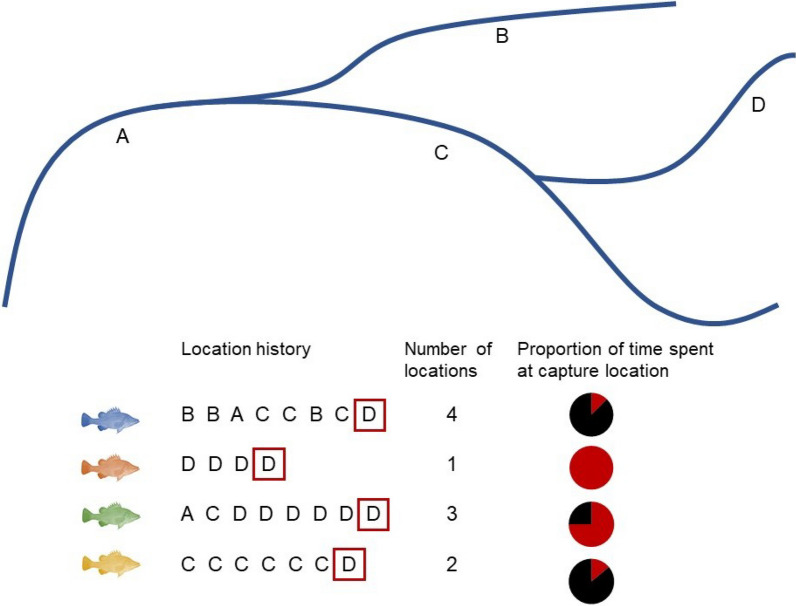 Figure 1
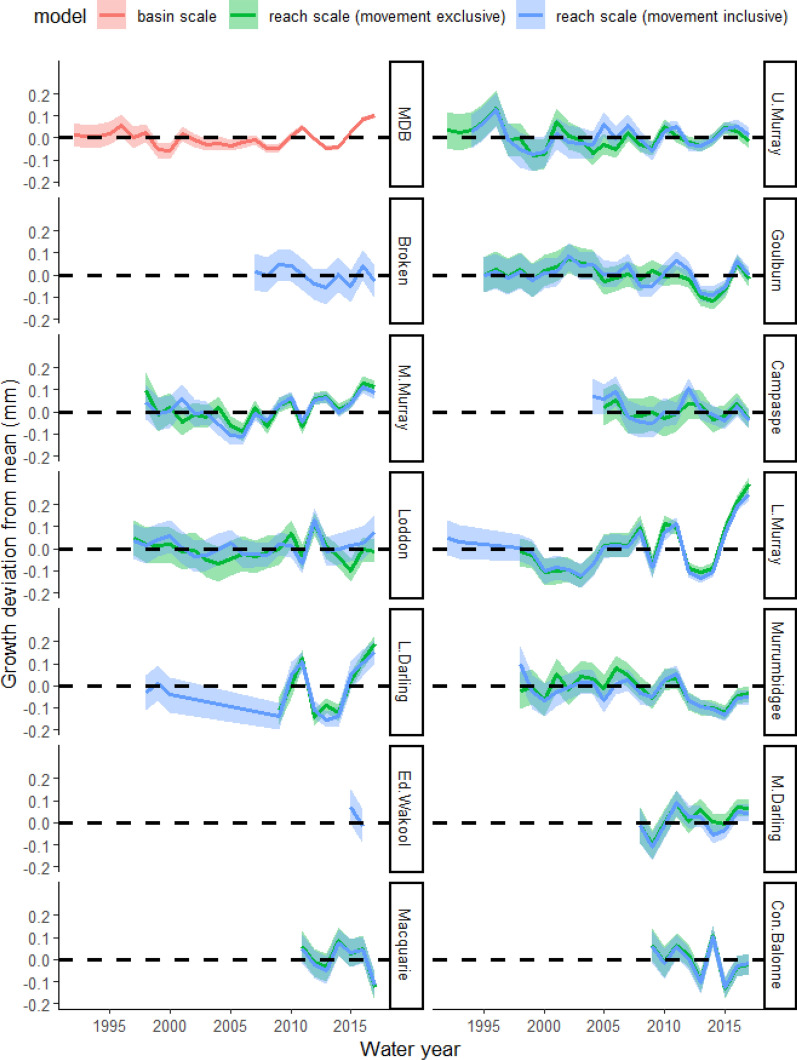 Figure 2
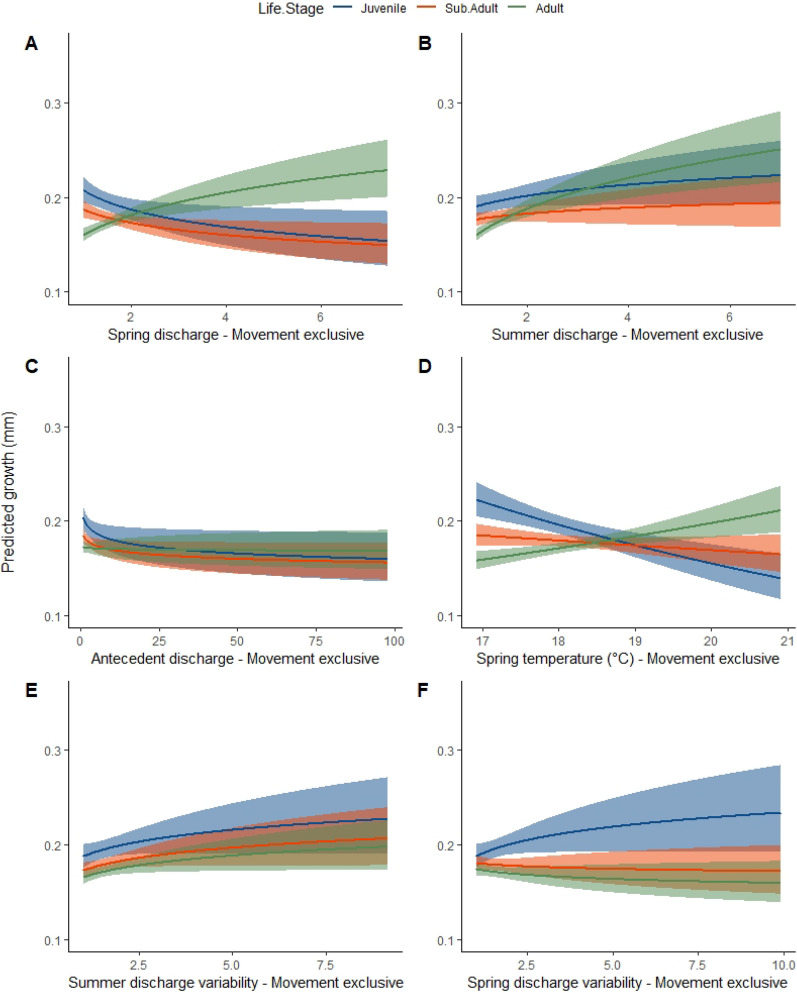 Figure 3
Peer Reviews
No public reviews on file for this paper yet. If you reviewed it on a platform where reviews are public (OpenReview, ICLR, NeurIPS, ICML), you can paste yours below so the community can read it here.
Videos
No videos yet. Explain this paper in a talk, walkthrough, or lecture? Add one.
Taxonomy
TopicsFish Ecology and Management Studies · Marine and fisheries research · Isotope Analysis in Ecology