Thin Layer Sonoelectrochemistry: The Solvents
Nadeesha P. W. Rathuwadu, Daniel L. Parr, Johna Leddy

TL;DR
This paper studies how ultrasound affects electrochemical reactions in thin fluid layers, showing that solvent properties influence the reaction rates without causing cavitation or heating.
Contribution
The study validates a model predicting TLS rate enhancements based on solvent properties using experimental data from various solvents.
Findings
Rate enhancements in TLS vary with solvent properties as predicted by the model.
No cavitation or heating is observed during TLS experiments.
The TLS model is verified for nonaqueous solvents using voltammetry data.
Abstract
In thin layer sonoelectrochemistry (TLS), ultrasound induces constructive interference in a thin fluid layer to increase interfacial rates. In TLS experiments, slow interfacial rates are increased during and after sonication. No cavitation or heating is observed in the fluid. A previously developed model quantifies how solvent properties impact TLS rates. Voltammetry for Fe3+ and benzoquinone in tetrahydrofuran, dimethylformamide, water, ethanol, and 2-propanol is undertaken with and without sonication. Rate enhancements vary with solvent properties, as quantitatively predicted by the model. The data vet the TLS model for nonaqueous solvents.
Genes, proteins, chemicals, diseases, species, mutations and cell lines named across the full text — each resolved to its canonical identifier and authoritative record.
Click any figure to enlarge with its caption.
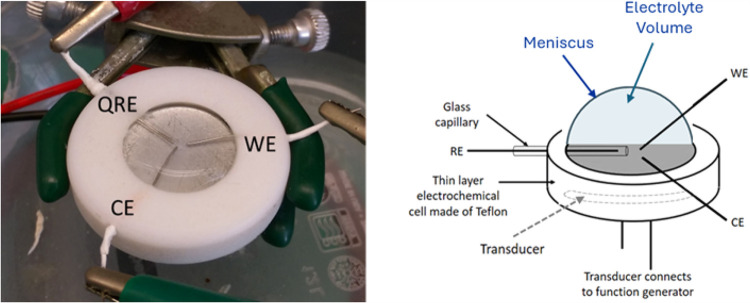 Figure 1
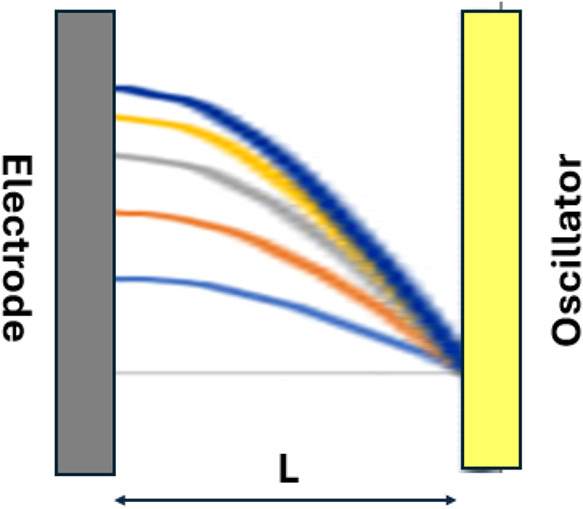 Figure 2
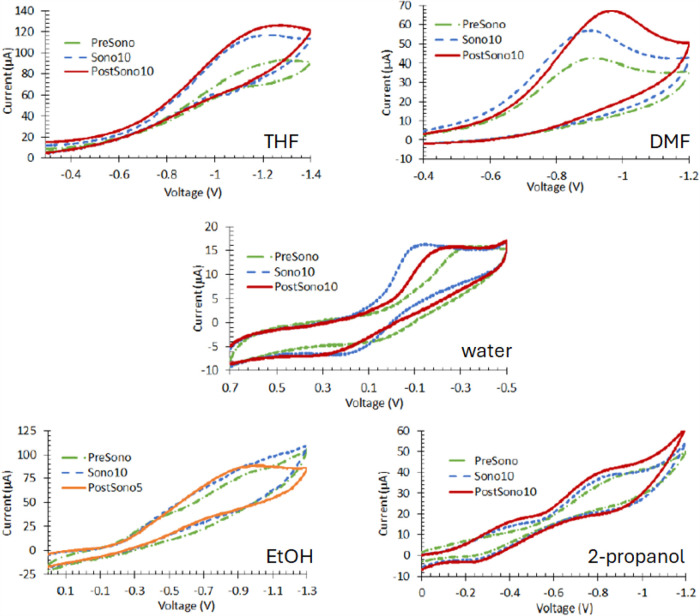 Figure 3
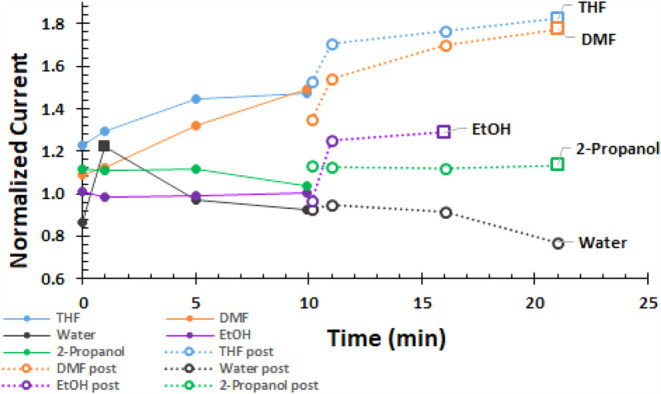 Figure 4
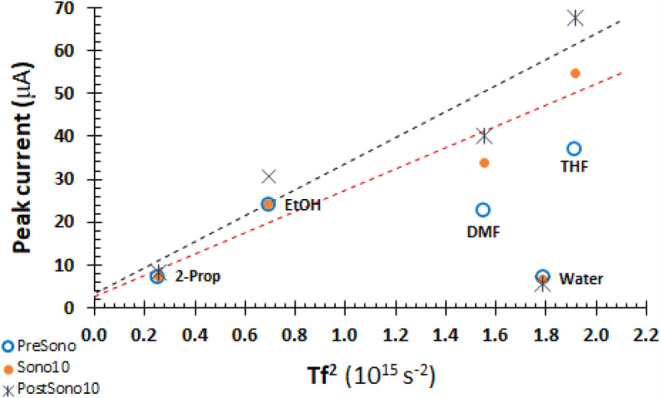 Figure 5
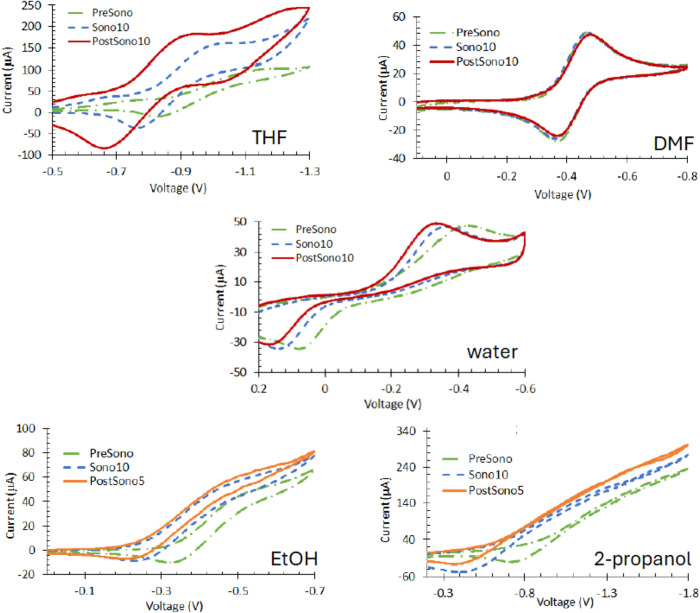 Figure 6
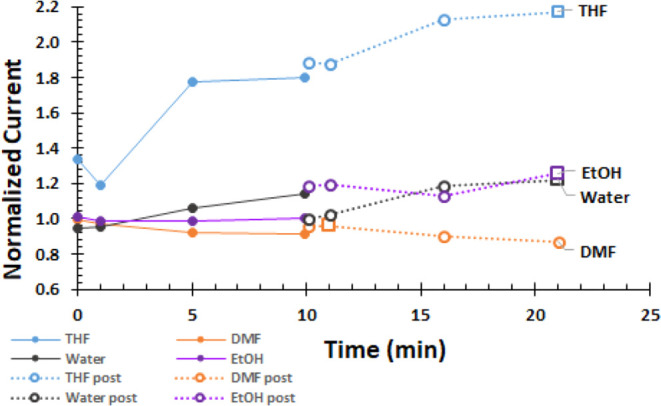 Figure 7
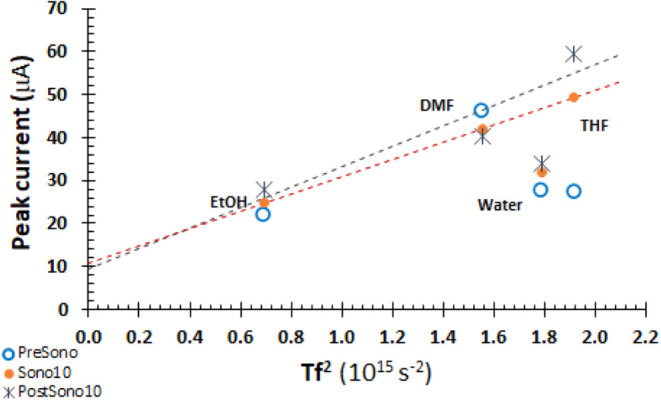 Figure 8
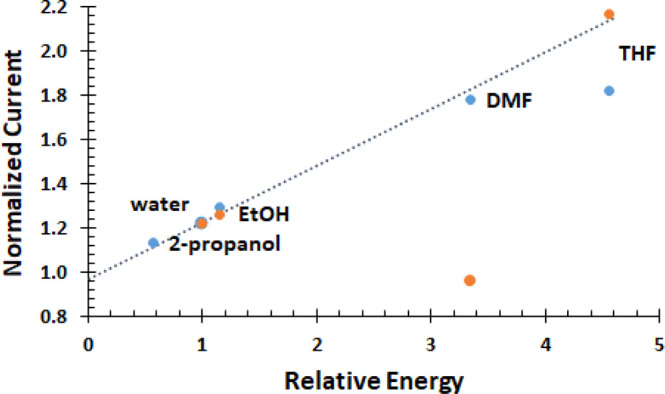 Figure 9
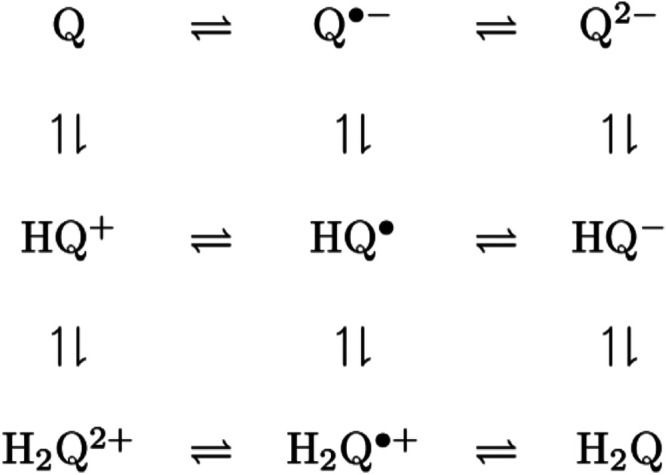 Figure 10
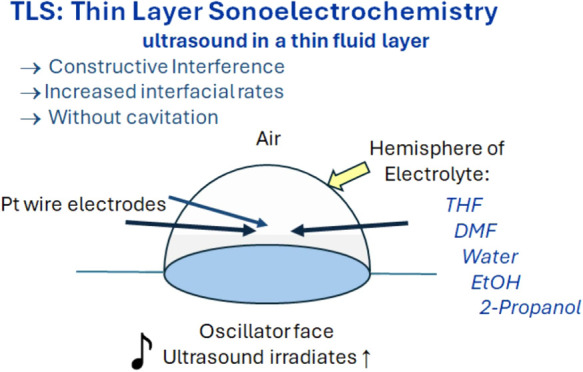 Figure 11
 Figure 12
 Figure 13
 Figure 14
 Figure 15
 Figure 16
 Figure 17
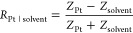 Figure 18
 Figure 19
 Figure 20
 Figure 21
 Figure 22
 Figure 23
Peer Reviews
No public reviews on file for this paper yet. If you reviewed it on a platform where reviews are public (OpenReview, ICLR, NeurIPS, ICML), you can paste yours below so the community can read it here.
Videos
No videos yet. Explain this paper in a talk, walkthrough, or lecture? Add one.
Taxonomy
TopicsUltrasound and Cavitation Phenomena · Electrochemical Analysis and Applications · Advanced Chemical Sensor Technologies