Structure and Dynamics of Macrophage Infectivity Potentiator Proteins from Pathogenic Bacteria and Protozoans Bound to Fluorinated Pipecolic Acid Inhibitors
Victor Hugo Pérez Carrillo, Jacob J. Whittaker, Christoph Wiedemann, Jean-Martin Harder, Theresa Lohr, Anil K. Jamithireddy, Marina Dajka, Benedikt Goretzki, Benesh Joseph, Albert Guskov, Nicholas J. Harmer, Ulrike Holzgrabe, Ute A. Hellmich

TL;DR
Scientists studied how certain proteins from harmful bacteria and parasites interact with specific inhibitors, using advanced techniques to better understand how to design effective drugs.
Contribution
The study provides high-resolution structural and dynamic insights into MIP-inhibitor interactions using a combination of NMR, EPR, and SAXS.
Findings
Crystal structures of MIPs from B. pseudomallei and T. cruzi bound to fluorinated pipecolic acid inhibitors were determined.
19F NMR revealed differences in ligand binding dynamics across MIPs from different species.
Inhibitor-induced structural changes in L. pneumophila MIP were observed using EPR and SAXS.
Abstract
Macrophage infectivity potentiator (MIP) proteins, found in pro- and eukaryotic pathogens, influence microbial virulence, host cell infection, pathogen replication, and dissemination. MIPs share an FKBP (FK506 binding protein)-like prolyl-cis/trans-isomerase domain, making them attractive targets for inhibitor development. We determined high-resolution crystal structures of Burkholderia pseudomallei and Trypanosoma cruzi MIPs in complex with fluorinated pipecolic acid inhibitors. The inhibitor binding profiles in solution were compared across B. pseudomallei, T. cruzi, and Legionella pneumophila MIPs using 1H, 15N, and 19F NMR spectroscopy. Demonstrating the versatility of fluorinated ligands for characterizing inhibitor complexes, 19F NMR spectroscopy identified differences in ligand binding dynamics across MIPs. EPR spectroscopy and SAXS further revealed inhibitor-induced global…
Genes, proteins, chemicals, diseases, species, mutations and cell lines named across the full text — each resolved to its canonical identifier and authoritative record.
Click any figure to enlarge with its caption.
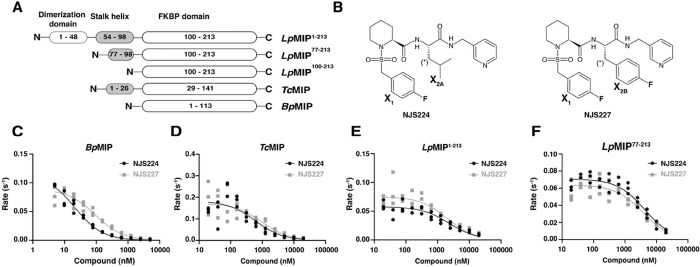 Figure 1
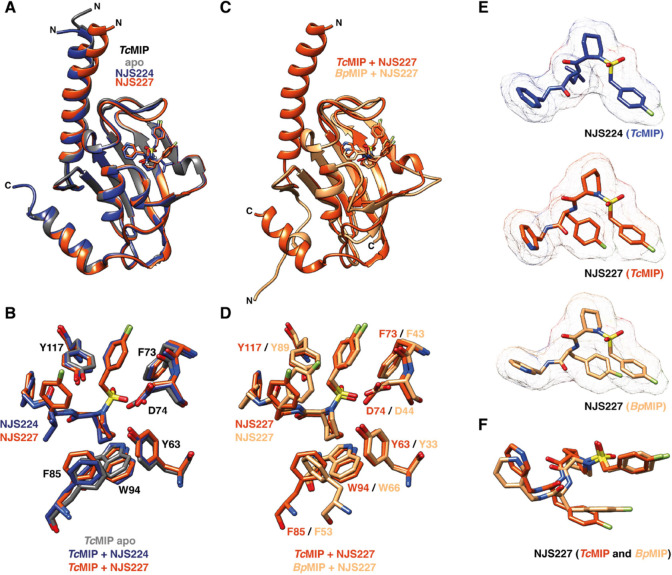 Figure 2
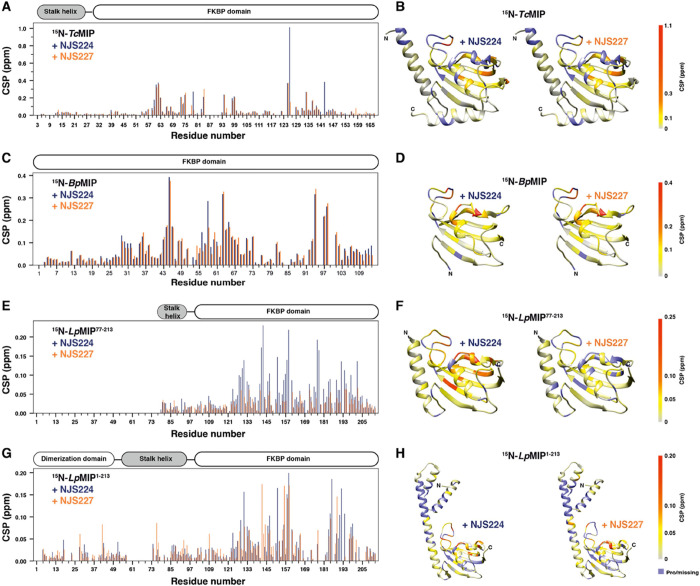 Figure 3
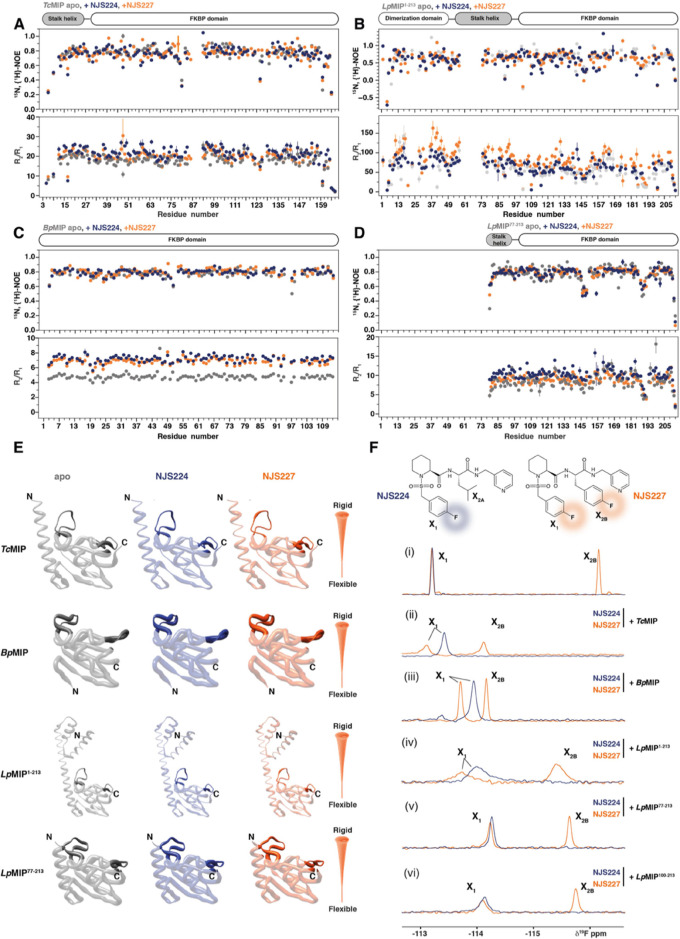 Figure 4
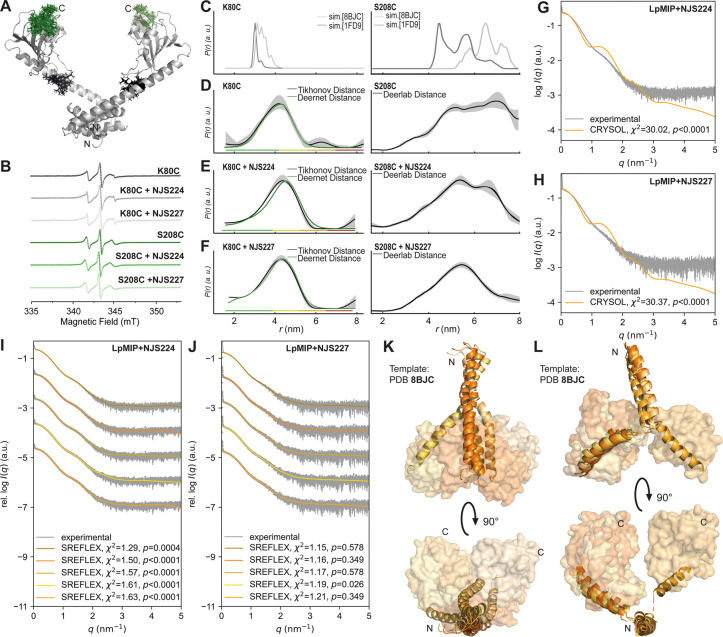 Figure 5
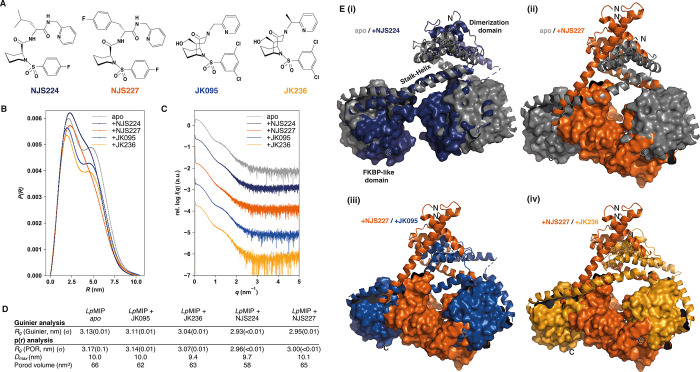 Figure 6
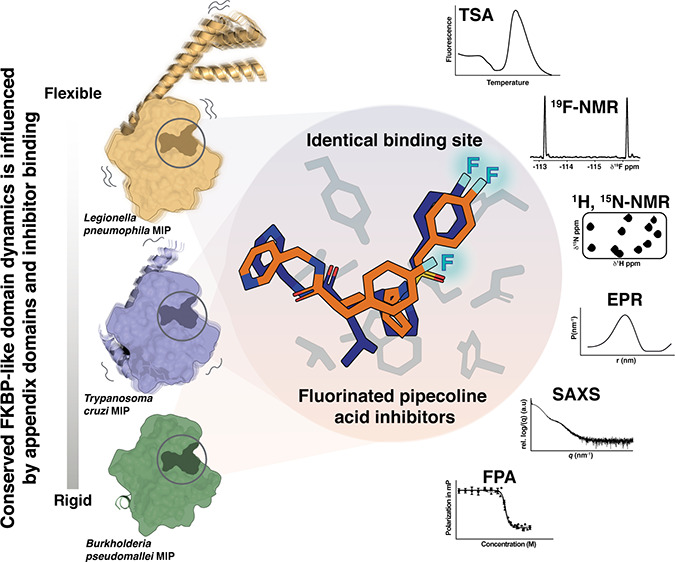 Figure 7
 Figure 8
 Figure 9
 Figure 10
 Figure 11
 Figure 12
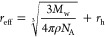 Figure 13
 Figure 14
 Figure 15
Peer Reviews
No public reviews on file for this paper yet. If you reviewed it on a platform where reviews are public (OpenReview, ICLR, NeurIPS, ICML), you can paste yours below so the community can read it here.
Videos
No videos yet. Explain this paper in a talk, walkthrough, or lecture? Add one.
Taxonomy
TopicsEnzyme Structure and Function · HIV Research and Treatment · RNA modifications and cancer