Negative-Ion Formation upon Soft X-ray Photoexcitation of 2-Propanol
Antti Kivimäki, Eetu Pelimanni, Kirill Chernenko, Abdul Rahman Abid, Christian Stråhlman

TL;DR
This study explores how 2-propanol molecules break apart into negative ions when exposed to soft X-rays, revealing new insights into molecular fragmentation.
Contribution
The study identifies nine new anion fragments and demonstrates the effectiveness of negative-ion/positive-ion coincidence spectroscopy.
Findings
Nine different anions were produced from 2-propanol under soft X-ray excitation.
Two protons were commonly involved in the most frequent three-ion events.
The method provides detailed insight into fragmentation processes of organic molecules.
Abstract
This study investigates the formation of negative ion fragments from gas-phase 2-propanol molecules after interaction with soft X-rays near the O K-edge. The experiment was performed by detecting negative and positive ions in coincidence with time-of-flight spectrometry. The analysis of two- and three-ion coincidence data revealed that nine different anions were produced: H–, C–, CH–, CH2–, O–, OH–, C2–, C2H–, and C3–. For all anions, the most common three-ion events were those involving two protons. The results highlight the sensitivity of negative-ion/positive-ion coincidence spectroscopy and provide new insight into the fragmentation processes of organic molecules under soft X-ray excitation.
Genes, proteins, chemicals, diseases, species, mutations and cell lines named across the full text — each resolved to its canonical identifier and authoritative record.
Click any figure to enlarge with its caption.
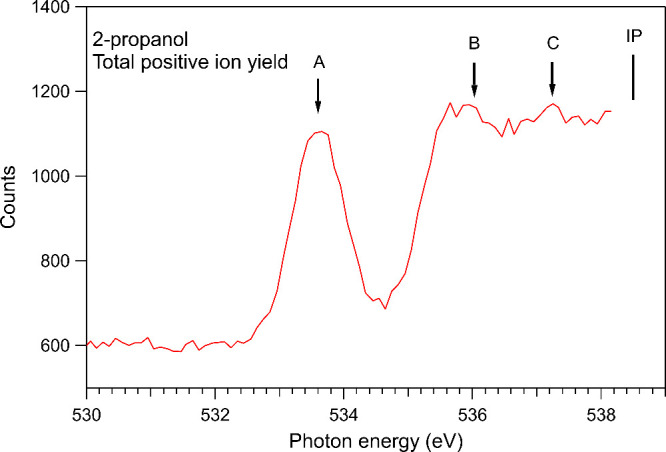 Figure 1
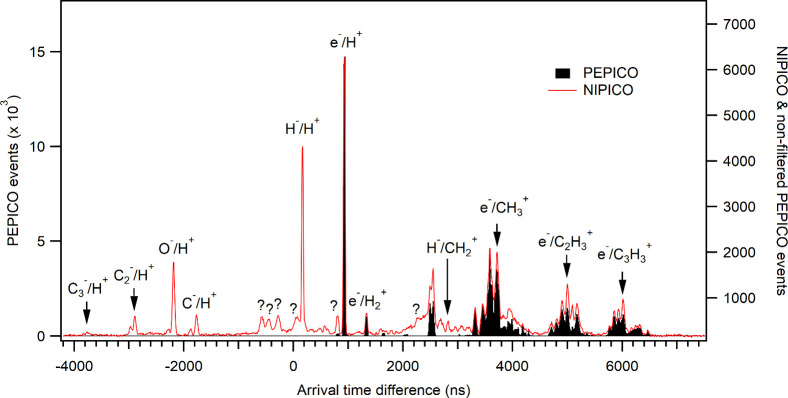 Figure 2
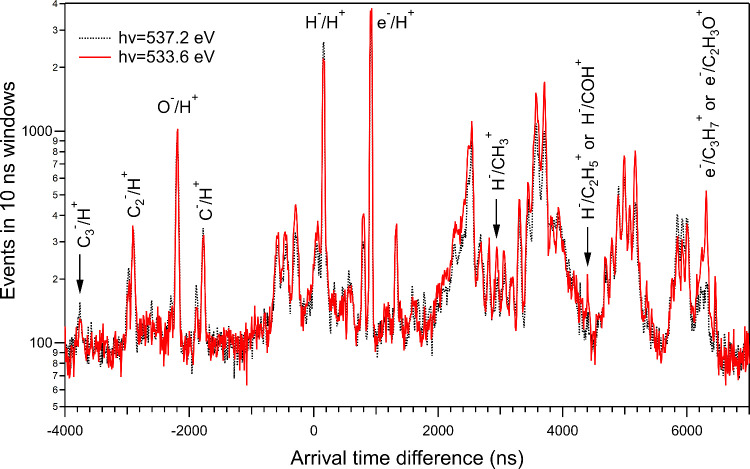 Figure 3
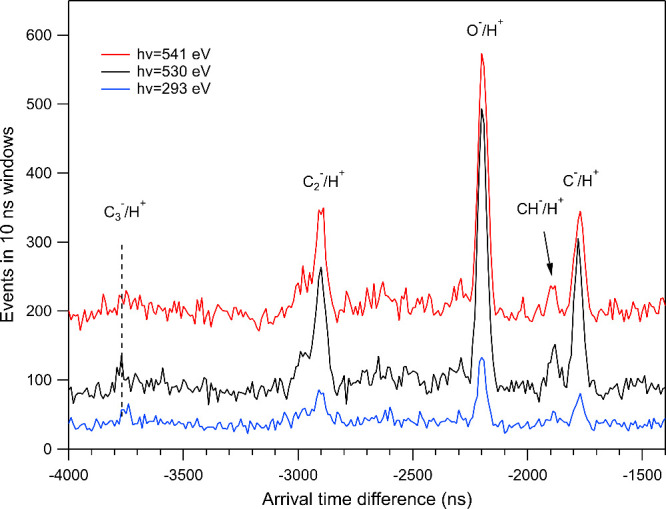 Figure 4
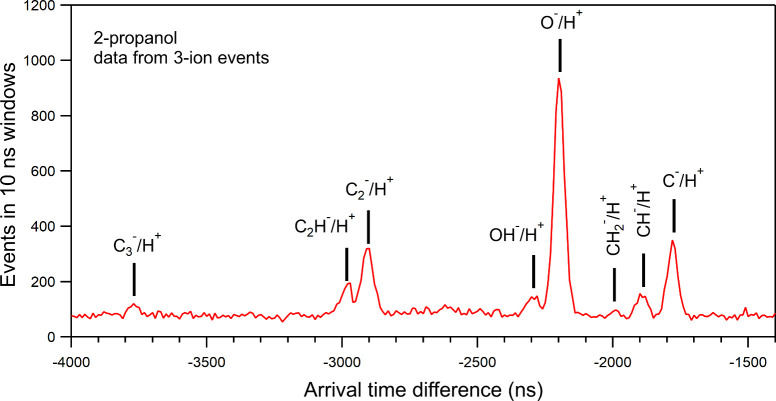 Figure 5
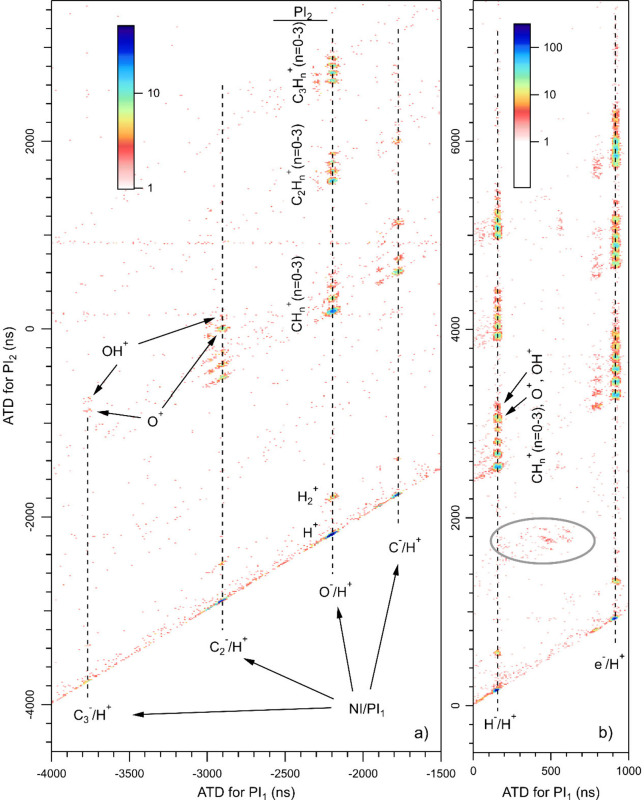 Figure 6
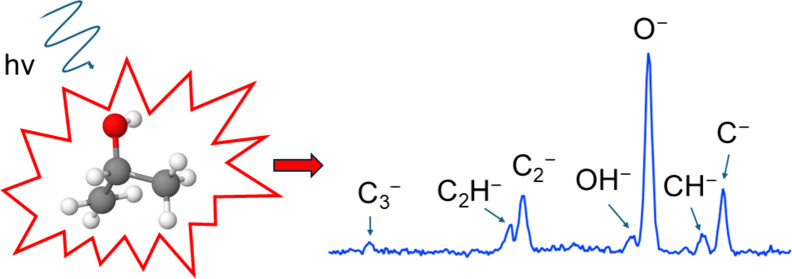 Figure 7
Peer Reviews
No public reviews on file for this paper yet. If you reviewed it on a platform where reviews are public (OpenReview, ICLR, NeurIPS, ICML), you can paste yours below so the community can read it here.
Videos
No videos yet. Explain this paper in a talk, walkthrough, or lecture? Add one.
Taxonomy
TopicsX-ray Spectroscopy and Fluorescence Analysis · Ion-surface interactions and analysis · Atomic and Molecular Physics