How Purposeful Adaptive Responses to Adverse Conditions Facilitate Successful Auditory Functioning: A Conceptual Model
Timothy Beechey, Graham Naylor

TL;DR
This paper introduces a conceptual model explaining how adaptive behaviors help people maintain good auditory functioning in challenging environments.
Contribution
The paper presents a new conceptual model integrating cognitive, physical, and linguistic adaptive responses to auditory challenges.
Findings
Adaptive behaviors are crucial for maintaining auditory performance in adverse conditions.
Hearing disability can be understood through the lens of environmental adaptation capacity.
Considering adaptive strategies can improve the generalizability of auditory research findings.
Abstract
This paper describes a conceptual model of adaptive responses to adverse auditory conditions with the aim of providing a basis for better understanding the demands of, and opportunities for, successful real-life auditory functioning. We review examples of behaviors that facilitate auditory functioning in adverse conditions. Next, we outline the concept of purpose-driven behavior and describe how changing behavior can ensure stable performance in a changing environment. We describe how tasks and environments (both physical and social) dictate which behaviors are possible and effective facilitators of auditory functioning, and how hearing disability may be understood in terms of capacity to adapt to the environment. A conceptual model of adaptive cognitive, physical, and linguistic responses within a moderating negative feedback system is presented along with implications for the…
Genes, proteins, chemicals, diseases, species, mutations and cell lines named across the full text — each resolved to its canonical identifier and authoritative record.
Click any figure to enlarge with its caption.
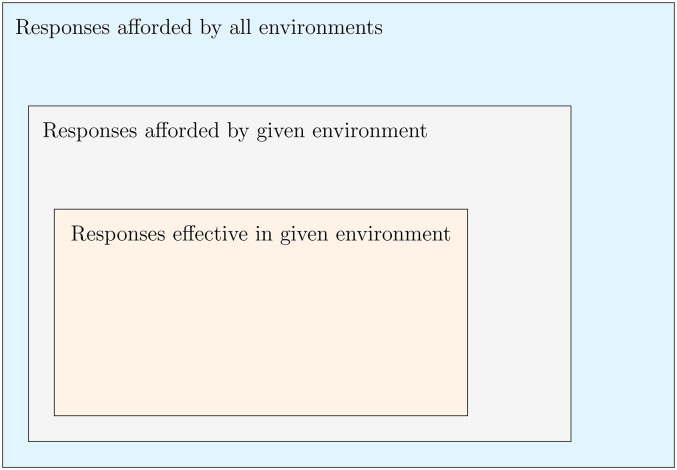 Figure 1
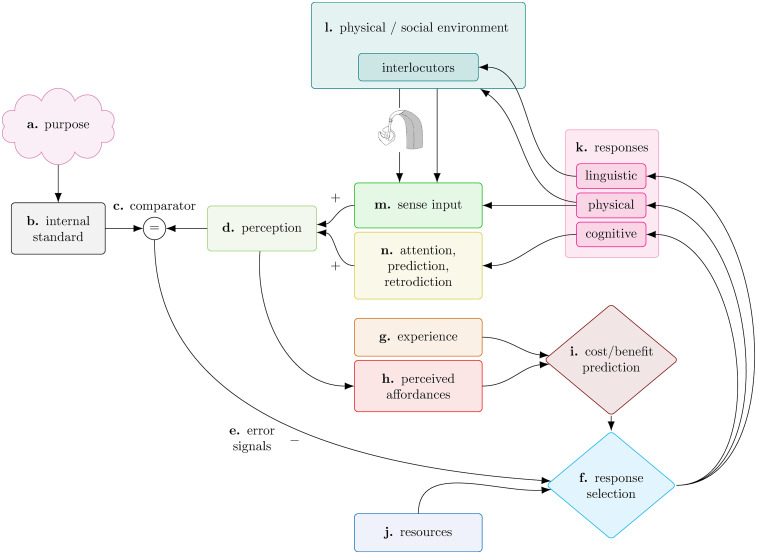 Figure 2
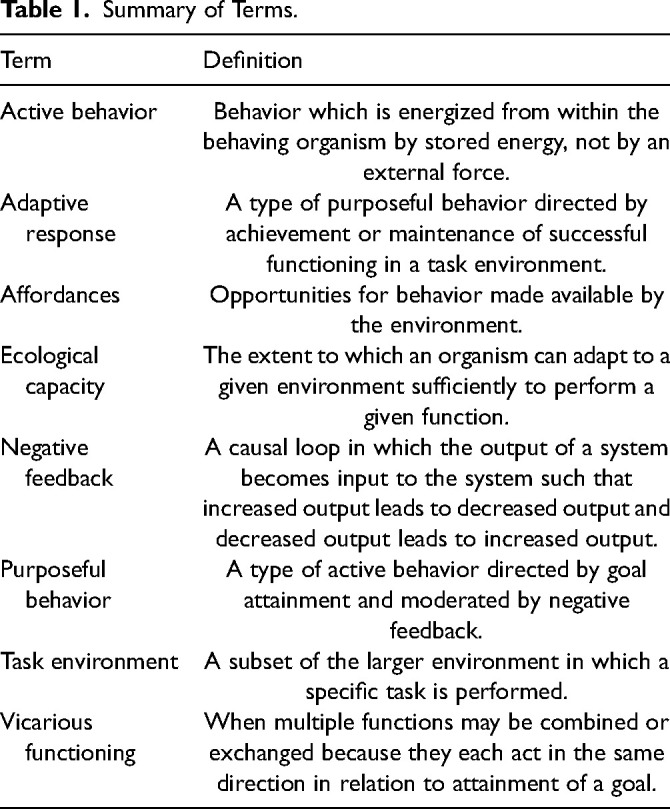 Figure 3
Peer Reviews
No public reviews on file for this paper yet. If you reviewed it on a platform where reviews are public (OpenReview, ICLR, NeurIPS, ICML), you can paste yours below so the community can read it here.
Videos
No videos yet. Explain this paper in a talk, walkthrough, or lecture? Add one.
Taxonomy
TopicsHearing Loss and Rehabilitation · Noise Effects and Management · Neuroscience and Music Perception