Native Capillary Nanogel Electrophoresis Assay of Inhibitors of Neuraminidases Derived from H1N1 and H5N1 Influenza A Pandemics
Laura N. Taylor, Lisa A. Holland, Makenzie T. Witzel

TL;DR
This paper introduces a new capillary electrophoresis method to measure how well drugs inhibit influenza A virus neuraminidase enzymes from H1N1 and H5N1 strains.
Contribution
A novel native capillary nanogel electrophoresis assay is developed for real-time monitoring of neuraminidase inhibition.
Findings
The assay quantifies enzyme activity and inhibitor effectiveness in real time using a thermally reversible nanogel.
Inhibition constants for DANA, oseltamivir acid, and peramivir were determined for H1N1 and H5N1 neuraminidases.
The method maintains the native structure of tetrameric neuraminidases during analysis.
Abstract
Tetrameric neuraminidases cleave the end-capping sialylated monomer from oligosaccharide ligands at the surface of a host cell infected by the influenza A virus. This cleavage releases the replicated virions from the host cell, making drugs that inhibit neuraminidase function effective to treat influenza A infections. A capillary electrophoresis separation-based assay is reported that maintains the native structure of tetrameric viral neuraminidases derived from H1N1 or H5N1 influenza A pandemics which convert, in-real time, a substrate that mimics 6′-sialyllated threonine-linked glycans on human cells. The assay integrates the enzyme reaction with the separation and is operated using a background electrolyte containing 100 mM NaCl with a thermally reversible nanogel in a 10 μm inner diameter fused silica capillary. In addition to defining the 0.4 nL reaction zone maintained at 37 °C,…
Genes, proteins, chemicals, diseases, species, mutations and cell lines named across the full text — each resolved to its canonical identifier and authoritative record.
Click any figure to enlarge with its caption.
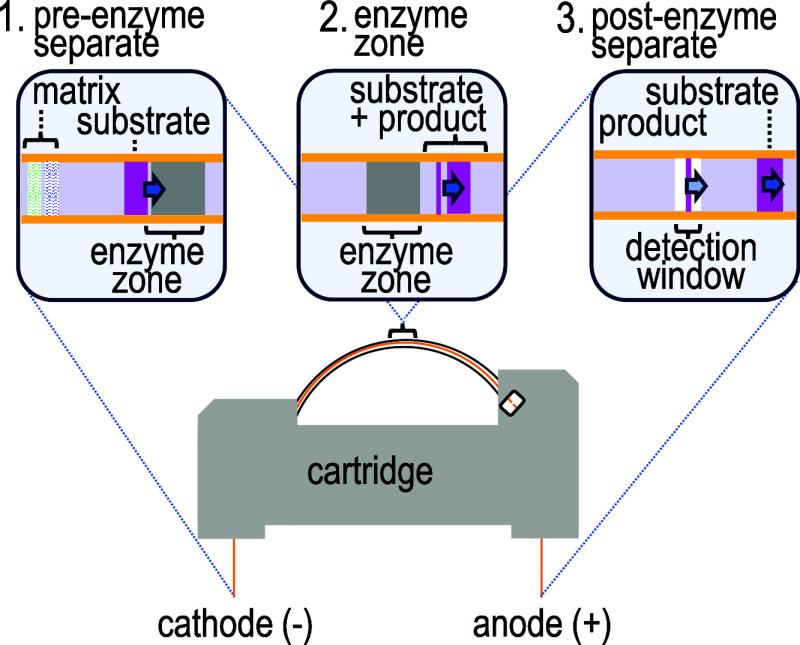 Figure 1
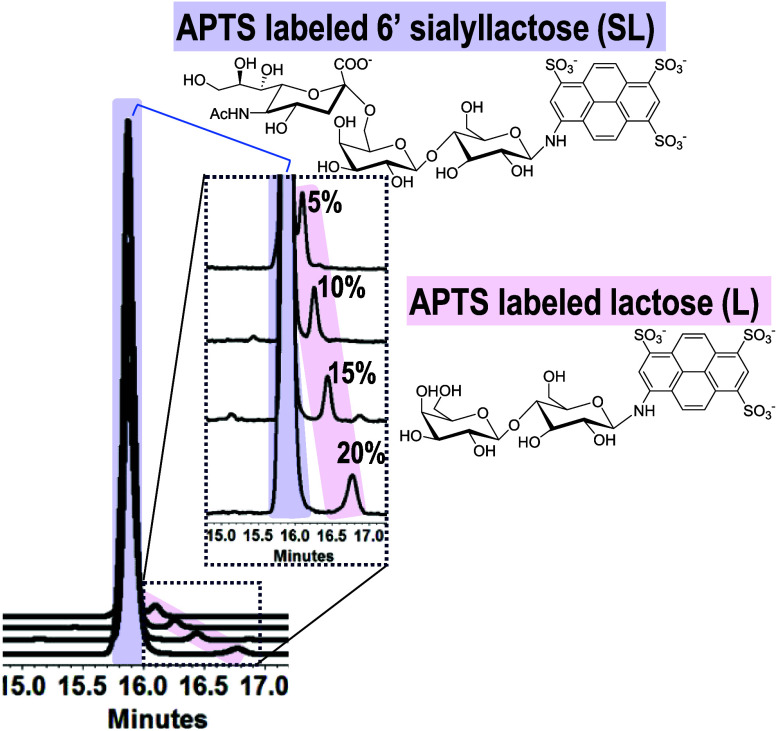 Figure 2
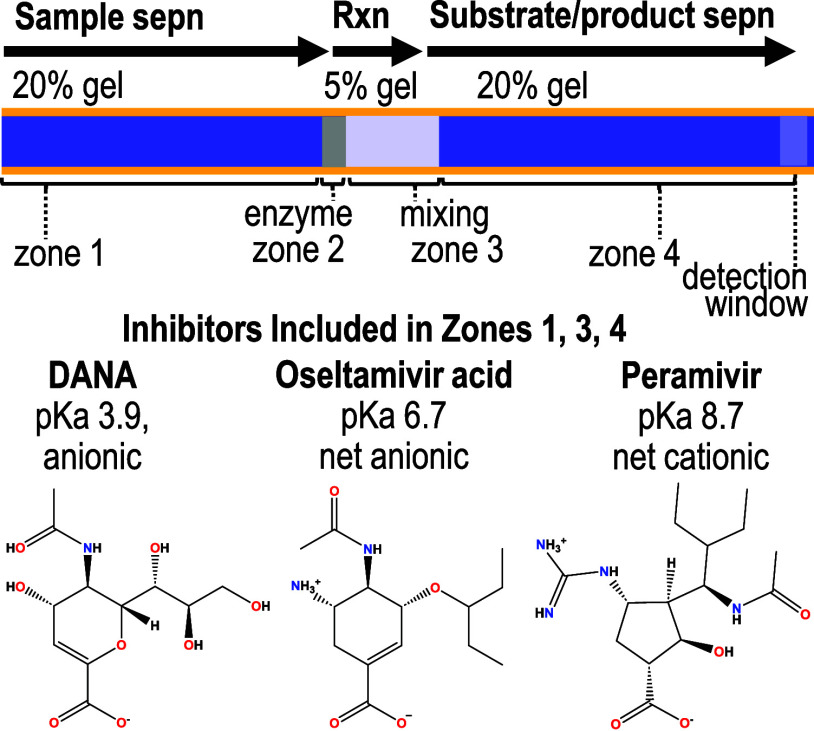 Figure 3
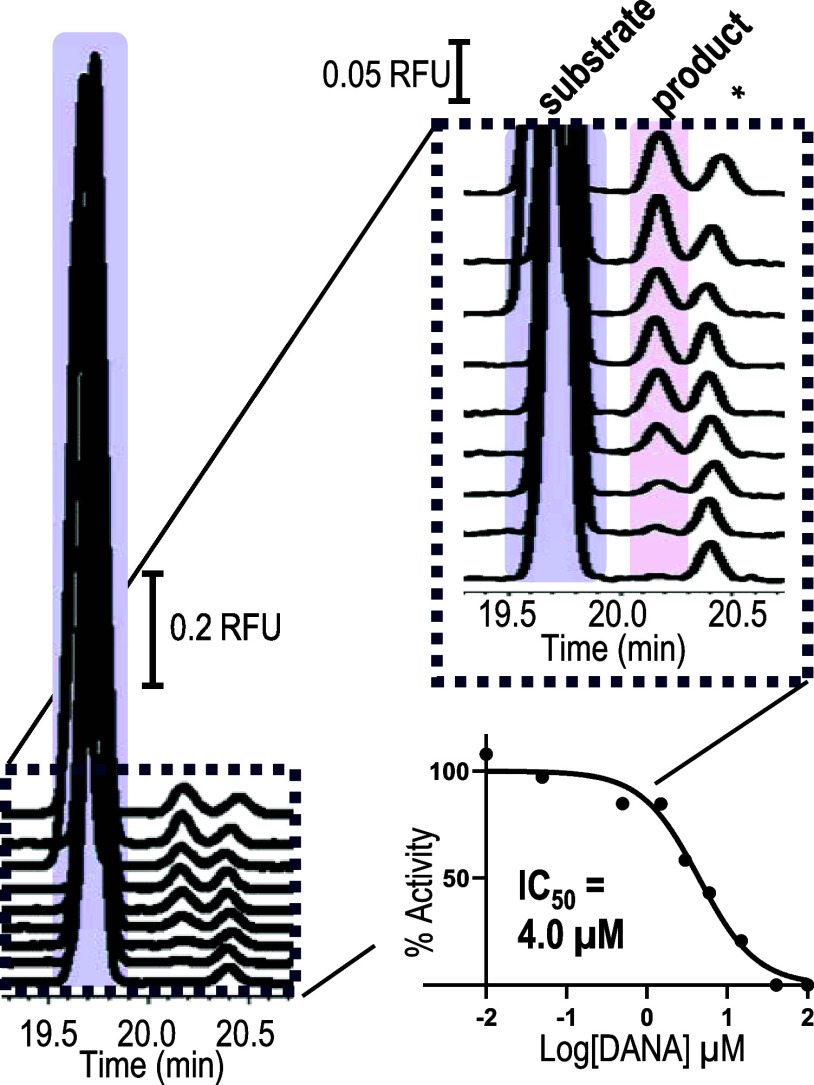 Figure 4
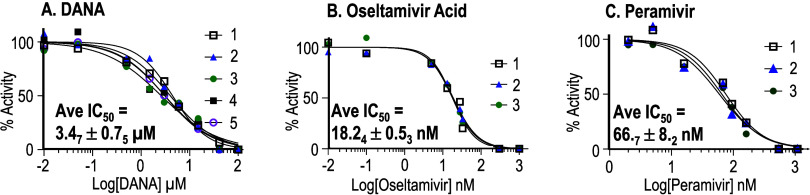 Figure 5
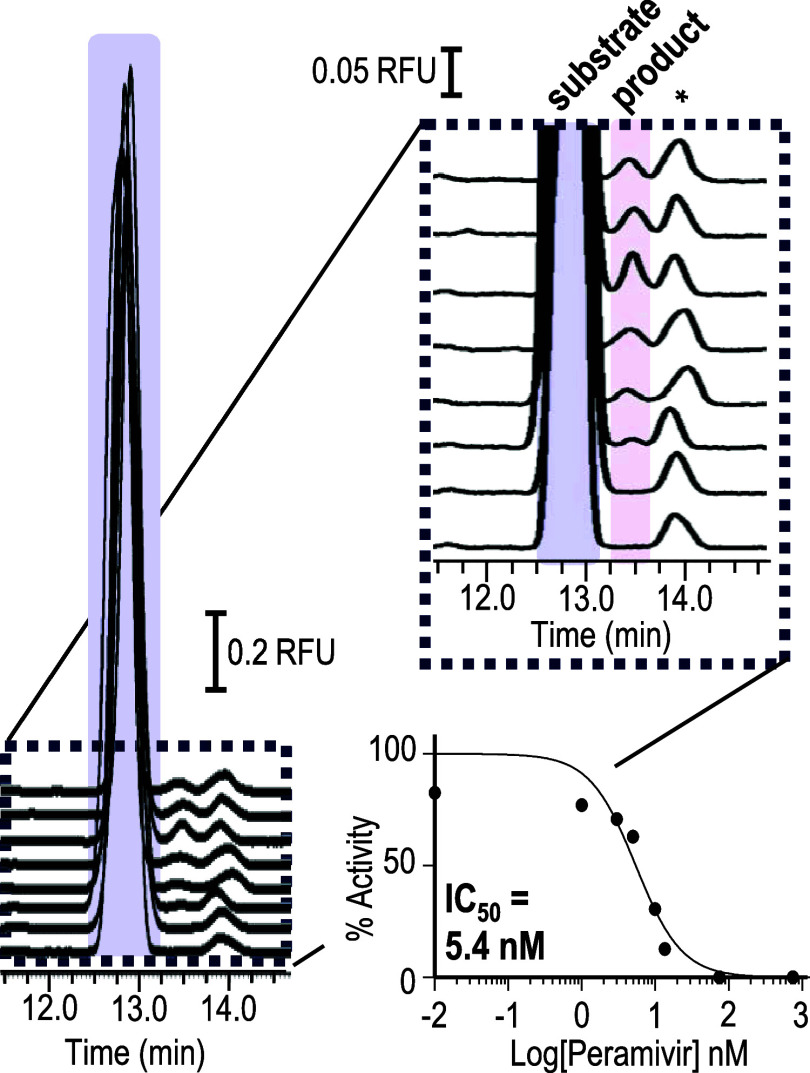 Figure 6
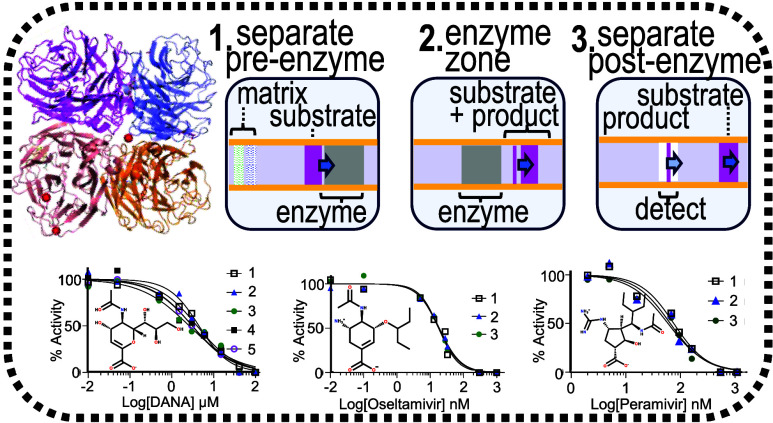 Figure 7
Peer Reviews
No public reviews on file for this paper yet. If you reviewed it on a platform where reviews are public (OpenReview, ICLR, NeurIPS, ICML), you can paste yours below so the community can read it here.
Videos
No videos yet. Explain this paper in a talk, walkthrough, or lecture? Add one.
Taxonomy
TopicsSARS-CoV-2 and COVID-19 Research · Influenza Virus Research Studies · Lipid Membrane Structure and Behavior