A spinal and bulbar muscular atrophy (SBMA) disease-specific human embryonic stem cell (hESC) line, UMICHe002-A/UM197–1
Indri Erliandri, Agamjot Sangotra, Laura Keller, Andrew P. Lieberman, Gary D. Smith

TL;DR
This paper introduces the first human embryonic stem cell line for studying SBMA, a neuromuscular disorder caused by a genetic mutation.
Contribution
The first SBMA-specific human embryonic stem cell line, UM197–1, is established and registered with NIH.
Findings
UM197–1 is a pluripotent stem cell line derived from an SBMA patient.
The cell line can differentiate into three germ layers in vitro.
It provides a new model for studying SBMA disease mechanisms.
Abstract
Spinal and Bulbar Muscular Atrophy (SBMA) is an X-linked degenerative disorder of the neuromuscular system that is caused by an expanded CAG/polyglutamine (polyQ) tract within the Androgen Receptor (AR) gene. This mutation causes progressive muscle weakness and atrophy in men. Here, we report the establishment of the first SBMA disease-specific human embryonic stem cell (hESC) line in the NIH hESC registry, UM197–1. UM197–1 exhibits pluripotency, the ability to differentiate into three germ layers in vitro, and provides a new cellular model system to study SBMA disease pathogenesis.
Genes, proteins, chemicals, diseases, species, mutations and cell lines named across the full text — each resolved to its canonical identifier and authoritative record.
Click any figure to enlarge with its caption.
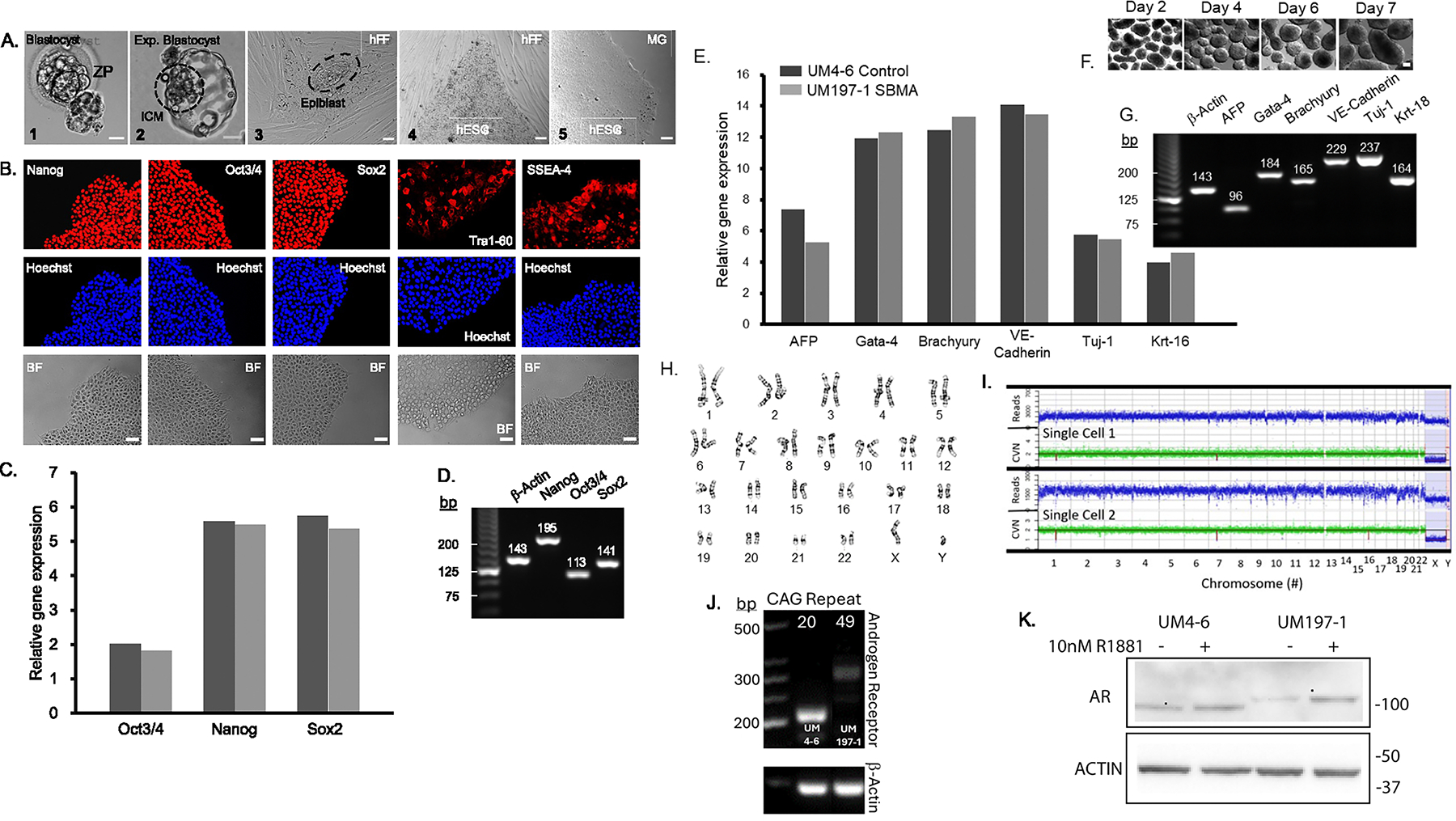 Figure 1
Peer Reviews
No public reviews on file for this paper yet. If you reviewed it on a platform where reviews are public (OpenReview, ICLR, NeurIPS, ICML), you can paste yours below so the community can read it here.
Videos
No videos yet. Explain this paper in a talk, walkthrough, or lecture? Add one.
Taxonomy
TopicsGenetic Neurodegenerative Diseases · Neurogenetic and Muscular Disorders Research · Muscle Physiology and Disorders