Negative Video Head Impulse Test in Acute Vestibular Syndrome Does Not Exclude Vestibular Neuritis: Insights and Challenges in Diagnosis
Pavol Skacik, Stefan Sivak, Egon Kurca

TL;DR
A negative video head impulse test in acute vestibular syndrome does not rule out vestibular neuritis, highlighting the need for clinical judgment in diagnosis.
Contribution
Highlights the limitations of v-HIT in diagnosing vestibular neuritis and emphasizes the importance of clinical integration.
Findings
v-HIT can produce false negatives in acute vestibular neuritis.
Clinical judgment is essential when v-HIT results conflict with other diagnostic findings.
Combining patient history and physical findings improves diagnostic accuracy.
Abstract
Video Head Impulse Test (v‐HIT) is a valuable tool for diagnosing acute and chronic vestibular disorders but may yield false negatives in acute vestibular neuritis. Clinical judgment remains paramount; integrating patient history, physical findings, and ancillary tests ensures accurate diagnosis, especially when v‐HIT results conflict with the clinical picture and other diagnostic tools.
Genes, proteins, chemicals, diseases, species, mutations and cell lines named across the full text — each resolved to its canonical identifier and authoritative record.
Click any figure to enlarge with its caption.
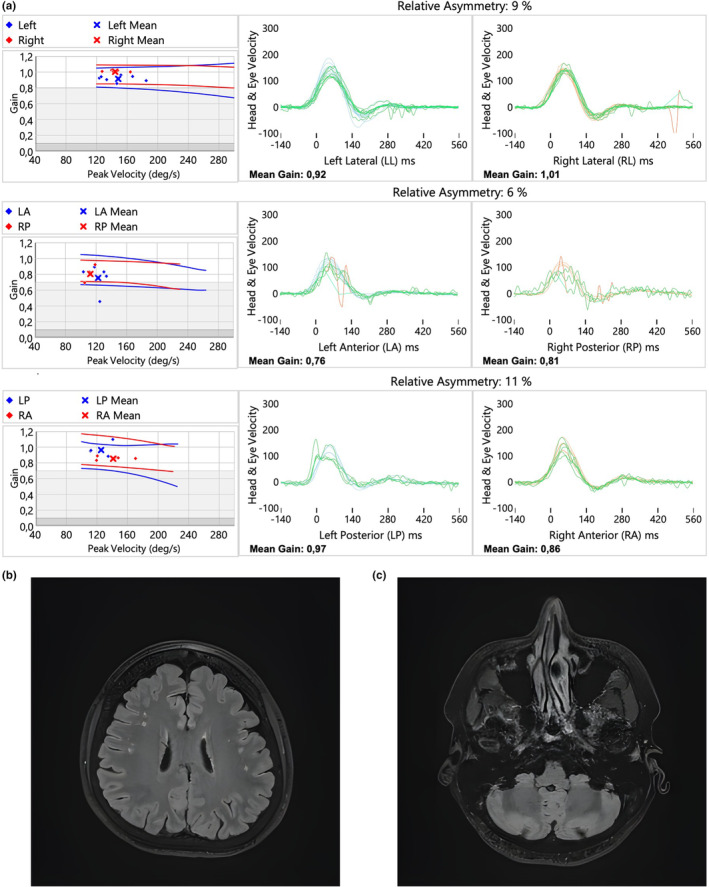 Figure 1
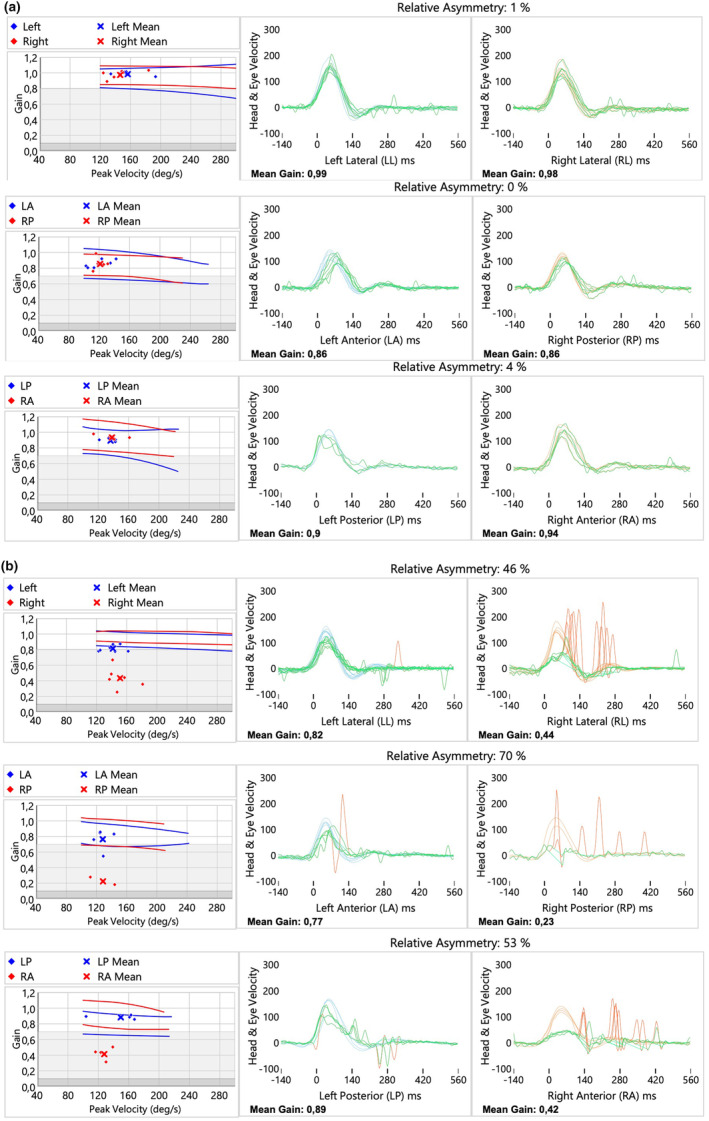 Figure 2
Peer Reviews
No public reviews on file for this paper yet. If you reviewed it on a platform where reviews are public (OpenReview, ICLR, NeurIPS, ICML), you can paste yours below so the community can read it here.
Videos
No videos yet. Explain this paper in a talk, walkthrough, or lecture? Add one.
Taxonomy
TopicsVestibular and auditory disorders · Hearing, Cochlea, Tinnitus, Genetics · Ophthalmology and Eye Disorders