Chemically-induced cellular stress signals are transmitted to alternative splicing via UsnRNA levels to alter gene expression in Arabidopsis thaliana
Hirokazu Takahashi, Toshihiro Arae, Kodai Ishibashi, Ryosuke Sano, Taku Demura, Misato Ohtani

TL;DR
This study shows that cellular stress in plants can change gene expression by altering alternative splicing, which is influenced by UsnRNA levels and SRD2-mediated transcription.
Contribution
The study reveals a novel mechanism linking cellular stress to alternative splicing through UsnRNA levels and SRD2 in Arabidopsis.
Findings
Stress treatments altered AS patterns and U1 snRNA levels in Arabidopsis.
The srd2-1 mutant showed hypersensitivity to stress, with AS changes at lower stress concentrations.
Cellular stress influences gene expression via AS regulation, partially mediated by UsnRNA levels.
Abstract
Alternative pre-mRNA splicing (AS) is a crucial regulatory layer of gene expression in eukaryotes. AS patterns can change in response to abiotic and biotic stress, allowing cellular functions to adapt to environmental conditions. Here, we examined the effects of cellular stress-inducing chemicals on AS-mediated gene regulation in Arabidopsis thaliana by investigating the alternatively spliced forms of SERINE-ARGININE PROTEIN30 (SRp30) and U1-70 K, encoding splicing factors, as well as ASCORBATE PEROXIDASE3 (APX3) and FOLYLPOLYGLUTAMATE SYNTHASE3 (FPGS3), encoding enzymes important for stress responses. Disrupting key cellular activities, including nitric oxide metabolism, ATPase activity, plastid function, and genome stability, affected AS patterns in Arabidopsis. Stress treatment altered the abundance of uridine-rich small nuclear RNAs (UsnRNAs), especially U1 snRNAs, which are…
Genes, proteins, chemicals, diseases, species, mutations and cell lines named across the full text — each resolved to its canonical identifier and authoritative record.
Click any figure to enlarge with its caption.
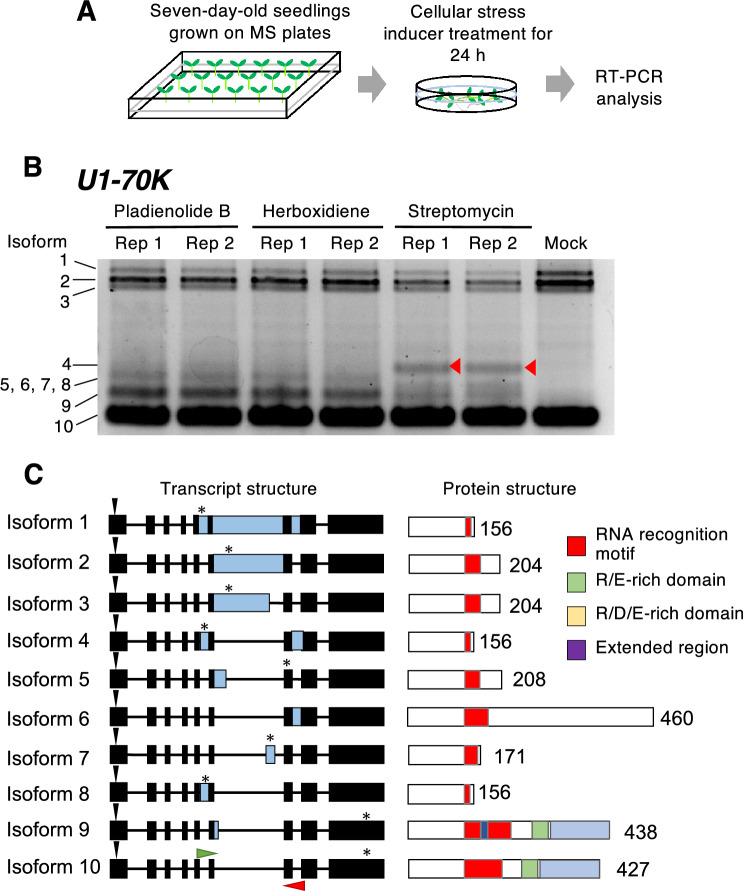 Figure 1
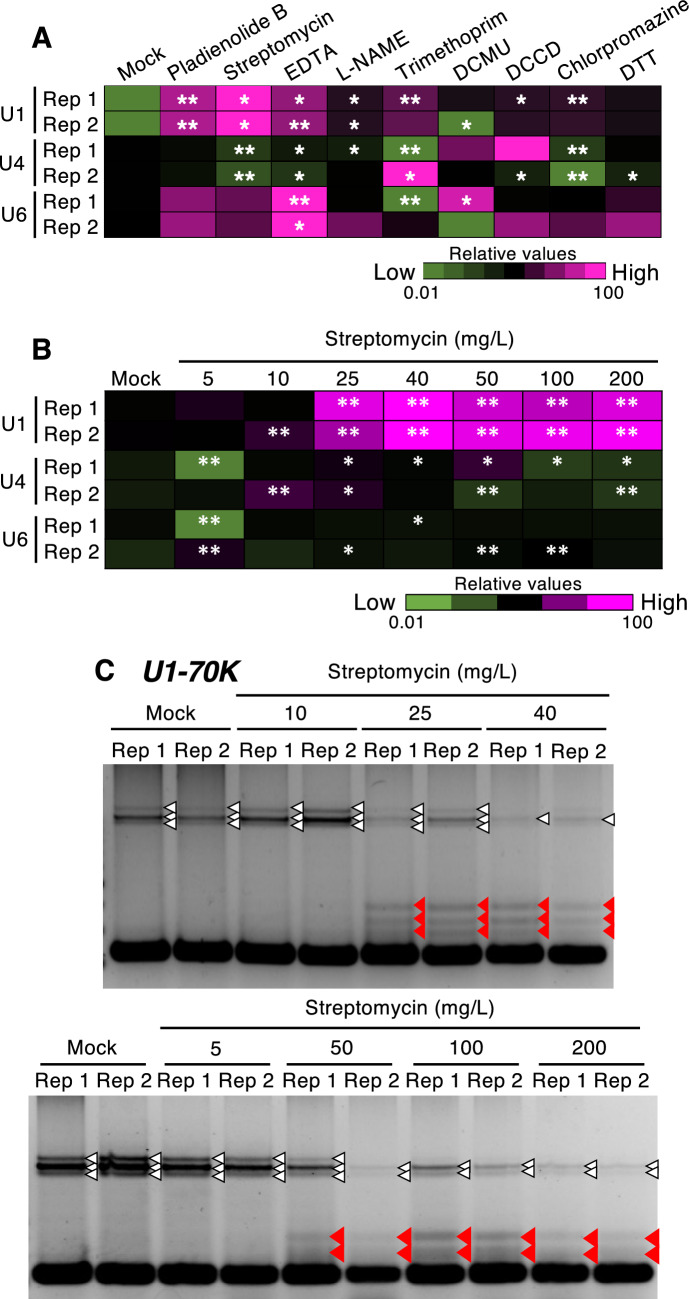 Figure 2
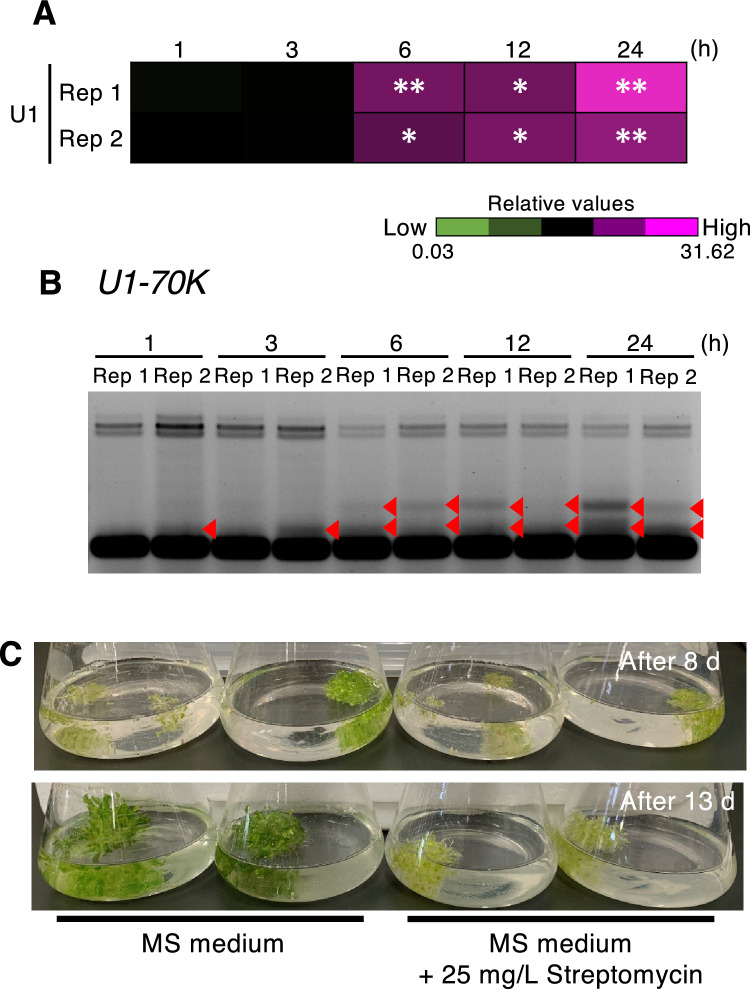 Figure 3
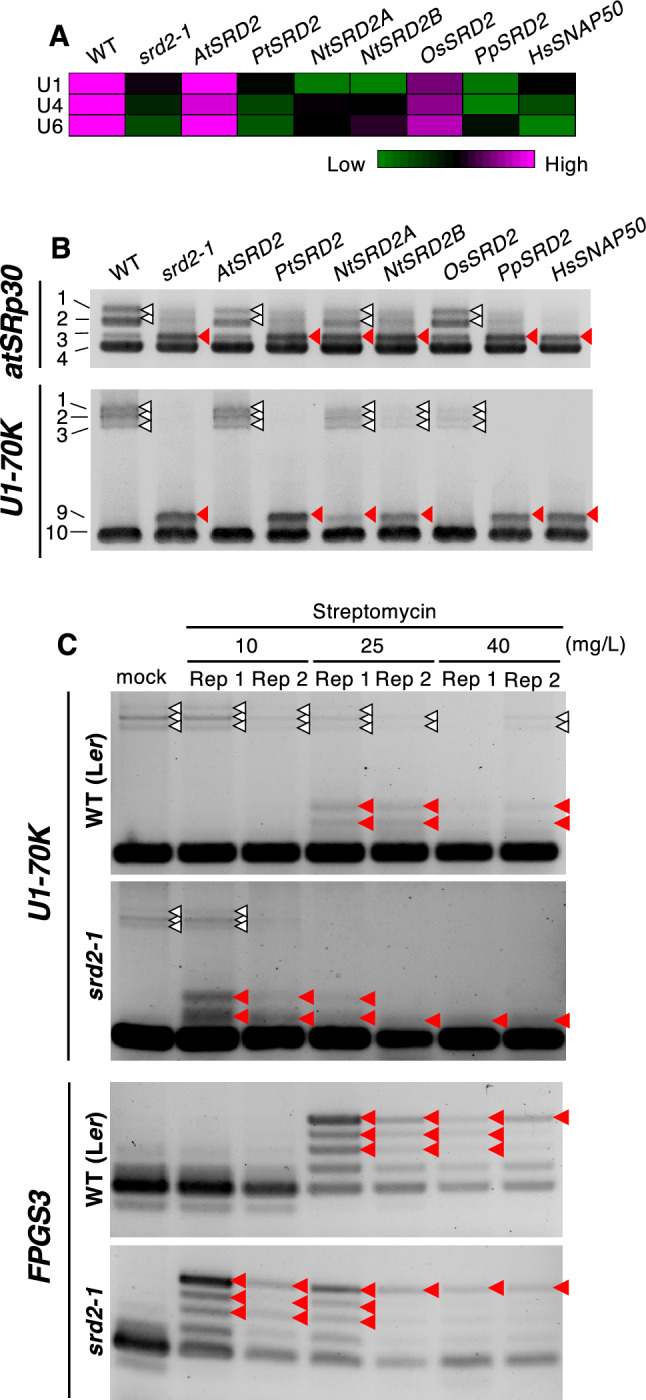 Figure 4
Peer Reviews
No public reviews on file for this paper yet. If you reviewed it on a platform where reviews are public (OpenReview, ICLR, NeurIPS, ICML), you can paste yours below so the community can read it here.
Videos
No videos yet. Explain this paper in a talk, walkthrough, or lecture? Add one.
Taxonomy
TopicsRNA Research and Splicing · RNA modifications and cancer · Plant Molecular Biology Research