Monitoring air pollutants in urbanized hydrothermal areas: challenges and benefits of traditional measurement strategies
Leonardo Fantini, Stefania Venturi, Francesco Capecchiacci, Tullio Ricci, Rebecca Biagi, Franco Tassi

TL;DR
This study examines air pollution in Tivoli Terme, Italy, from natural hydrothermal sources and human activities, highlighting limitations of traditional monitoring methods.
Contribution
The paper introduces an integrated monitoring strategy combining mobile and low-cost instruments to better track pollution sources.
Findings
Hydrothermal and anthropogenic emissions both contribute to air contamination, but levels remain below outdoor thresholds.
H2S concentrations near sulfur-rich pools indicate a significant hydrothermal impact.
Traditional fixed monitoring fails to reliably distinguish pollution sources due to weather and ambiguous geochemical data.
Abstract
Carbon- and sulfur-bearing gases are emitted at relevant amounts from hydrothermal manifestations at Tivoli Terme (Latium, central Italy), where different potential anthropogenic contaminant sources also occur. This study presents a geochemical dataset including CO2, CH4, SO2, and H2S concentrations and δ13C-CO2 and δ13C-CH4 values measured in air at the center of Tivoli town. The main aim was to evaluate the impact on air quality of hydrothermal manifestations and anthropogenic activities employing a traditional stationary monitoring strategy. The analytical results reveal significant air contamination from both natural and anthropogenic emissions, although gas levels were below outdoor air quality thresholds. Carbon dioxide and CH4 were primarily linked to anthropogenic sources, while hydrothermal emissions played a secondary role. However, H2S concentrations up to 282 ppb highlighted…
Genes, proteins, chemicals, diseases, species, mutations and cell lines named across the full text — each resolved to its canonical identifier and authoritative record.
Click any figure to enlarge with its caption.
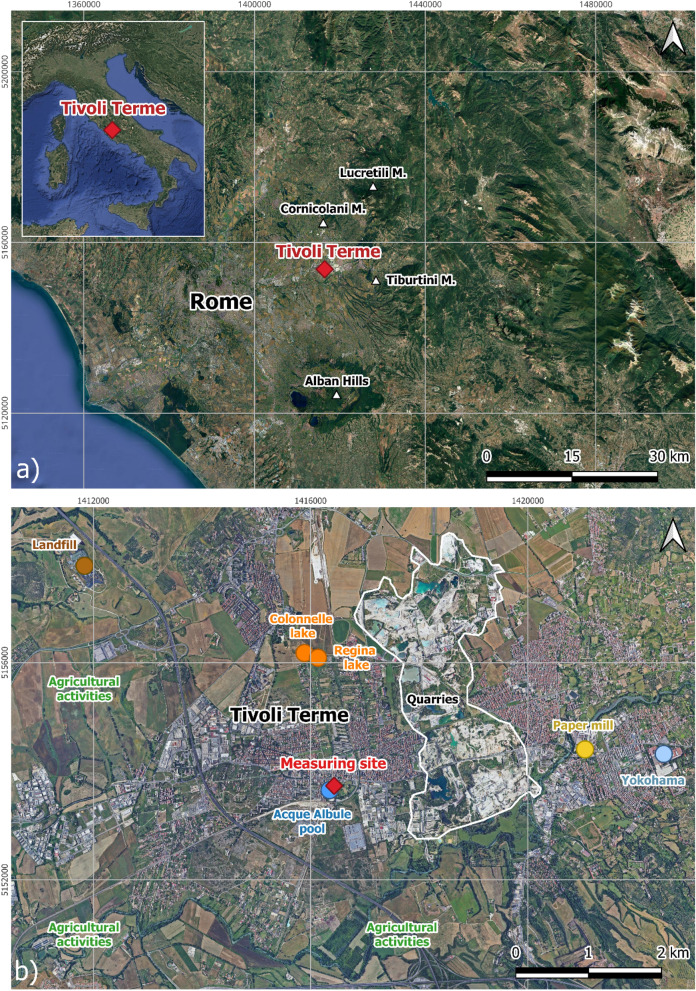 Figure 1
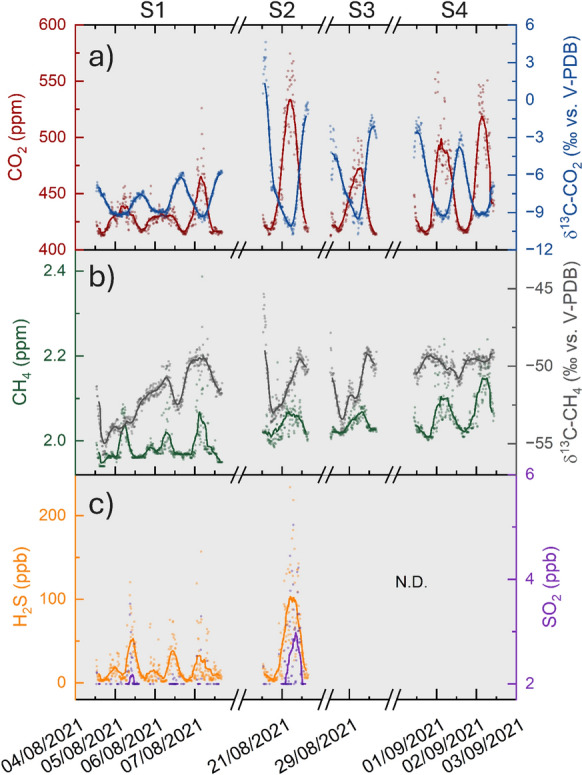 Figure 2
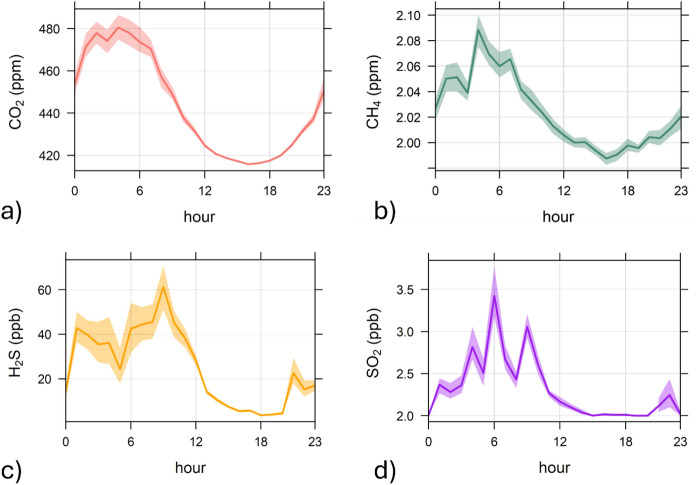 Figure 3
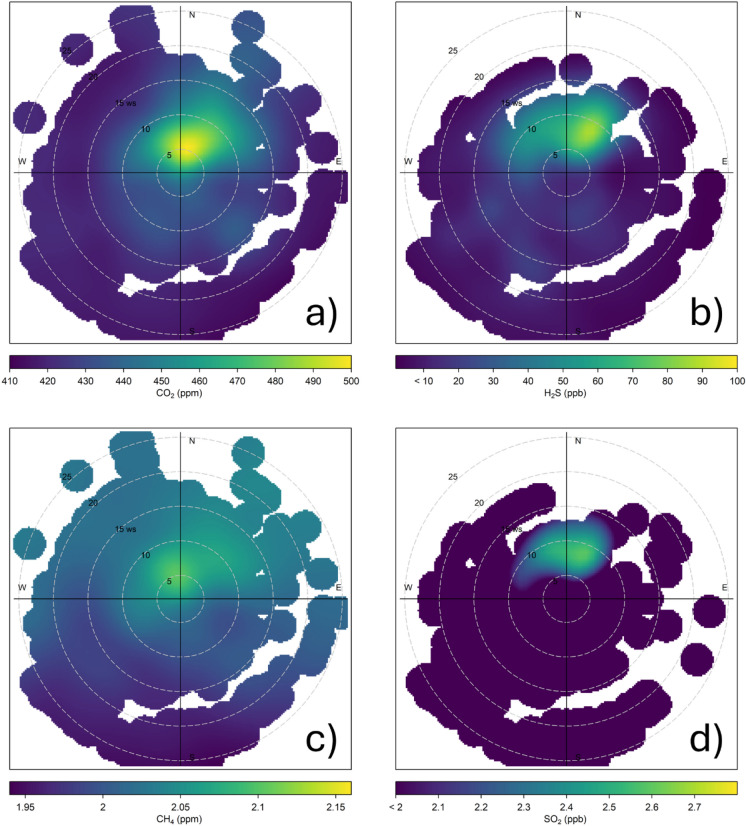 Figure 4
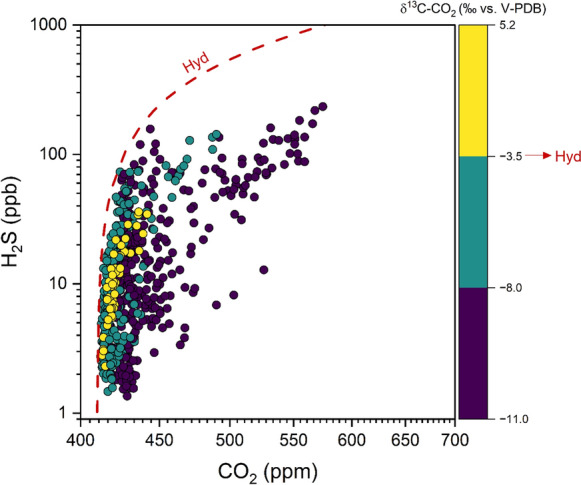 Figure 5
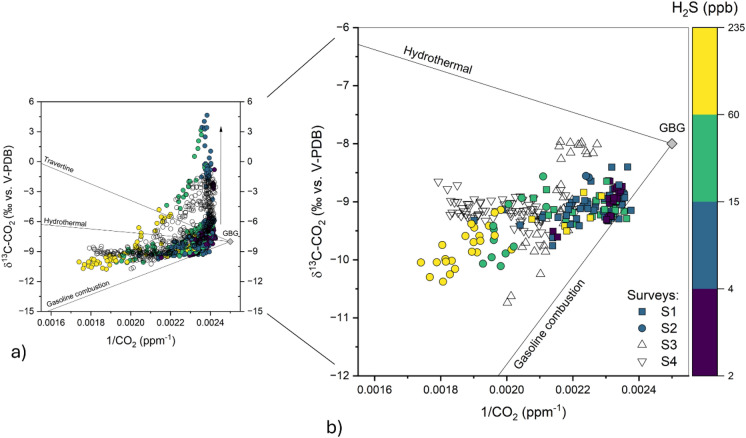 Figure 6
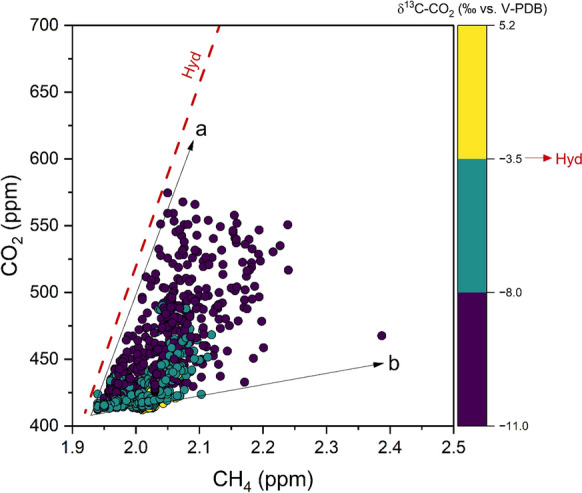 Figure 7
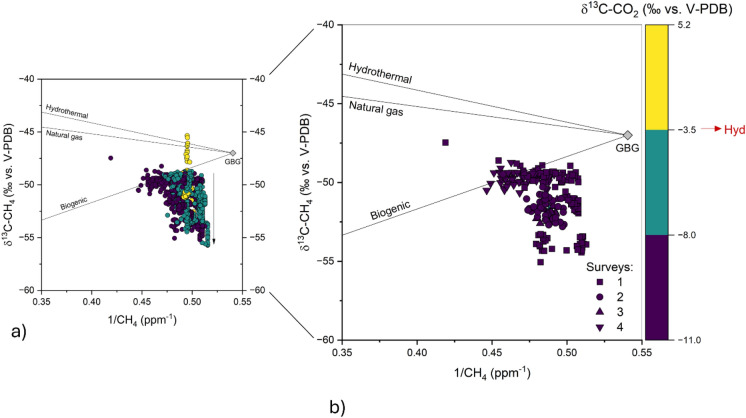 Figure 8
Peer Reviews
No public reviews on file for this paper yet. If you reviewed it on a platform where reviews are public (OpenReview, ICLR, NeurIPS, ICML), you can paste yours below so the community can read it here.
Videos
No videos yet. Explain this paper in a talk, walkthrough, or lecture? Add one.
Taxonomy
TopicsAtmospheric and Environmental Gas Dynamics · Atmospheric chemistry and aerosols · Air Quality and Health Impacts