State-of-the-art for automated machine learning predicts outcomes in poor-grade aneurysmal subarachnoid hemorrhage using routinely measured laboratory & radiological parameters: coagulation parameters and liver function as key prognosticators
Ali Haider Bangash, Jayro Toledo, Muhammed Amir Essibayi, Neil Haranhalli, Rafael De la Garza Ramos, David J. Altschul, Stavropoula Tjoumakaris, Reza Yassari, Robert M. Starke, Redi Rahmani

TL;DR
This study uses automated machine learning to predict recovery outcomes in severe aneurysmal subarachnoid hemorrhage patients using routine lab and imaging data.
Contribution
The study introduces a novel application of automated machine learning for outcome prediction in poor-grade aSAH patients using routinely measured clinical parameters.
Findings
Logistic regression models achieved perfect prediction for both 1-month and 3-month functional outcomes.
Key predictors included coagulation parameters, liver function markers, and targeted temperature management.
Decision tree algorithms provided actionable cut-points for clinical decision-making.
Abstract
The objective of this study was to develop and evaluate automated machine learning (aML) models for predicting short-term (1-month) and medium-term (3-month) functional outcomes [Modified Rankin Scale (mRS)] in patients suffering from poor-grade aneurysmal subarachnoid hemorrhage (aSAH), using readily available and routinely measured laboratory and radiological parameters at admission. Data from a pilot non-randomized trial of 60 poor-grade aSAH patients (Hunt-Hess grades IV or V) were analyzed. Patients were evenly divided between targeted temperature management (TTM) and standard treatment groups. The current state-of-the-art for aML was adopted to employ nine ML algorithms with hyperparameter tuning to develop algorithmic models predicting 1 month and 3-months mRS scores. Model performance was evaluated using macro-weighted average Area Under the Receiver Operating Curve (mWA-AUROC)…
Genes, proteins, chemicals, diseases, species, mutations and cell lines named across the full text — each resolved to its canonical identifier and authoritative record.
Click any figure to enlarge with its caption.
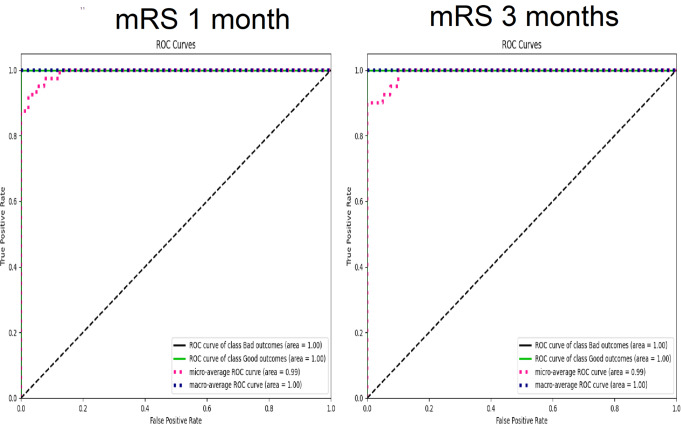 Figure 1
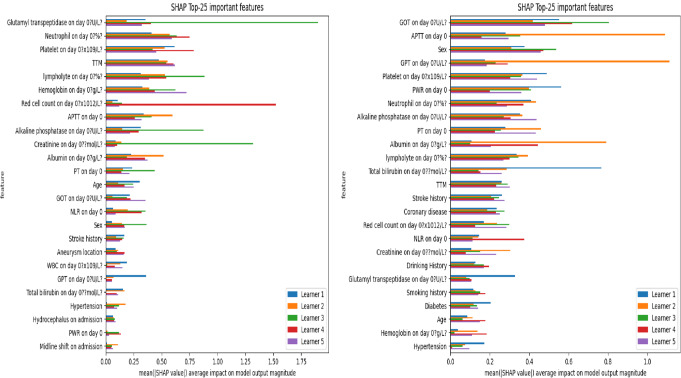 Figure 2
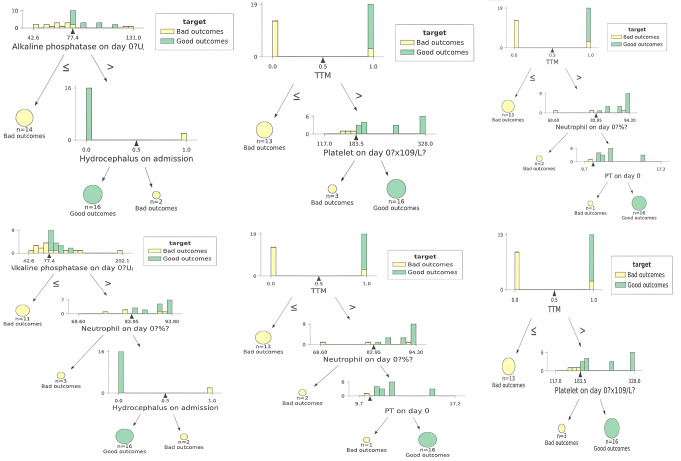 Figure 3
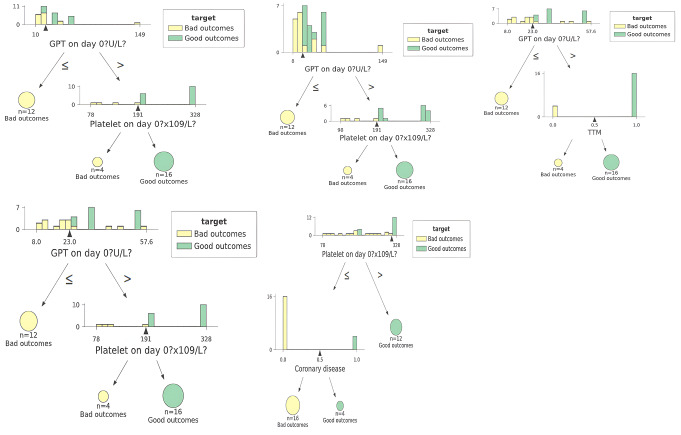 Figure 4
Peer Reviews
No public reviews on file for this paper yet. If you reviewed it on a platform where reviews are public (OpenReview, ICLR, NeurIPS, ICML), you can paste yours below so the community can read it here.
Videos
No videos yet. Explain this paper in a talk, walkthrough, or lecture? Add one.
Taxonomy
TopicsIntracranial Aneurysms: Treatment and Complications · Traumatic Brain Injury and Neurovascular Disturbances · Intracerebral and Subarachnoid Hemorrhage Research