Predicting the risk of relapsed or refractory in patients with diffuse large B-cell lymphoma via deep learning
Dongshen Ma, Yuqing Yuan, Xiaodan Miao, Ying Gu, Yubo Wang, Dan Luo, Meiting Fan, Xiaoli Shi, Shuxue Xi, Binbin Ji, Chenxi Xiang, Hui Liu

TL;DR
This study uses deep learning and clinical data to predict which patients with a type of lymphoma are at high risk of relapse or treatment resistance.
Contribution
A novel fusion model combining histopathological images and clinical features for predicting relapsed or refractory risk in DLBCL.
Findings
The fusion model achieved an average AUC of 0.71 in validation and 0.70 in testing.
Combining image features and clinical data improved prediction performance.
High-risk patients can benefit from intensified monitoring and adjusted treatment plans.
Abstract
Diffuse large B-cell lymphoma (DLBCL) is the most common type of non-Hodgkin lymphoma (NHL) in humans, and it is a highly heterogeneous malignancy with a 40% to 50% risk of relapsed or refractory (R/R), leading to a poor prognosis. So early prediction of R/R risk is of great significance for adjusting treatments and improving the prognosis of patients. We collected clinical information and H&E images of 227 patients diagnosed with DLBCL in Xuzhou Medical University Affiliated Hospital from 2015 to 2018. Patients were then divided into R/R group and non-relapsed & non-refractory group based on clinical diagnosis, and the two groups were randomly assigned to the training set, validation set and test set in a ratio of 7:1:2. We developed a model to predict the R/R risk of patients based on clinical features utilizing the random forest algorithm. Additionally, a prediction model based on…
Genes, proteins, chemicals, diseases, species, mutations and cell lines named across the full text — each resolved to its canonical identifier and authoritative record.
Click any figure to enlarge with its caption.
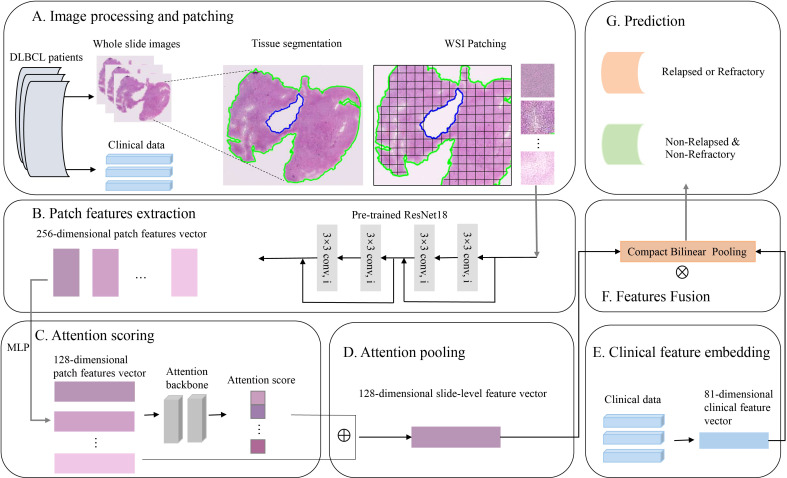 Figure 1
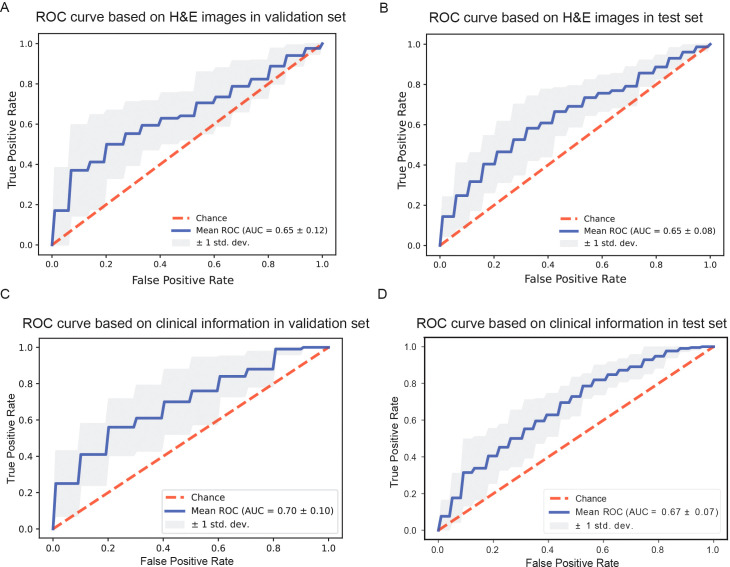 Figure 2
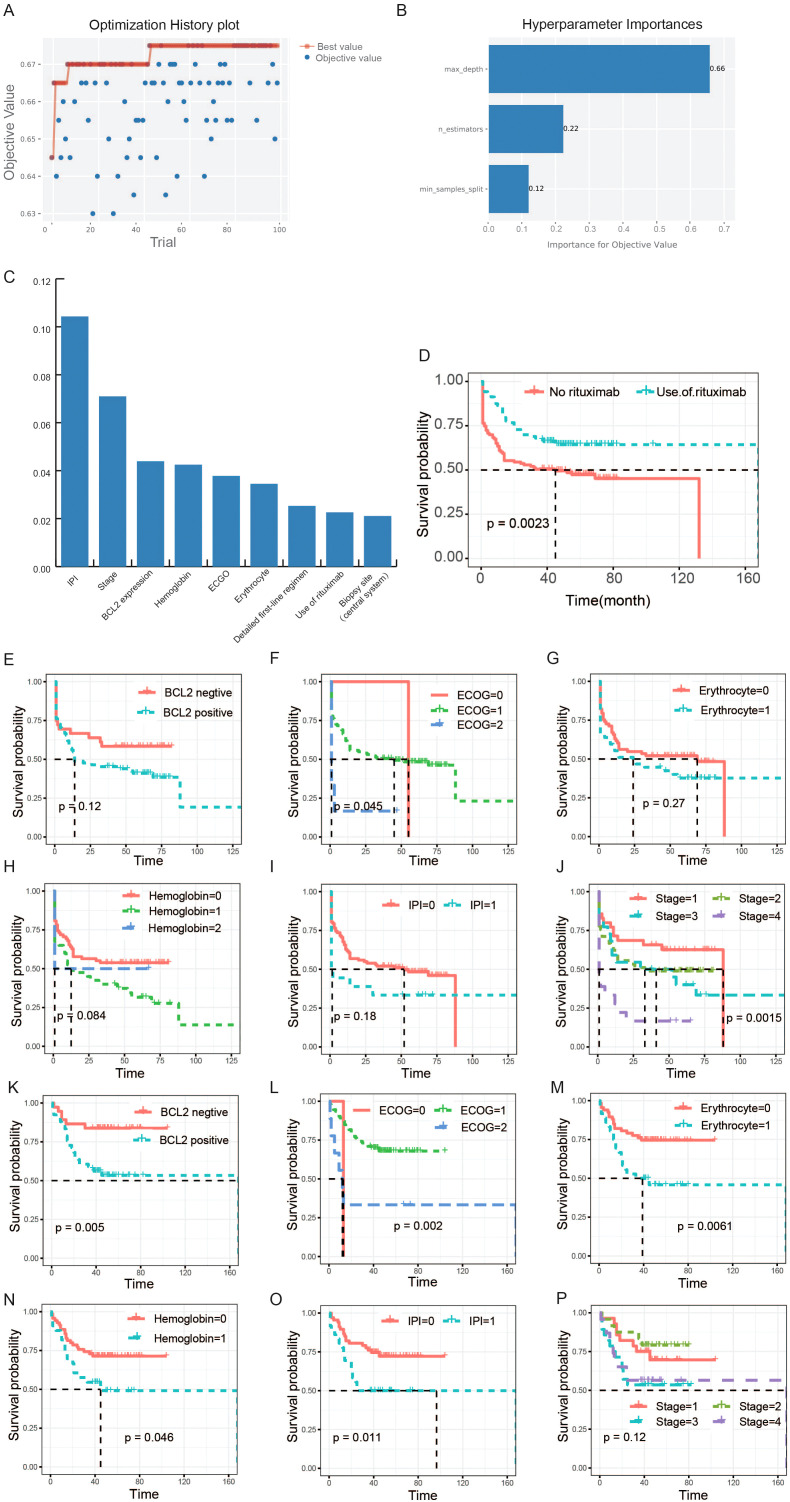 Figure 3
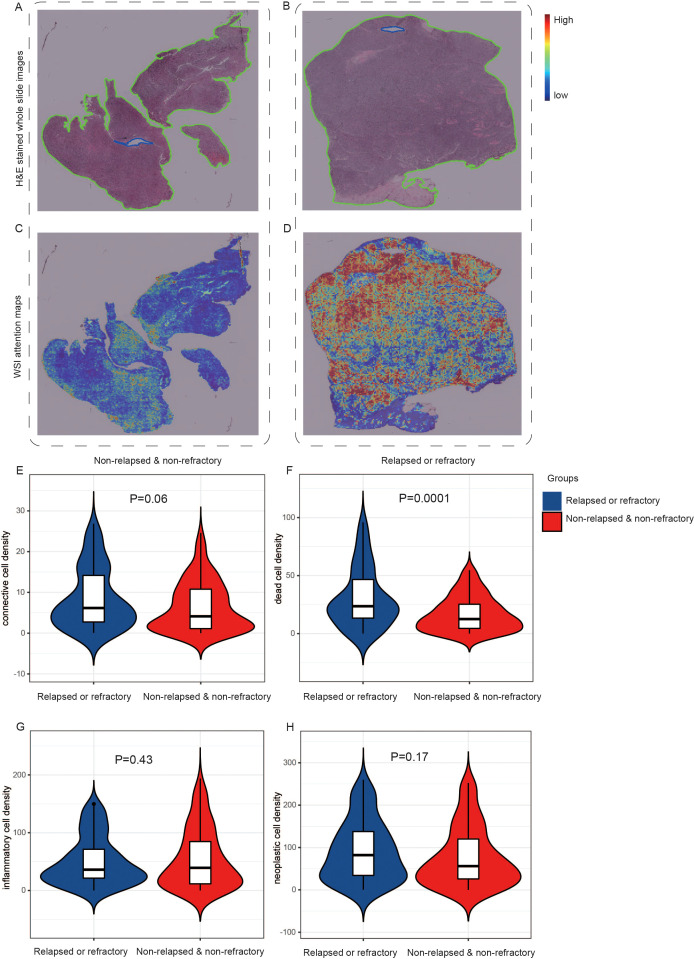 Figure 4
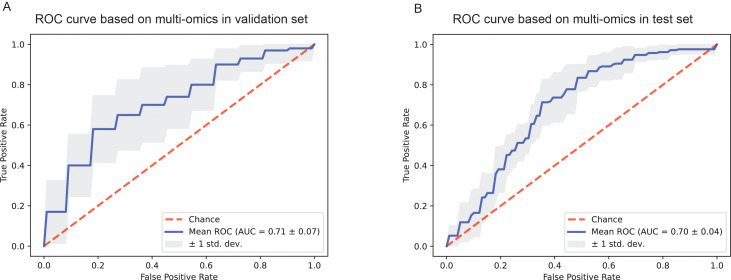 Figure 5
Peer Reviews
No public reviews on file for this paper yet. If you reviewed it on a platform where reviews are public (OpenReview, ICLR, NeurIPS, ICML), you can paste yours below so the community can read it here.
Videos
No videos yet. Explain this paper in a talk, walkthrough, or lecture? Add one.
Taxonomy
TopicsRadiomics and Machine Learning in Medical Imaging · Lymphoma Diagnosis and Treatment · AI in cancer detection