Computational fluid dynamics analysis for predicting microaneurysm formation in parent arteries of unruptured cerebral aneurysms: implications for neck clipping safety
Kento Sasaki, Ichiro Nakahara, Kotaro Kihara, Shiho Tanaka, Riki Tanaka, Akiko Hasebe, Jun Tanabe, Kenichi Haraguchi, Yasuhiro Yamada, Fuminari Komatsu, Mai Okubo, Tomoka Katayama, Yoko Kato, Yuichi Hirose

TL;DR
This study shows that computational fluid dynamics can predict microaneurysms near cerebral aneurysms, improving surgical safety for clipping procedures.
Contribution
The study introduces computational fluid dynamics (CFD) with the parent artery radiation sign (PARS) to predict microaneurysms preoperatively.
Findings
PARS had 89% sensitivity and 78% specificity for detecting microaneurysms.
8 out of 9 intraoperatively confirmed microaneurysms were PARS-positive.
CFD analysis using PARS could guide safer surgical planning for aneurysm clipping.
Abstract
Aneurysmal subarachnoid hemorrhage caused by cerebral aneurysm rupture has a poor prognosis, with mortality exceeding 30% despite treatment advancements. Surgical neck clipping remains the standard for preventing rupture, but intraoperative rupture rates vary significantly (3–50%) and are influenced by vascular complexity and technical challenges. Thinning of the vascular wall near the aneurysm neck, particularly with microaneurysm formation, has emerged as a significant risk factor, yet these changes often go undetected in preoperative imaging. This study aimed to evaluate the utility of computational fluid dynamics (CFD) analysis for predicting microaneurysm formation in the parent artery adjacent to unruptured cerebral aneurysms, using the parent artery radiation sign (PARS) as a predictive marker. We conducted a single-center, retrospective observational study of 89 patients with…
Genes, proteins, chemicals, diseases, species, mutations and cell lines named across the full text — each resolved to its canonical identifier and authoritative record.
Click any figure to enlarge with its caption.
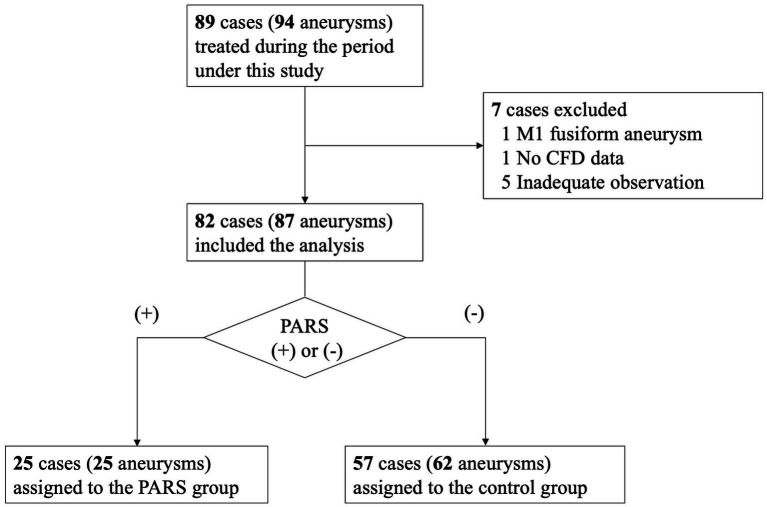 Figure 1
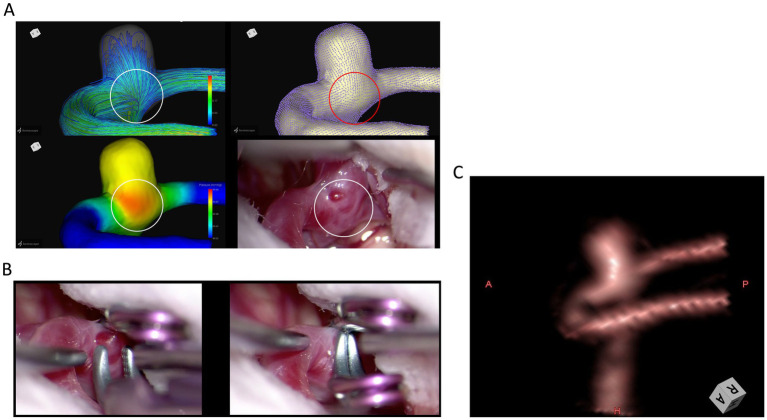 Figure 2
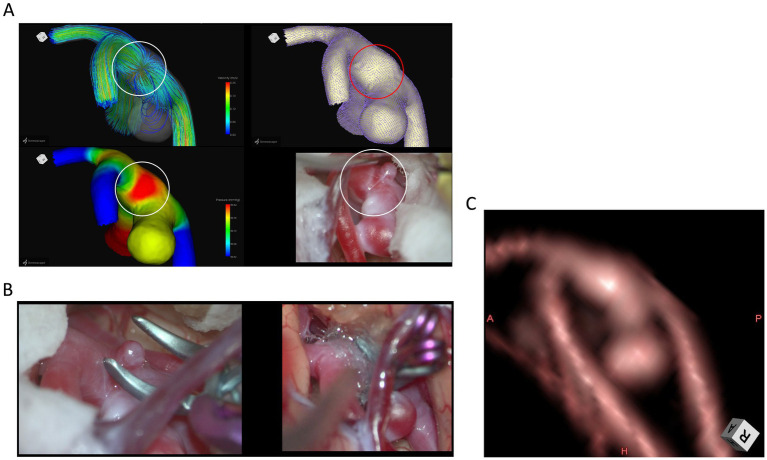 Figure 3
Peer Reviews
No public reviews on file for this paper yet. If you reviewed it on a platform where reviews are public (OpenReview, ICLR, NeurIPS, ICML), you can paste yours below so the community can read it here.
Videos
No videos yet. Explain this paper in a talk, walkthrough, or lecture? Add one.
Taxonomy
TopicsIntracranial Aneurysms: Treatment and Complications · Traumatic Brain Injury and Neurovascular Disturbances · Vascular Malformations Diagnosis and Treatment