An automated algorithm for quantitative morphometry of thoracic and lumbar vertebral bodies in lateral radiographs
Shoutaro Arakawa, Akira Shinohara, Daigo Arimura, Takeshi Fukuda, Yukihiro Takumi, Kazuyoshi Nishino, Mitsuru Saito

TL;DR
This paper introduces an AI algorithm that accurately measures vertebral body deformities in X-rays, showing performance comparable to human experts.
Contribution
A novel AI-based algorithm for automated vertebral body morphometry with high accuracy and speed for clinical use.
Findings
The first-stage AI model achieved 97.6% sensitivity and 95.1% precision for vertebral body detection.
Landmark annotation errors averaged 2.9-4.0% on X and Y axes, comparable to human evaluators.
Algorithm processing time per image was under 10 seconds, with performance similar to human experts.
Abstract
This exploratory study developed and evaluated an artificial intelligence (AI)–based algorithm for quantitative morphometry to assess vertebral body deformities indicative of fractures. To achieve this, 709 radiographs from 355 cases were utilized for algorithm development and performance evaluation. The proposed algorithm integrates a first-stage AI model to identify the positions of thoracic and lumber vertebral bodies in lateral radiographs and a second-stage AI model to annotate 6 landmarks for calculating vertebral body height ratios (C/A, C/P, and A/P). The first-stage AI model achieved a sensitivity of 97.6%, a precision of 95.1%, and an average false-positive ratio of 0.43 per image for vertebral body detection. In the second stage, the algorithm’s performance was evaluated using an independent dataset of vertebrae annotated by 2 spine surgeons and 1 radiologist. The average…
Genes, proteins, chemicals, diseases, species, mutations and cell lines named across the full text — each resolved to its canonical identifier and authoritative record.
Click any figure to enlarge with its caption.
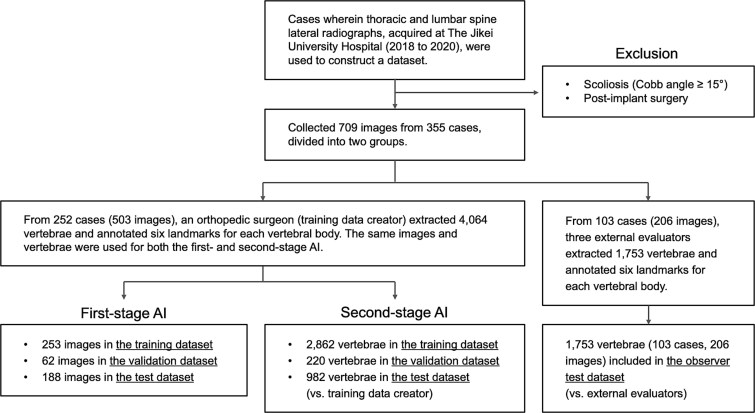 Figure 1
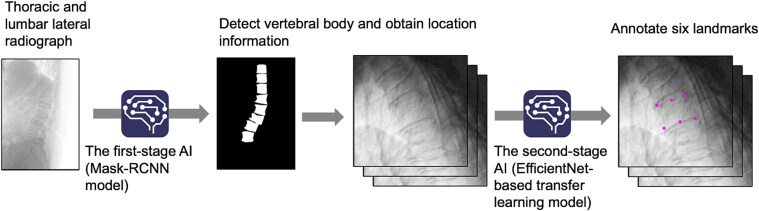 Figure 2
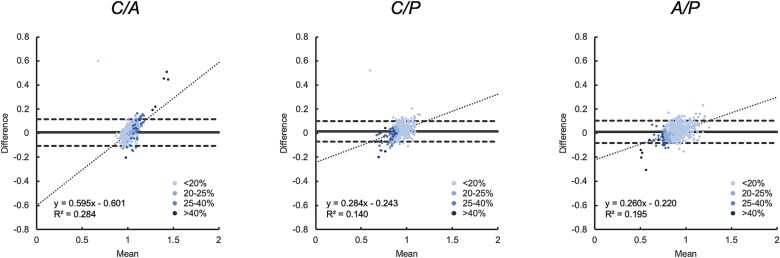 Figure 3
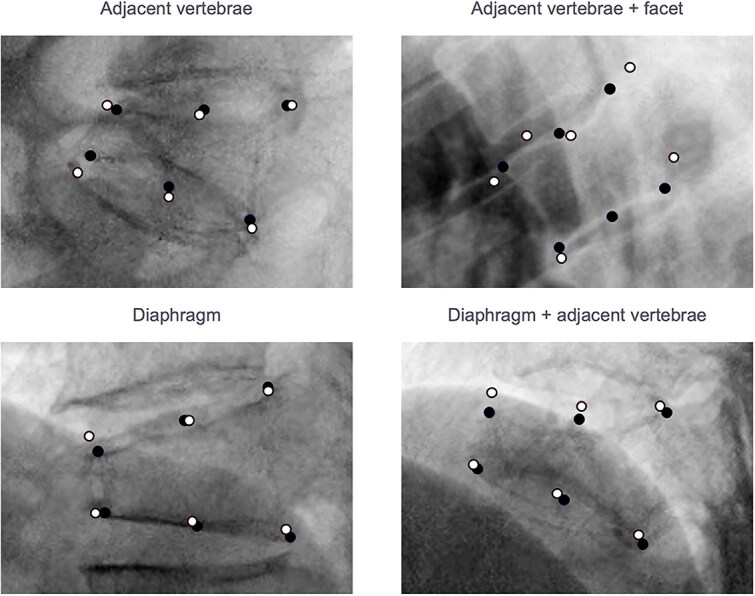 Figure 4
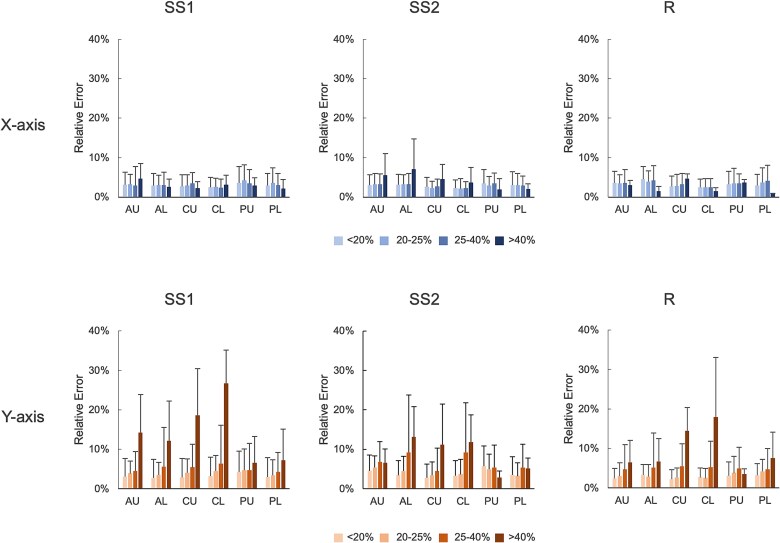 Figure 5
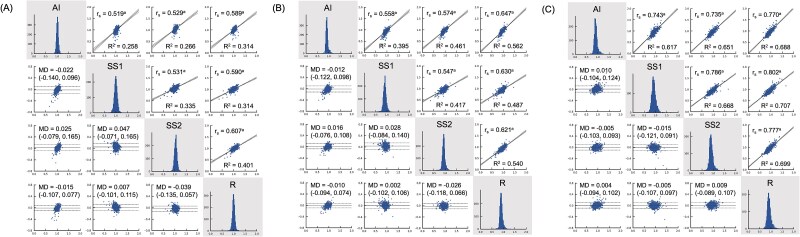 Figure 6
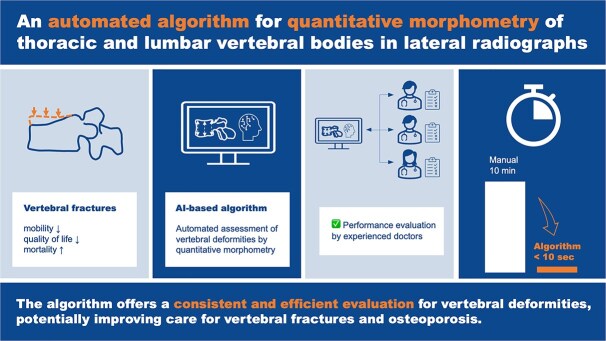 Figure 7
Peer Reviews
No public reviews on file for this paper yet. If you reviewed it on a platform where reviews are public (OpenReview, ICLR, NeurIPS, ICML), you can paste yours below so the community can read it here.
Videos
No videos yet. Explain this paper in a talk, walkthrough, or lecture? Add one.
Taxonomy
TopicsMedical Imaging and Analysis · Scoliosis diagnosis and treatment · Spinal Fractures and Fixation Techniques