Epithelial-Stromal Polyp With Features of Perineurioma Lacking Covering Serrated Crypts Associated With a Sessile Serrated Lesion With High-Grade Dysplasia of the Colon: A Case Report
Hideki Mori, Kenichirou Suzuki, Masako Kawamura, Takashi Yao

TL;DR
A 79-year-old woman had six colon polyps, including a rare epithelial-stromal polyp with perineurioma-like features and a serrated lesion linked to cancer risk.
Contribution
Reports a rare case of an epithelial-stromal polyp with perineurioma-like features lacking serrated crypts, associated with a serrated lesion and tubular adenomas.
Findings
A sessile serrated lesion with high-grade dysplasia was identified as a potential precursor to colorectal cancer.
A bland spindle cell lesion in the lamina propria lacked serrated epithelium and showed perineurioma-like features.
The coexistence of multiple polyps suggests involvement of BRAF and WNT signaling pathways.
Abstract
A 79-year-old woman received a colonoscopy, and 6 polyps were found in the proximal colon. Histologically, four polyps were conventional tubular adenomas. Interestingly, one protuberant polyp was a sessile serrated lesion (SSL) with high-grade dysplasia being regarded as a potent precursor lesion for colorectal cancers. The polyp was connected with a flat-type SSL. Furthermore, another polyp was a bland spindle cell lesion filling the lamina propria. The polyp lacked covering serrated epithelium. Although the mesenchymal neoplasm displayed architectural features of perineurioma, immunoexpression of epithelial membrane antigen (EMA) and GLUT1 was negative. Accordingly, the benign mesenchymal neoplasm was considered an unusual epithelial-stromal polyp with a perineurioma-like lesion. In cases of usual perineuriomas, stromal cell proliferation is suggested to be a concern for serrated…
Genes, proteins, chemicals, diseases, species, mutations and cell lines named across the full text — each resolved to its canonical identifier and authoritative record.
Click any figure to enlarge with its caption.
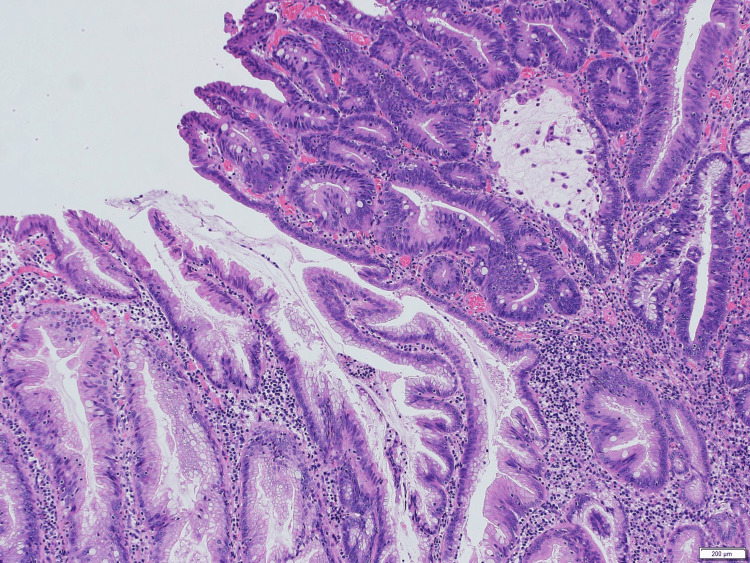 Figure 1
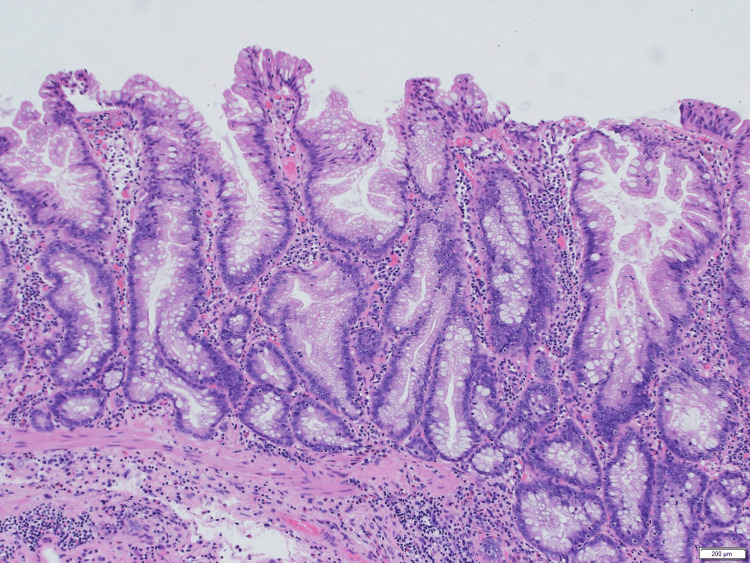 Figure 2
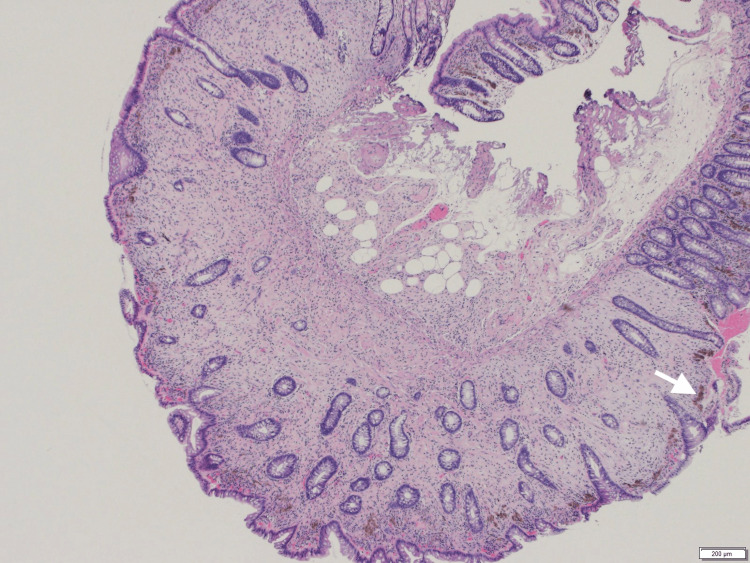 Figure 3
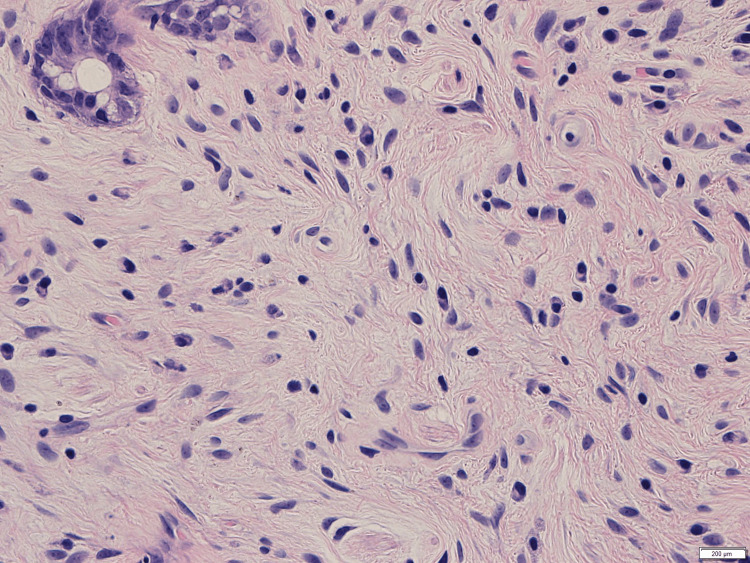 Figure 4
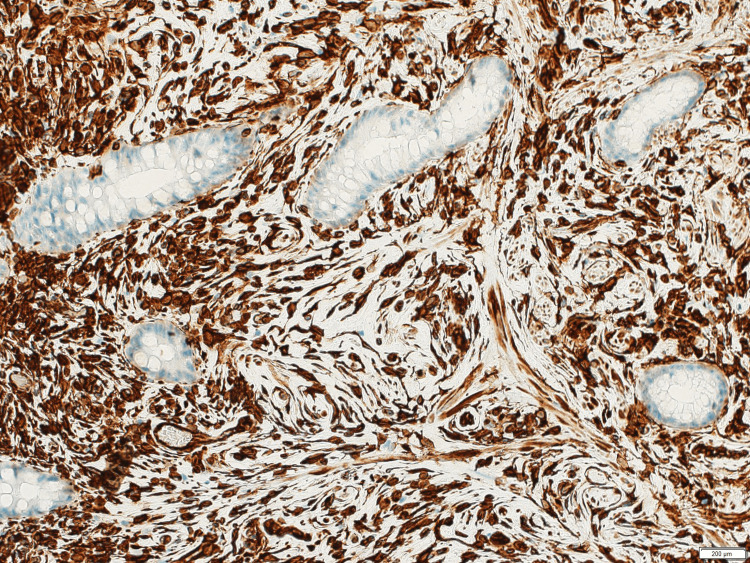 Figure 5
Peer Reviews
No public reviews on file for this paper yet. If you reviewed it on a platform where reviews are public (OpenReview, ICLR, NeurIPS, ICML), you can paste yours below so the community can read it here.
Videos
No videos yet. Explain this paper in a talk, walkthrough, or lecture? Add one.
Taxonomy
TopicsGastrointestinal Tumor Research and Treatment · Soft tissue tumor case studies · Colorectal and Anal Carcinomas