Closing the gap in kidney disease: validating the reporting of Aboriginal and/or Torres Strait Islander identification in a clinical quality registry using linked data
Heather J Baldwin, Nicole De La Mata, Grant Sara, Faye McMillan, Brett Biles, Jianyun Wu, Paul Lawton, Stephen McDonald, Angela C Webster

TL;DR
This study finds that the ANZDATA registry underreports Aboriginal and Torres Strait Islander people with kidney disease, leading to biased outcomes like lower transplant rates and higher death rates.
Contribution
The study validates the accuracy of Aboriginal and Torres Strait Islander identification in a clinical registry using linked data, revealing significant underreporting and biases.
Findings
ANZDATA had a sensitivity of 67.0% and high specificity of 99.8% in identifying Aboriginal and Torres Strait Islander people.
Underreporting was most pronounced in males, children, elderly, and socioeconomically advantaged individuals.
Identified Indigenous patients had lower transplant rates and higher death rates compared to those identified via linked data.
Abstract
To examine the accuracy of the Australia and New Zealand Dialysis and Transplant Registry (ANZDATA), the population‐based clinical quality registry for people with kidney failure, in identifying Aboriginal and/or Torres Strait Islander people. Population‐based cohort study of reporting accuracy. New South Wales, 2006–2020. Incident kidney failure patients. Sensitivity and specificity of identification of Aboriginal and/or Torres Strait Islander people in ANZDATA compared with identification with Enhanced Reporting of Aboriginality (ERA) methods using linked health datasets. Of 11 708 patients, 693 (5.9%) were identified as Aboriginal and/or Torres Strait Islander people using ERA methods, with 484 recognised in ANZDATA. Overall ANZDATA sensitivity was 67.0% (95% CI, 63.3–70.5%), with high specificity (99.8%; 95% CI, 99.7–99.9%). Sensitivity was lowest for males (63.8%; 95% CI,…
Genes, proteins, chemicals, diseases, species, mutations and cell lines named across the full text — each resolved to its canonical identifier and authoritative record.
Click any figure to enlarge with its caption.
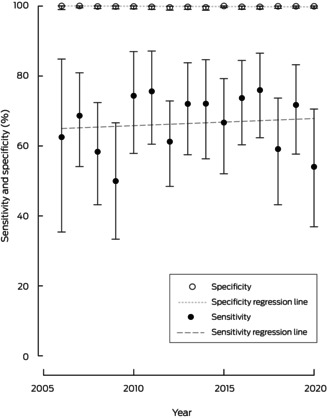 Figure 1
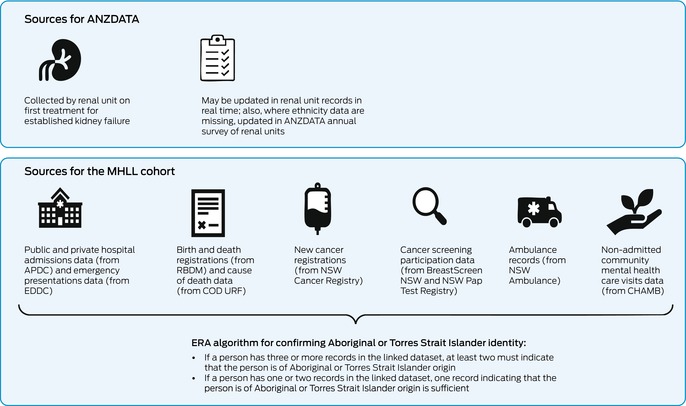 Figure 2
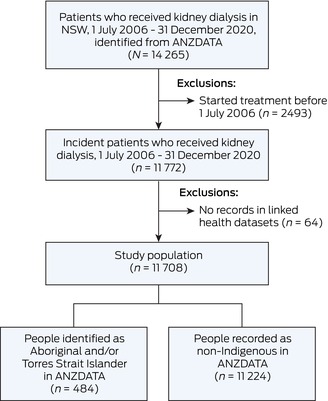 Figure 3
Peer Reviews
No public reviews on file for this paper yet. If you reviewed it on a platform where reviews are public (OpenReview, ICLR, NeurIPS, ICML), you can paste yours below so the community can read it here.
Videos
No videos yet. Explain this paper in a talk, walkthrough, or lecture? Add one.
Taxonomy
TopicsGlobal Maternal and Child Health · Indigenous Health, Education, and Rights · Prenatal Screening and Diagnostics