Time Trend Analysis of Early Term Births in Greece (1980-2023): Persistent High Rates Raise Public Health Concerns
Nikolaos Vlachadis, Chryssi Christodoulaki, Nikolaos Machairiotis, Dimos Sioutis, Ioannis Tsakiridis, Themistoklis Dagklis, Konstantinos Louis, Georgios Petrakos, Maria Siori, Periklis Panagopoulos, Dimitrios Panagiotopoulos

TL;DR
This study shows that early term births in Greece have remained high since 1980, raising concerns about neonatal health and long-term risks.
Contribution
The paper provides the first comprehensive time trend analysis of early term births in Greece over a 43-year period.
Findings
The early term birth rate in Greece has remained above 40% since 2010, with 56% of births occurring before 39 weeks in 2023.
The rate of 37-week births increased annually by 7.1%, while 38-week births decreased by 2.1% per year.
Greece's early term birth rates exceed those of all developed countries, contributing to significant neonatal health risks.
Abstract
Introduction: Neonates born at 37-38 weeks of gestation have been shown to face a relatively higher risk of mortality and various morbidities compared to those born at full term (39-41 weeks). The aim of this study was to conduct a comprehensive analysis of early term birth rate (ETBR) trends in Greece from 1980 to 2023. Materials and methods: Data on live births in Greece from 1980 to 2023 were obtained from the Hellenic Statistical Authority (ELSTAT), based on birth certificate records. A total of 4,595,020 live births were categorized by gestational age. The annual ETBR was calculated as the number of live births occurring at 37-38 completed gestational weeks (from 37+0 to 38+6 weeks) per 100 total live births. Additionally, ETBR was calculated separately for 37 and 38 gestational weeks, as well as the overall birth rate < 39 weeks of gestation. Time trends were evaluated using…
Genes, proteins, chemicals, diseases, species, mutations and cell lines named across the full text — each resolved to its canonical identifier and authoritative record.
Click any figure to enlarge with its caption.
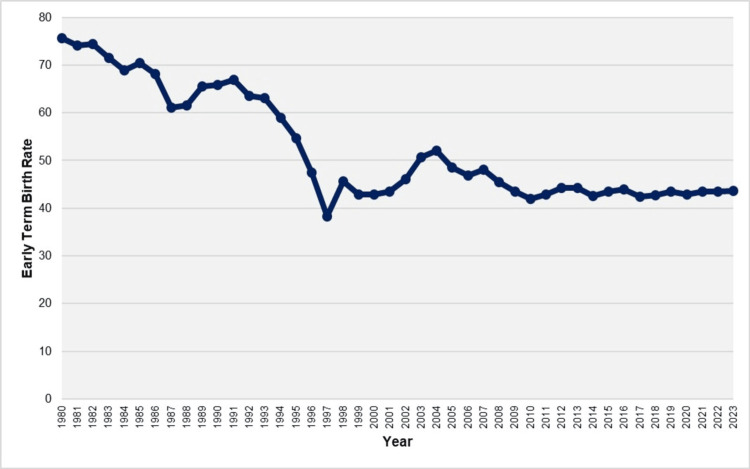 Figure 1
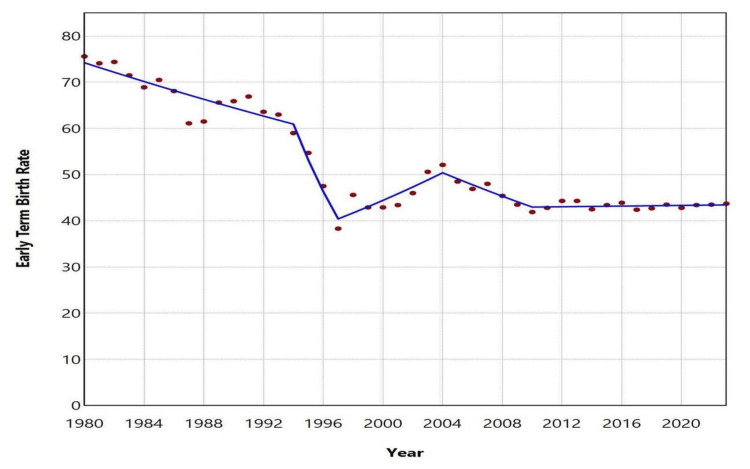 Figure 2
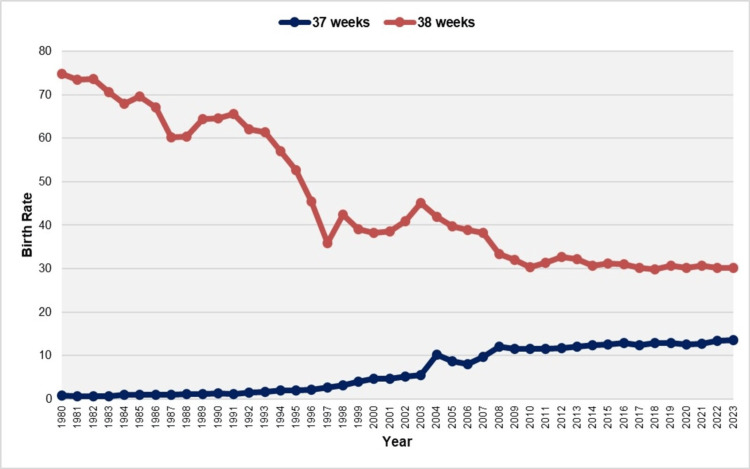 Figure 3
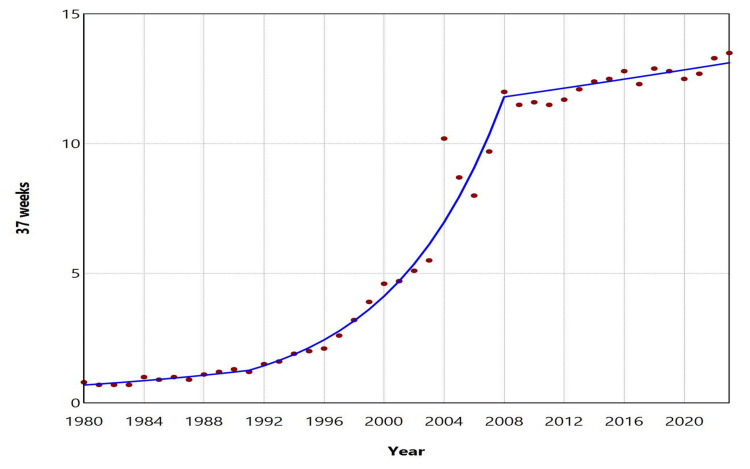 Figure 4
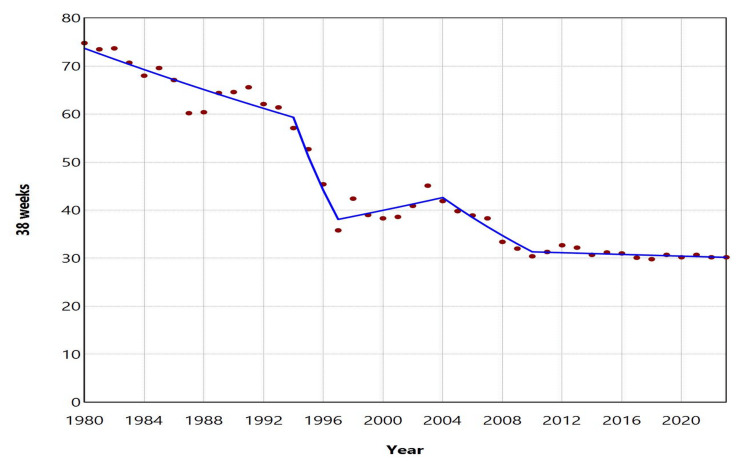 Figure 5
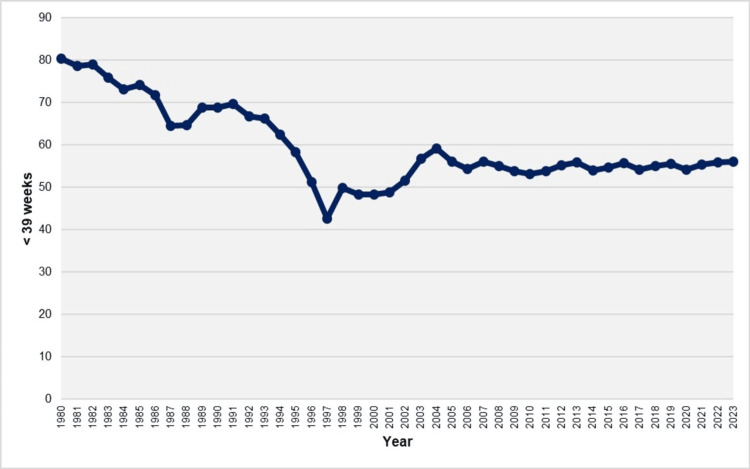 Figure 6
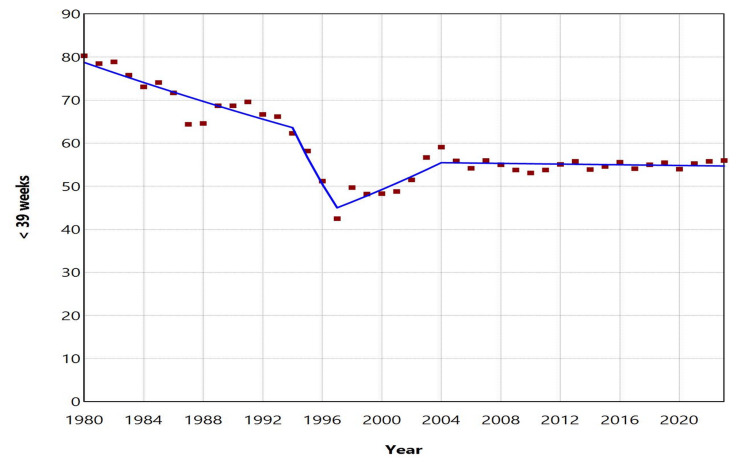 Figure 7
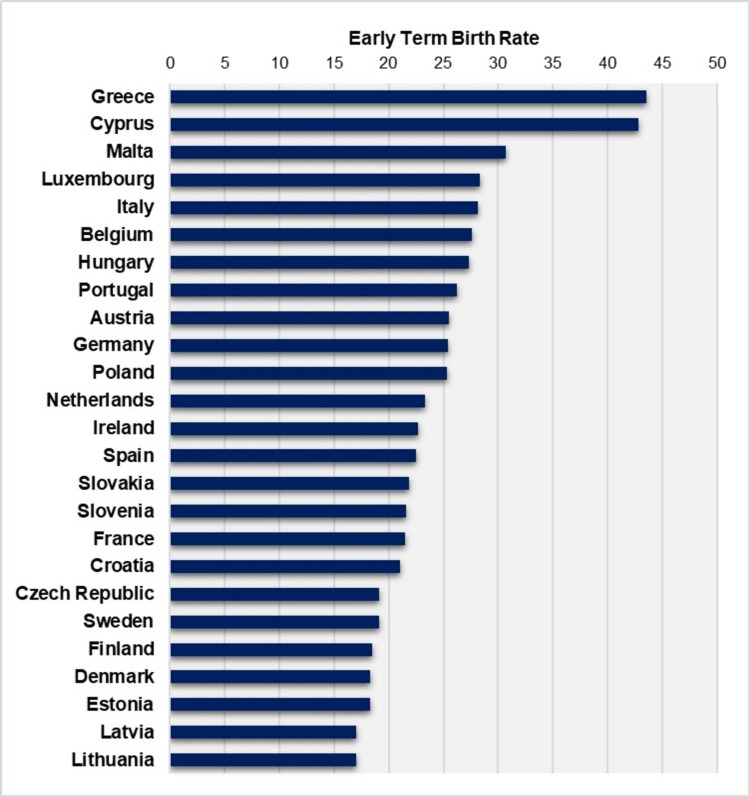 Figure 8
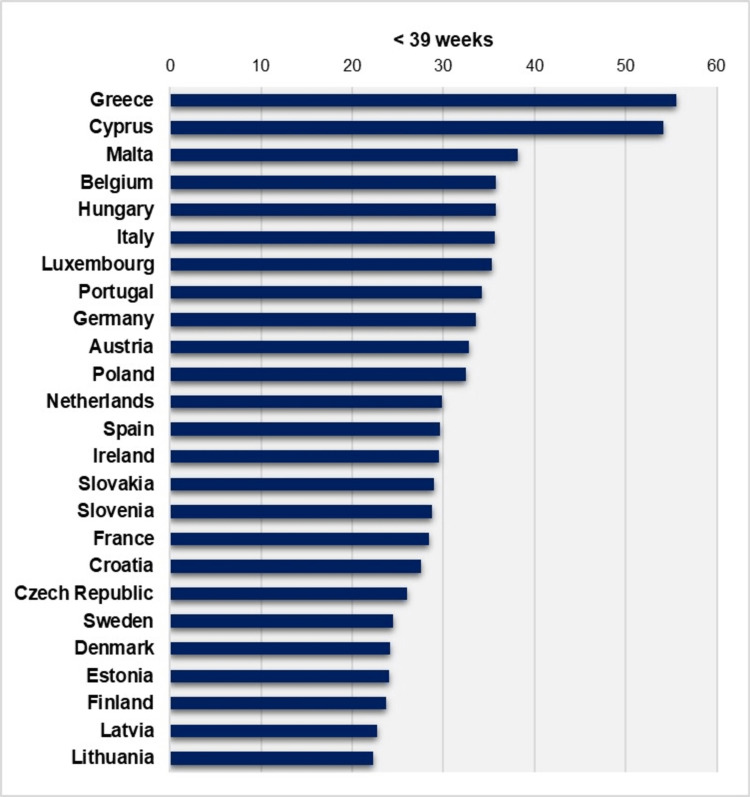 Figure 9
Peer Reviews
No public reviews on file for this paper yet. If you reviewed it on a platform where reviews are public (OpenReview, ICLR, NeurIPS, ICML), you can paste yours below so the community can read it here.
Videos
No videos yet. Explain this paper in a talk, walkthrough, or lecture? Add one.
Taxonomy
TopicsBirth, Development, and Health · Global Maternal and Child Health · Neonatal Respiratory Health Research