Genetic instability in HSPC subpopulations of umbilical cord blood from patients with childhood acute lymphoblastic leukemia
Katarina Vrobelova, Lukas Jakl, Milan Skorvaga, Pavol Kosik, Matus Durdik, Eva Markova, Jana Jakubikova, Marek Holop, Miroslav Kubes, Martin Cermak, Judita Puskacova, Alexandra Kolenova, Igor Belyaev

TL;DR
This study identifies specific cell types in umbilical cord blood that may be the origin of childhood leukemia and shows these cells have genetic instability.
Contribution
The study is the first to identify CD34+ CD38+ and CD34+ CD38− cells as likely preleukemic stem cell subpopulations with genetic instability.
Findings
CD34+ CD38+ and CD34+ CD38− cells were identified as likely subpopulations containing preleukemic fusion genes.
Genetic instability in genes associated with ALL was found in hematopoietic stem and progenitor cells from pediatric patients.
The findings suggest ALL may be a screenable disease due to the prenatal origin of preleukemic fusion genes.
Abstract
Preleukemic stem cells (PSC) containing preleukemic fusion genes (PFG) arise prenatally and represent the initial stage of acute lymphoblastic leukemia (ALL) development. Despite widespread efforts, the cell of origin of PFG is still unclear. For the first time, in order to identify the immunophenotype of the PSCs, different subpopulations of hematopoietic stem and progenitor cells (HSPC) of umbilical cord blood (UCB) from ALL pediatric patients and control healthy children were sorted and analyzed for the presence of diagnostically-relevant PFGs by fluorescent in situ hybridization (FISH). Representative FISH results were confirmed by RT-qPCR and validated by sequencing of the products. Not only did we identify likely subpopulations of TEL/AML1+ PSC to be CD34+ CD38+ and CD34+ CD38− cells, but we also found markedly increased instability of often associated with ALL genes in UCB HSPC…
Genes, proteins, chemicals, diseases, species, mutations and cell lines named across the full text — each resolved to its canonical identifier and authoritative record.
Click any figure to enlarge with its caption.
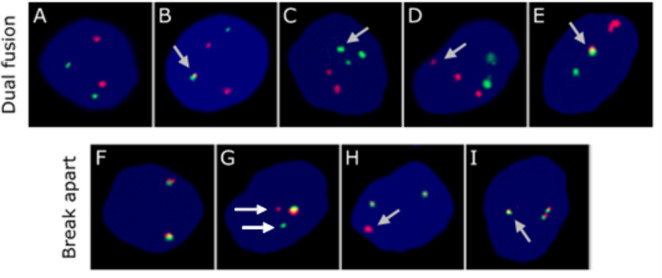 Figure 1
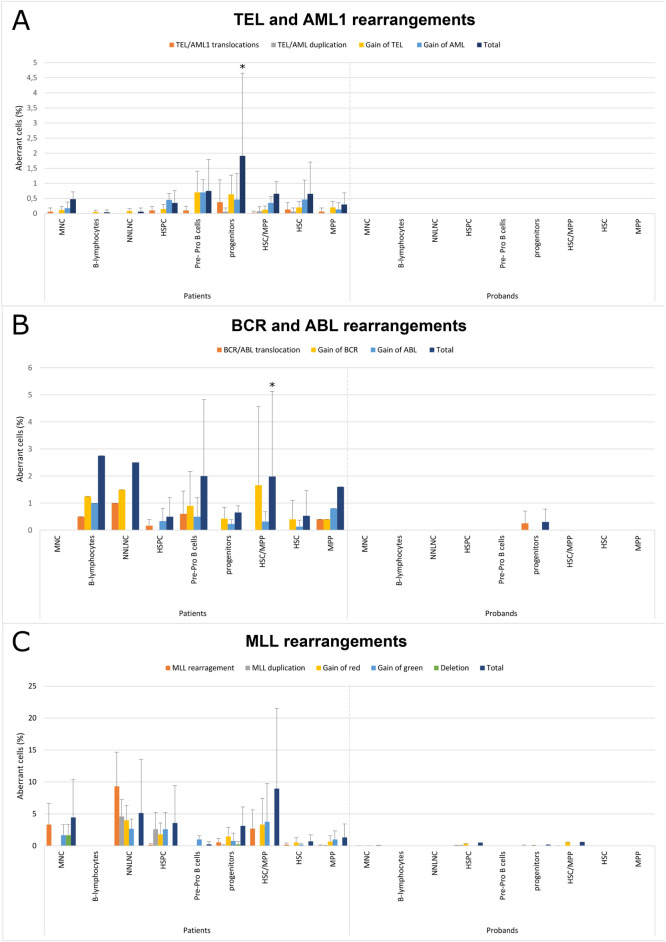 Figure 2
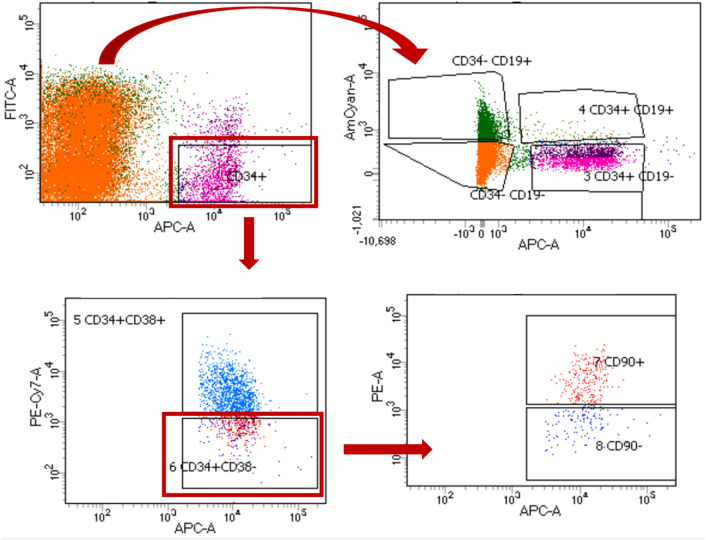 Figure 3
Peer Reviews
No public reviews on file for this paper yet. If you reviewed it on a platform where reviews are public (OpenReview, ICLR, NeurIPS, ICML), you can paste yours below so the community can read it here.
Videos
No videos yet. Explain this paper in a talk, walkthrough, or lecture? Add one.
Taxonomy
TopicsAcute Lymphoblastic Leukemia research · Hematopoietic Stem Cell Transplantation · Acute Myeloid Leukemia Research